Quick Facts
- Market Share: In 2024, the hardware segment, including on-board units and antennas, accounted for approximately 60% of the global cellular vehicle-to-everything (C-V2X) market share.
- Safety Impact: The U.S. National Highway Traffic Safety Administration estimates V2X could mitigate the severity of up to 80 percent of crashes involving non-impaired drivers.
- Standard Frequency: Most global systems operate on the 5.9 GHz spectrum allocation reserved for intelligent transport systems.
- Core Mechanic: Remote speed control is managed via intelligent speed assistance systems that interface directly with the vehicle's electronic control units.
- Hardware Status: Modular V2X communication modules are already being installed in 2026 model-year vehicles, often sitting dormant until activated by over-the-air updates.
- Connectivity: Cellular-V2X capabilities offer higher reliability and lower latency compared to older Wi-Fi-based standards like DSRC.
V2X technology, or Vehicle-to-Everything, allows modern vehicles to communicate with other cars and roadside infrastructure. This system utilizes dedicated short-range radio or cellular 5G networks to share real-time data on position, speed, and direction. In many new vehicles, the hardware for these communications is already installed, allowing for features like emergency braking alerts and traffic management notifications.
The Anatomy of V2X Hardware: From OBUs to RSUs
To understand how a car from the 2026 model year interacts with the world, we have to look beneath the dashboard. Every connected vehicle relies on an On-Board Unit (OBU). These units are not just simple radios; they are sophisticated computers that act as the gateway between the car’s internal nervous system—the CAN bus—and the external environment. We see a wide variety in hardware costs for these components, typically ranging from $600 to $2,800 depending on the level of integration and the number of sensors involved.
The OBU works in tandem with Roadside Units (RSU). These are physical boxes mounted on traffic lights, toll gantries, and street lamps. While the OBU handles the vehicle's data, the RSU acts as the local hub for the traffic management center. This constant handshake between the car and the infrastructure is known as vehicle-to-infrastructure communication. It provides the car with a digital map of its surroundings that extends far beyond what a driver can see.
However, a major challenge in modern environments is the urban canyon effect. Tall buildings can block GPS signals, leading to positioning errors. To solve this, manufacturers are identifying V2X communication modules in new cars that utilize dead reckoning. This technology uses the car’s internal sensors—like wheel speed and steering angle—to maintain an accurate position even when satellite signals are lost. This level of precision is vital when we consider how V2X hardware enables remote speed control, as the system must know exactly which lane the car is in before applying any corrective measures.
Remote Speed Control: The Logic of ISA
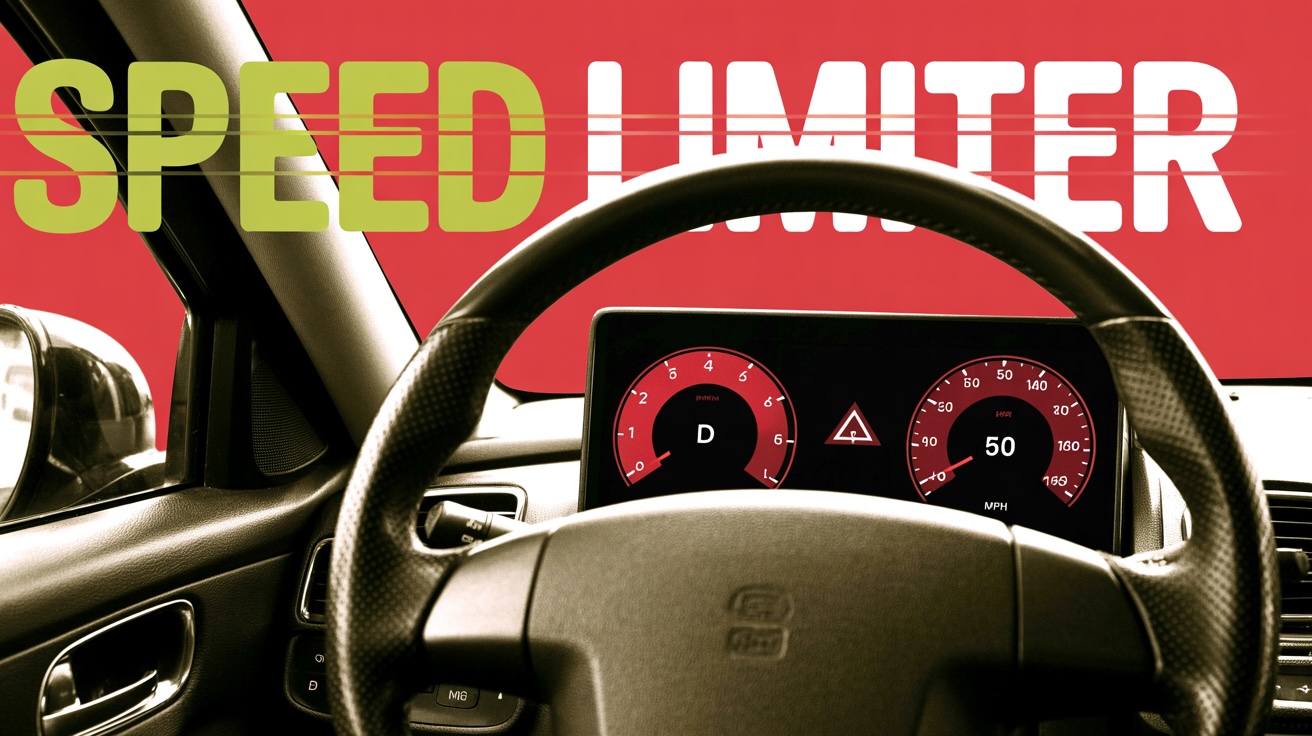
The most discussed aspect of V2X technology is its ability to influence vehicle behavior without driver intervention. This is primarily achieved through intelligent speed assistance systems. While early versions of these systems simply beeped or flashed a light when a driver exceeded the limit, 2026 vehicles are moving toward active intervention.
The logic flow is straightforward but technically complex. As a car enters a school zone or a high-congestion area, the local traffic management center sends a signal via the RSU. The vehicle-to-infrastructure communication receives this data, and the intelligent speed assistance systems compare the local limit to the car’s current telemetry. If the driver does not slow down, the system can send a command to the electronic control units to reduce throttle input or gently apply the brakes.
We have seen this trend accelerating since the European Union began mandating ISA in all new vehicles in 2022. The hardware for remote speed control is effectively a digital speed governor. By understanding how intelligent speed assistance systems work in 2026 vehicles, we can see that the car is no longer an isolated machine; it is a node in a larger, regulated network. This allows for dynamic speed limits that can change based on weather conditions or accident reports, sent directly to the car’s speed control modules in real-time.
Connectivity Standards: C-V2X vs. DSRC
There has been a long-standing debate in the industry regarding the best way to facilitate these connections. For years, Dedicated Short-Range Communications (DSRC) was the frontrunner. However, cellular-V2X capabilities have largely taken over the market. This shift is due to the ultra-low latency and higher data throughput offered by 5G networks, specifically under the 3GPP Release 16 standards.
When evaluating the differences between DSRC and cellular-V2X hardware, it comes down to range and reliability. C-V2X can use the existing cellular tower network, which allows for a much wider coverage area than the point-to-point radio of DSRC. This is why automakers are favoring C-V2X for connected car hardware for emergency braking notifications and long-range hazard alerts.
| Feature | DSRC (802.11p) | C-V2X (PC5/5G) |
|---|---|---|
| Latency | Moderate | Ultra-low (<5ms) |
| Range | Short (~300m) | Long (>450m + Network) |
| Reliability | Variable in congestion | High (Sidelink tech) |
| Scalability | Limited infrastructure | High (Uses 5G towers) |
Because C-V2X is integrated into the Telematics Control Units already found in modern cars, it is easier for manufacturers to deploy. It also simplifies over-the-air updates, allowing the vehicle to receive new safety protocols or security patches without a trip to the dealership. This modularity is key to how V2I systems send traffic commands to connected cars; the software can be refined and the hardware repurposed as regulatory environments evolve.
Security and Autonomy: The 'Safety vs. Freedom' Debate
The prospect of a traffic management center having the ability to override a driver’s input raises significant questions about driver autonomy. While the safety benefits are clear—as highlighted by the NHTSA's estimate that V2X technology could eliminate or mitigate the severity of up to 80 percent of crashes—the ethical implications are still being weighed.
Cybersecurity vulnerabilities are the primary concern for many experts. If a vehicle can receive remote commands to slow down, it must be protected against malicious actors who might attempt to send fraudulent signals. This requires robust data encryption standards and secure hardware security modules within the OBU. Every message sent between the vehicle and the infrastructure must be authenticated in milliseconds to ensure it is coming from a legitimate source.
Editor's Note: We recommend checking your vehicle's privacy settings to see how much data is being shared with the manufacturer. While V2X is designed for safety, the telemetry being shared often includes speed, location, and even braking patterns.
Furthermore, there is the issue of "dormant hardware." Many cars sold today already contain the communication modules necessary for these features, but they are not yet fully active. A simple software update could turn a passive alert system into an active speed governor overnight. As we move toward 2026, the balance between public safety and individual control will likely be the defining debate of the automotive industry.
FAQ
What is V2X technology and how does it work?
It is a communication system that allows vehicles to share data with other cars, pedestrians, and roadside infrastructure. It works by using radio or cellular signals to transmit a vehicle's status and receive information from the surrounding environment to improve safety and traffic flow.
What is the difference between DSRC and C-V2X?
DSRC is a Wi-Fi-based technology that relies on direct, short-range radio communication between devices. C-V2X uses cellular networks like 4G and 5G, providing a longer range, better reliability in crowded areas, and a clearer path for future technological upgrades.
How does V2X technology improve road safety?
By providing cars with "360-degree awareness," the technology can alert drivers to hazards they cannot see, such as a car running a red light or an icy patch around a blind curve. It can also trigger automatic safety features like emergency braking to prevent collisions.
What are the security risks associated with V2X?
The main risks involve unauthorized access to the vehicle's communication system, which could allow hackers to send false information or interfere with remote control systems. To combat this, the industry uses high-level encryption and digital certificates to verify every signal.
Does V2X technology require 5G connectivity?
While V2X can operate on 4G or even dedicated radio frequencies like DSRC, 5G is the preferred standard for the future. It offers the low latency and high speed necessary for more advanced features like autonomous driving and real-time remote speed management.