Quick Facts
- Primary Rule: All spare lithium batteries and power banks are strictly prohibited in checked luggage.
- Watt-Hour Limit: 100Wh is the standard limit for unrestricted carry-on; batteries between 101Wh and 160Wh require airline approval.
- Penalty: Violations of hazardous materials regulations can result in civil penalties of up to $17,062.
- Safe Packing: Battery terminals must be insulated using original packaging, non-conductive tape, or individual pouches.
- State of Charge: Safety experts recommend transporting batteries at a 30% state of charge to minimize fire intensity.
- 2026 Enforcement: New AI-driven scanners at security screening checkpoints are now designed to automatically detect hidden batteries.
TSA and FAA regulations for 2026 strictly prohibit spare lithium-ion batteries and power banks in checked luggage to prevent thermal runaway. These items must be stored in carry-on bags to ensure cabin crew can respond quickly to any fire risks. By following the current TSA battery rules, travelers can ensure their devices meet the 100Wh limit and avoid significant fines or travel delays.
The Science of Risk: Understanding Thermal Runaway
To understand why aviation authorities are so focused on how you pack your electronics, we have to look at the chemistry inside. Lithium batteries are incredibly energy-dense. While this makes them great for powering your smartphone all day, it also means they contain a significant amount of potential energy that can be released all at once if the battery is damaged or short-circuited.
Thermal runaway is a phenomenon where an internal short circuit or external heat causes a battery cell to enter an uncontrolled self-heating state. Once a cell reaches a certain temperature, it releases its stored energy as heat, which then triggers neighboring cells to do the same. This is known as thermal event propagation. In the confined space of an aircraft, especially in a cargo hold where no one is present to intervene, this can lead to a catastrophic fire that is extremely difficult to extinguish.
The risk is not merely theoretical. In 2024, commercial airlines in the United States reported an average of two thermal runaway incidents per week involving lithium-ion batteries, marking the second-highest rate of such occurrences in the last six years. When these events happen in the cabin, the crew is trained to use specialized fire containment bags. However, if that same battery is buried in a suitcase under the plane, the situation escalates rapidly. Data shows that approximately 18% of onboard lithium-ion battery thermal runaway incidents result in major flight disruptions, including emergency evacuations, diverted landings, or returns to the gate. This highlights the critical importance of preventing lithium battery thermal runaway in carry-on luggage through proper storage and handling.
Calculating Your Capacity: The 100Wh vs. 160Wh Threshold
One of the most common points of confusion for travelers is the difference between milliampere hours (mAh) and watt-hours (Wh). While most consumer power banks list their capacity in mAh, the lithium battery travel limits set by the FAA and international aviation bodies are measured in watt-hours.
To stay compliant, you need to know how to calculate watt hours for TSA battery rules. This is especially important for high-capacity external power sources or professional camera gear.
The Capacity Formula
Wh = (mAh × V) / 1000
Example: A 20,000mAh power bank with a 3.7V nominal voltage. (20,000 × 3.7) / 1000 = 74Wh.
Most smartphones, tablets, and standard laptops fall well under the 100Wh threshold (usually around 27,000mAh at 3.7V). Here is how the 2026 capacity tiers are enforced:
- Under 100Wh: You can bring an unlimited number of these for personal use in your carry-on bag.
- 101Wh to 160Wh: This category includes large laptop batteries and professional video lighting. You are limited to two spare batteries per person, and you must obtain airline approval for 160wh lithium ion batteries before you arrive at the gate.
- Over 160Wh: These are strictly forbidden on passenger aircraft. They must be shipped as cargo under specialized hazardous materials regulations.
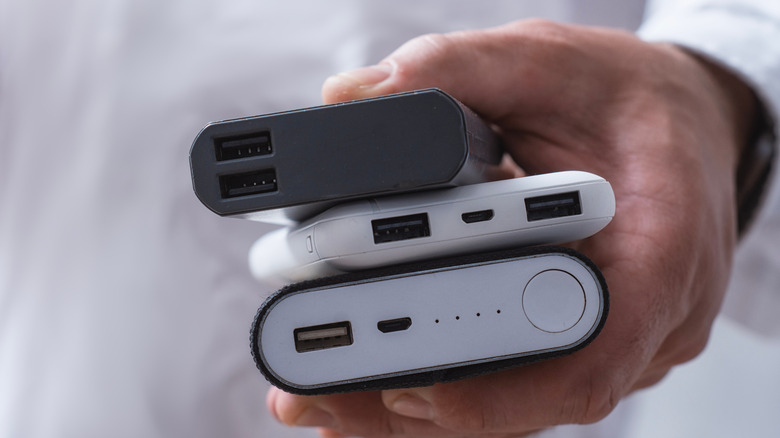
Keep in mind that the TSA lithium battery limit for multiple power banks generally allows for a reasonable amount of personal equipment, but if you are carrying dozens of units, security may question if the items are for commercial resale, which involves different rules.
Mandatory Packing Protocols: Terminal Insulation & Storage
Once you have confirmed your batteries are within the legal limits, the next step is physical safety. The primary cause of thermal events during transit is a short circuit. This happens when the metal terminals of a battery come into contact with other metal objects, such as keys, coins, or even other batteries.
When packing spare batteries for flight, you must ensure the electrodes are protected. The most effective way is to keep the battery in its original retail packaging. If you no longer have the box, you should practice insulating battery terminals for flight safety by using non-conductive electrical tape to cover the contact points. Alternatively, place each battery in its own separate plastic sleeve or a dedicated fire-retardant storage pouches.
Before you head to the airport, inspect your devices for any signs of damaged lithium batteries for air travel. A compromised battery is a significant fire hazard and will be confiscated if detected.
Signs of Battery Damage Checklist:
- Swelling or Bulging: The casing looks "puffy" or no longer sits flat.
- Discoloration: Brown or black scorch marks near the terminals.
- Odors: A sweet, metallic, or chemical smell emanating from the device.
- Heat: The battery feels hot to the touch even when not in use.
- Leaking: Any fluid or crusty residue around the seams.
| Packing Step | Recommended Method | Why It Matters |
|---|---|---|
| Terminal Protection | Electrical tape or individual bags | Prevents metal-on-metal short circuits. |
| Outer Protection | Hard-shell case or padded pouch | Protects against physical crushing or punctures. |
| Placement | Carry-on luggage only | Allows for cabin crew response protocols. |
| Charging | Drain to 30% capacity | Lower energy levels mean less intense fire if a failure occurs. |
If you are packing spare lithium batteries for international flights, be aware that some foreign carriers have even stricter limits on the total number of power banks allowed per passenger, often capping the count at two or three regardless of the watt-hour rating.
The 'Gate-Check' Trap and Smart Luggage Rules
A common scenario that catches travelers off guard is the "gate-check." You may have followed every rule and placed your power bank in your carry-on, only to find that the overhead bins are full and the gate agent requires you to check your bag at the last minute.
Alert: The Gate-Check Protocol If your carry-on bag is moved to the cargo hold at the gate, you must remove all spare lithium batteries and power banks and bring them into the cabin with you. Leaving them in a gate-checked bag violates FAA lithium battery regulations and creates a hidden fire risk in the hold.
This also brings us to the rise of "smart luggage." Many modern suitcases feature built-in GPS tracking, electronic scales, or USB charging ports. While convenient, these are subject to strict scrutiny. If you are traveling with smart luggage and non-removable batteries, the bag is generally banned from both the cabin and the cargo hold. To be compliant, the battery must be removable. If you check the bag, the battery must be taken out and carried in the cabin. If you take the bag as a carry-on, the battery can stay inside, but it must be able to be powered off completely.
2026 Enforcement: AI Scanning and Legal Consequences
Starting in 2026, the security screening checkpoint experience has evolved. TSA has integrated AI-driven CT scanners that provide a 3D view of your bag's contents. These systems are programmed to automatically flag the specific density and shape of lithium cells. This means that hiding a power bank in your checked luggage is more likely than ever to be detected, leading to your bag being pulled for manual inspection and your flight potentially being delayed.
The consequences for ignoring TSA battery rules have also become more severe. The FAA has increased its oversight of hazardous materials regulations. A single violation—such as packing a high-capacity lithium battery in a checked suitcase—can result in a civil penalty of up to $17,062. For repeat offenders or those who demonstrate a reckless disregard for safety, the TSA may even revoke PreCheck status or pursue criminal charges if the violation leads to an onboard emergency.
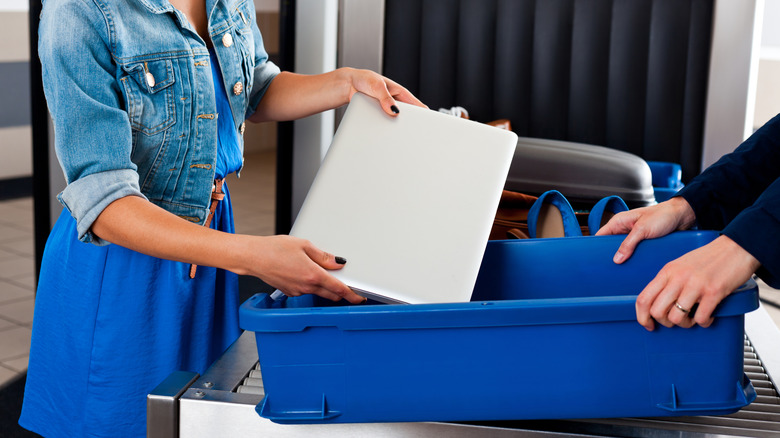
By staying informed about these changes and taking the extra five minutes to tape your battery terminals and check your watt-hour labels, you contribute to the safety of everyone on board.
FAQ
Can I bring lithium batteries in my carry-on bag?
Yes, you are encouraged to bring lithium batteries in your carry-on bag. In fact, for spare batteries and power banks, the carry-on is the only place they are allowed. This ensures that if a thermal event occurs, the cabin crew can quickly use a fire containment bag to neutralize the threat.
Are batteries allowed in checked luggage?
Standard alkaline batteries (AA, AAA) and lithium batteries that are securely installed inside a device (like a laptop or toothbrush) are generally allowed in checked luggage. However, spare lithium batteries and all power banks are strictly prohibited in checked bags due to the risk of fire in the cargo hold.
What is the watt-hour limit for batteries on flights?
The standard limit is 100Wh per battery, which covers almost all smartphones and laptops. Batteries between 101Wh and 160Wh are limited to two per person and require airline approval. Anything over 160Wh is prohibited from passenger flights.
Do I need to tape battery terminals for travel?
Yes, it is highly recommended and often required. Insulating the terminals with non-conductive tape or placing each battery in its own plastic bag prevents short circuits that could lead to a fire. This is a crucial step for any spare batteries not protected by a device casing.
How should I pack spare batteries for travel?
You should pack them in your carry-on bag, ensuring the terminals are insulated. Use the original packaging if possible, or use a battery organizer or fire-retardant pouch. Avoid packing them loose with other metal objects like jewelry or coins.