Quick Facts
- Safety Limit: 40°F (4°C) is the absolute maximum safe temperature for refrigeration; anything higher invites rapid bacterial growth.
- Ideal Range: For peak freshness, aim for 35°F to 38°F in the fridge and exactly 0°F in the freezer.
- Accuracy Gap: Built-in refrigerator dials usually measure the air coming out of the vent rather than the actual ambient air circulation around your food.
- Efficiency Boost: Maintaining a consistent temperature can prevent your compressor from working overtime, potentially saving on energy bills.
- Smart Advantage: Modern sensors provide real-time notifications and data logging to catch cooling failures before they become total losses.
- Maintenance Payoff: Combining temperature monitoring with regular coil cleaning can extend appliance life by several years.
Using a refrigerator thermometer is the only way to ensure your appliance maintains the ideal refrigerator temperature for food safety, as internal dials often rely on estimates rather than precise data. By implementing a dedicated refrigerator thermometer, you gain the empirical evidence needed for foodborne illness prevention and long-term appliance health.
Why Your Refrigerator Dial is Lying to You
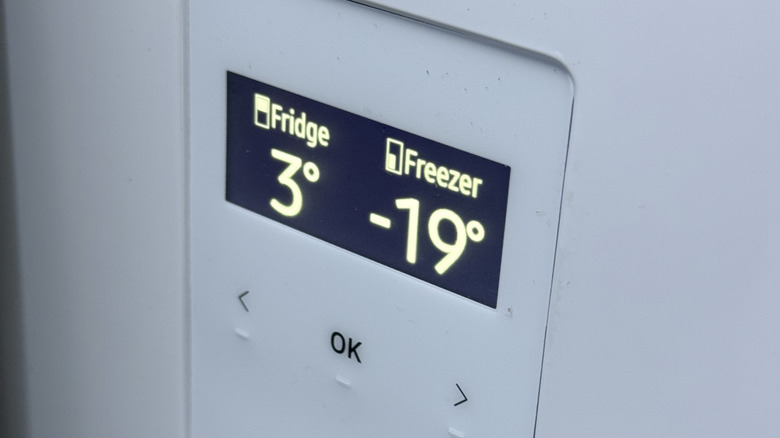
Most of us treat our refrigerator like a "set it and forget it" appliance. We glance at the dial, see it is set to 3 or 4, or perhaps "Optimal," and assume everything is fine. In reality, those dials are often based on "vibes" rather than objective data. They typically control the duration of the cooling cycle or the aperture of the air vent, but they do not account for how much food you have crammed inside, how often the door is opened, or the ambient temperature of your kitchen.
The core issue is that built-in sensors are often located near the cooling vents. When the compressor kicks on, that area gets very cold very quickly, leading the internal thermostat to believe the entire unit has reached its target. However, the perishables sitting on the bottom shelf or in the door bins might still be in the "danger zone." Relying on these dials is a risk that can lead to undetected food spoilage in fridge units, especially as components age.
When a compressor malfunction occurs, it is rarely a sudden, total death. Instead, the cooling capacity begins to drift. You might notice your milk smelling slightly off a day before the expiration date, or your butter feeling a bit too soft. Without a refrigerator thermometer, you lack the baseline to know if your fridge is actually failing or if you just bought a bad batch of groceries. Learning how to tell if refrigerator is failing using a thermometer transforms your kitchen maintenance from guesswork into a data-driven process.
Choosing Your Defense: Analog vs. Digital vs. Smart
As a smart home editor, I am often asked if a basic $5 analog gauge is enough. The answer depends on your level of risk and how much you value convenience. There are three primary tiers of defense when it comes to monitoring your kitchen appliances.
The analog option is the classic stainless steel dial with a hook. These are inexpensive and require no batteries, making them highly reliable for manual checks. However, they can be difficult to read through a fogged-up glass door or deep in a dark shelf. Digital thermometers offer a significant step up, providing large LCD screens and often tracking both the current temperature and the "Min/Max" peaks over a 24-hour period. This is crucial because it tells you if your fridge spiked to 45°F in the middle of the night while you were sleeping.
For the modern connected home, a smart refrigerator temperature sensor is the gold standard. These devices connect to your home Wi-Fi via a Bluetooth gateway and send real-time notifications directly to your smartphone. If the temperature crosses a specific threshold—say, 41°F—you get an alert immediately. This is the best smart refrigerator thermometer for phone alerts because it prevents a small mechanical hiccup from turning into a $400 grocery loss. The ability to view data logging over weeks or months allows you to see if your fridge is struggling during heatwaves or if the door isn't sealing properly.
| Feature | Analog Thermometer | Digital Thermometer | Smart Sensor (IoT) |
|---|---|---|---|
| Precision | Low to Moderate | High | Very High |
| Power Source | None | Battery | Battery (Long Life) |
| Remote Alerts | No | No | Yes (Phone/Tablet) |
| Data History | None | 24-Hour Min/Max | Unlimited Cloud Logging |
| Price Point | $5 - $12 | $15 - $30 | $40 - $100+ |
Digital vs analog refrigerator thermometers for home use often come down to a trade-off between cost and visibility. If you aren't the type of person who remembers to check a manual gauge every morning, the investment in a smart sensor pays for itself the first time it catches a door that was left slightly ajar.
Strategic Placement and Thermal Mapping
Simply throwing a thermometer into the fridge isn't enough. To truly understand your appliance's health, you need to practice thermal mapping. Your refrigerator is not a uniform block of cold; it is a complex environment where ambient air circulation is constantly fighting against the heat of the room and the thermal mass of your groceries.
To get the most accurate picture of your food safety, follow these steps to find your cold and warm spots:
- The Center Point: Start by placing your refrigerator thermometer on the middle shelf, centered from left to right. This provides your "system average" and is where you should look for your primary reading.
- The Door Test: Place a sensor in the middle door bin. This is usually the warmest part of the fridge and is where you should avoid keeping highly perishable items like eggs or milk. If the door bin consistently stays above 40°F, you have a problem.
- The Crisper Check: Move the thermometer to the vegetable drawers. These areas are designed to hold humidity, but they can also become "dead zones" where air doesn't circulate well.
- Identify the Coldest Zone: This is usually right in front of the primary air vent. While great for quick cooling, placing items here can lead to accidental freezing of delicate greens.
Identifying refrigerator cold and warm spots with a thermometer helps you organize your groceries more effectively. For example, use the warmest spots for condiments and the coldest spots for raw meats. Furthermore, testing different areas can help you evaluate gasket integrity. If the temperature near the door frame is significantly higher than the interior, your rubber seals might be leaking cold air, forcing your compressor to work harder than necessary. Knowing exactly where to place a thermometer in the refrigerator for accurate readings ensures that your most sensitive items stay within the FDA storage guidelines.
The Morning Baseline Protocol
If you want to know the "truth" about your refrigerator, you have to check it at the right time. Checking the temperature right after you’ve put away a massive load of room-temperature groceries or after the kids have been holding the door open for five minutes will give you a false reading.
The Morning Baseline Protocol is the most effective way to establish a safe temperature range for refrigerator and freezer storage. After the refrigerator has been closed for 8 or more hours (typically overnight), the internal environment has reached a state of equilibrium. The compressor has had time to cycle normally without external interference.
When you open the door first thing in the morning, check your thermometer immediately. In a healthy unit, the fridge should be between 35°F and 38°F. If you consistently see 40°F or higher during this baseline check, your appliance is either failing or the settings need immediate adjustment. For the freezer, anything above 0°F can lead to freezer burn and a decrease in the quality of frozen goods over time.
Pro Tip: If you are using a smart sensor, use the app to look at the "overnight valley" in your temperature graph. This represents your fridge's most efficient state and is the best indicator of long-term compressor health.
Predictive Maintenance: Recognizing Failure Patterns
A refrigerator thermometer is more than just a safety tool; it is a diagnostic instrument for predictive maintenance. By watching how your temperature fluctuates, you can spot issues before they lead to a total compressor malfunction.
One of the most common causes of cooling drift is dirty condenser coils. When dust and pet hair build up on the coils, the fridge cannot shed heat efficiently. This forces the compressor to run longer and hotter. According to maintenance experts, cleaning a refrigerator's condenser coils every six months can extend the appliance's operational life by 3 to 5 years by preventing the compressor from overheating.
Furthermore, dirty condenser coils can increase a refrigerator's energy usage by up to 35%, often leading to premature mechanical failure. If you notice your thermometer reading slowly climbing over several weeks, or if you hear the compressor running almost constantly, it is time to pull the unit out and vacuum the coils.
Using remote refrigerator temperature monitoring for food spoilage prevention is particularly useful for secondary appliances, like a garage fridge or a basement chest freezer. These units are often subject to extreme ambient temperature changes and are checked less frequently. A smart sensor will tell you the moment your garage fridge can't keep up with a summer heatwave, allowing you to move your perishables before bacteria proliferation becomes a health risk.
FAQ
Why is a refrigerator thermometer important for food safety?
Built-in temperature settings are often inaccurate and do not reflect the actual temperature of the food. A dedicated thermometer ensures you stay below the 40°F threshold mandated by FDA storage guidelines, which is critical for preventing the growth of harmful bacteria that cause foodborne illness.
Where is the best place to put a refrigerator thermometer?
The most reliable location for a general reading is the center of the middle shelf. However, you should periodically move the thermometer to the door bins and the bottom drawers to identify warm spots where air circulation might be restricted.
Are digital or analog refrigerator thermometers better?
Digital thermometers are generally superior because they are easier to read and often include a memory function to track the highest and lowest temperatures over a 24-hour period. Analog thermometers are a good budget-friendly backup but lack the precision and "Min/Max" tracking of digital or smart models.
What temperature should my refrigerator thermometer show?
For optimal food safety and freshness, your refrigerator should stay between 35°F and 38°F (1.6°C to 3.3°C). Your freezer should be set to exactly 0°F (-18°C). Any reading consistently above 40°F in the fridge requires immediate attention to prevent spoilage.
How do you test a refrigerator thermometer?
You can test the accuracy of a thermometer using an ice slurry. Fill a glass with crushed ice and a small amount of water, then submerge the probe or the sensor. After a few minutes, the thermometer should read exactly 32°F (0°C). If it is off by more than a degree, it should be calibrated or replaced.
Save Your Food and Your Fridge
In the world of smart home technology, we often focus on the flashy gadgets—the AI-powered ovens or the touch-screen fridges. But often, the most valuable tool in your kitchen is a simple, $20 refrigerator thermometer. It is the bridge between "hoping" your food is safe and "knowing" your appliance is performing correctly.
By taking control of your kitchen data, you protect your family from foodborne illness and protect your wallet from the high cost of appliance replacement. Whether you choose a basic digital model or a fully integrated smart sensor with real-time notifications, the peace of mind that comes from knowing your perishables are chilled to perfection is worth every penny. Stop relying on the dial and start relying on the data. Your food—and your compressor—will thank you.