Quick Facts
- Peak Window: October 19–22, 2026
- Primary Targets: Comet SWAN (C/2025 R2) and Comet Lemmon (C/2025 A6)
- Meteor Shower: Orionids (20 meteors/hr)
- Best Equipment: 7x50 binoculars or smart telescopes like the Seestar S50
- Visibility Window: Comets visible after sunset; meteors best after moonset in the Northern Hemisphere
To spot Comet SWAN and Comet Lemmon in this October stargazing guide, look toward the southwestern and northwestern horizons shortly after sunset between October 19 and 21, 2026. While Comet SWAN is best positioned in the southwest near the constellation Scorpius, Comet Lemmon reaches its closest point to Earth on October 21 near the northwestern horizon, providing a double-feature for amateur astronomers.
Mid-October Highlight: Spotting Comet SWAN (C/2025 R2)
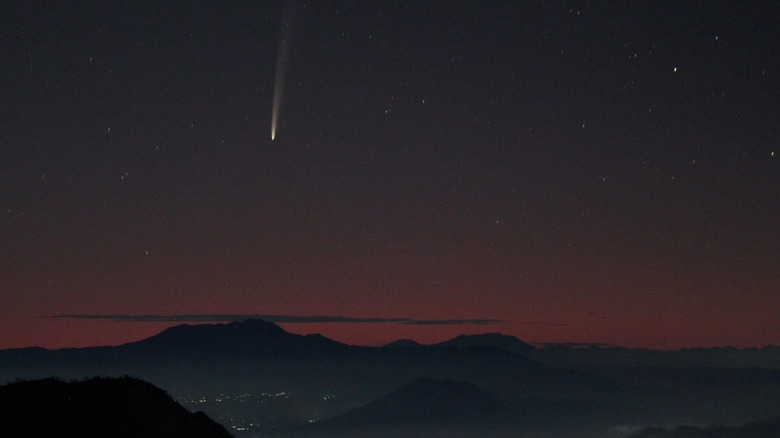
As we move into the heart of the autumn astronomical calendar, the arrival of Comet SWAN (C/2025 R2) is generating significant buzz among the stargazing community. This particular celestial visitor is what we often call dirty snowballs—fragile mixtures of ice, dust, and rock that begin to sublimate and glow as they approach the sun. For those of us looking for Comet SWAN C/2025 R2 viewing tips, timing and horizon clarity are your two best friends.
Comet SWAN made its closest approach to Earth on October 21, passing at a distance of 0.27 AU. This is remarkably close in astronomical terms, allowing for a potentially bright display if the nucleus remains stable. To find the SWAN comet in the southwest sky, you should start your search about an hour after sunset. It will be positioned low in the sky, specifically near the tail of the constellation Scorpius.
If you are wondering how to see comet SWAN C/2025 R2 north of equator, the key is to find a viewing spot with an unobstructed view of the southwestern horizon. Because the comet is so low, even a distant line of trees or a neighbor’s house can block your view. The expected apparent magnitude is around +6.1, which sits right at the edge of naked-eye visibility under perfect conditions. However, for most of us living near any level of light pollution, binoculars will be essential to see the faint, fuzzy coma and the beginning of its tail.
The Orionid Meteor Shower Peak (October 21-22)
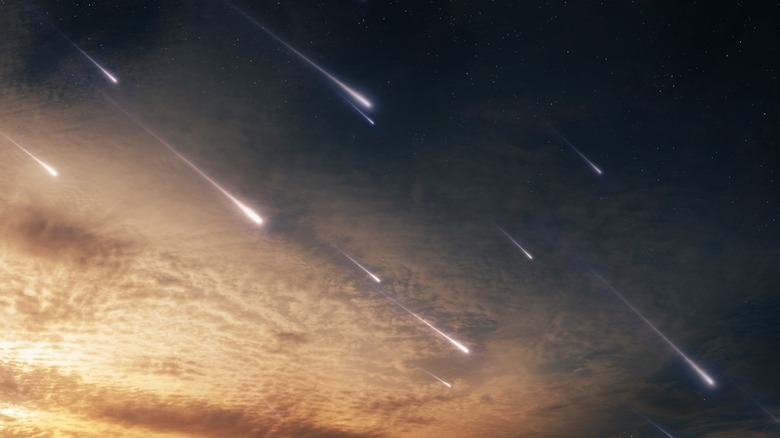
While the comets are the headliners for 2026, we cannot ignore one of the most reliable annual celestial phenomena: the Orionid meteor shower. This shower is particularly special because it is composed of debris left behind by the most famous comet of all, Halley’s Comet. As Earth passes through this stream of space dust, the particles strike our atmosphere at incredible speeds, creating the bright streaks we love to track.
The Orionid meteor shower peak date falls on the night of October 21 and the early morning of October 22. During a typical year, you can expect to see about 20 meteors per hour. However, 2026 presents a slight challenge in the form of a waxing gibbous moon. The moon’s brightness will wash out the fainter meteors during the early evening hours.
For the best experience, viewing the Orionid meteor shower after moonset is the strategy I recommend. On the peak night, the moon will set in the early hours of the morning, leaving a dark window of time before dawn. This is when the sky will be at its darkest, and the radiant point in the constellation Orion will be high in the sky. If you are patient, you might even find yourself spotting comets and meteor showers on the same night, making for a truly memorable session under the stars.
Late October Target: Comet Lemmon (C/2025 A6)
As Comet SWAN begins to fade or move lower, Comet Lemmon (C/2025 A6) steps into the spotlight. This object has a much shorter orbital history in our records compared to its peer, with an estimated inbound orbital period of 1,350 years. To put that in perspective, the last time this comet visited the inner solar system, the Byzantine Empire was in its prime. In contrast, SWAN takes approximately 22,554 years to complete its journey.
When looking for October 2026 comet locations, Lemmon will be found near the northwestern horizon. It reached its closest approach to Earth on October 21 at a distance of 0.60 AU, and observers noted a peak brightness of approximately magnitude 4 around October 27–28. At magnitude 4, this comet is significantly brighter than SWAN and offers a much better chance for naked-eye visibility, provided you are away from the city glow.
To find the best time to spot comet Lemmon C/2025 A6, look toward the northwest after the twilight has faded. You can use the "Big Dipper" in Ursa Major and the bright star Arcturus in Bootes as your navigational landmarks. The comet will be moving through this general region, appearing as a soft, greenish smudge. I highly recommend using sky-charting apps like Stellarium or Star Walk 2 to get the exact coordinates for your specific latitude, as the comet's position relative to the horizon changes nightly.
Gear Guide: Binoculars and Smart Telescopes
Stargazing doesn't always require a massive investment, but the right optics can transform a frustrating night into a brilliant one. For objects like the October comets, many amateur astronomers actually prefer binoculars over traditional telescopes. Binoculars provide a wider field of view, making it much easier to locate a "fuzzy" object like a comet against the vast backdrop of stars.
Using binoculars to see October 2026 comets is most effective with a pair of 7x50 or 10x50 specs. The "50" refers to the diameter of the objective lenses in millimeters; the larger the lens, the more light it gathers, which is crucial for seeing the faint tails of comets. When you first step outside, remember the 20-minute dark adaptation rule. Your eyes need time to adjust to the low light before you can see the subtle details of the comet's coma.
For those who want to take their hobby to the next level, smart telescopes like the ZWO Seestar S50 have changed the game. These devices use live-stacking technology to pull detail out of the darkness that the human eye simply cannot see. By taking multiple short exposures and stacking them in real-time, these telescopes can reveal the vibrant green hue of a comet or the intricate filaments of its gas tail, even in areas with moderate light pollution.
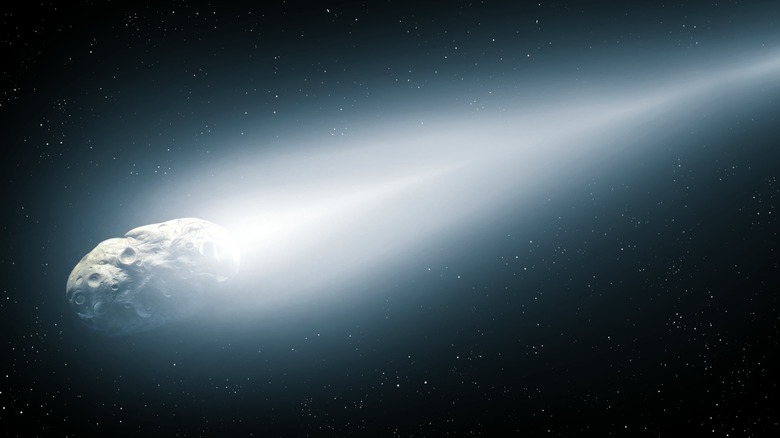
If you are interested in astrophotography, the October 2026 sky offers a great chance to practice wide-field shots. A standard DSLR with a fast lens (f/2.8 or wider) on a tripod can capture both the comet and the surrounding constellations. If you time it right during the Orionid peak, you might even capture a stray meteor and a comet in the same frame—the ultimate "trophy" for any night-sky photographer.
FAQ
When is the next meteor shower in October?
The most significant meteor shower in October is the Orionids, which occurs annually. While there are smaller showers like the Draconids earlier in the month (usually peaking around October 8-9), the Orionids provide a much higher rate of visible meteors and are the main event for the month.
When is the Orionid meteor shower peak?
The Orionid meteor shower peak date for 2026 is the night of October 21 through the morning of October 22. While the shower is active for several weeks, this specific 24-hour window offers the highest frequency of meteors, reaching up to 20 per hour under optimal conditions.
Is October a good month for stargazing?
October is often considered one of the best months for stargazing in the Northern Hemisphere. The air begins to cool and stabilize, leading to "clearer" skies with less atmospheric turbulence. Additionally, the sun sets earlier than in the summer, giving observers more hours of darkness without having to stay up until the extremely late hours required in June or July.
What equipment do I need for stargazing in the fall?
For basic stargazing, you only need your eyes and a dark location. However, for observing comets and the finer details of the Orionids, a pair of 7x50 binoculars is the most recommended tool. It’s also vital to bring warm clothing, a red-light flashlight to preserve your night vision, and a comfortable reclining chair to avoid neck strain while looking up at the radiant in Orion.