I have spent the last decade testing every piece of glass, silicon, and titanium that manufacturers expect us to wear on our faces. As a mobile editor, I have seen the evolution of smart eyewear from the awkward, glowing prisms of Google Glass to the indistinguishable-from-Ray-Bans frames we see today. While the seamless integration of technology into our daily lives is a feat of engineering, it has birthed a new era of ambient surveillance. The concern is no longer just the visible camera on a tripod; it is the person sitting across from you at a cafe, seemingly just wearing a pair of Wayfarers.
Quick Facts
- App Name: Nearby Glasses (Available on Android and GitHub)
- Detection Range: 10–32 feet indoors, and potentially up to 50 feet in open outdoor spaces
- Primary Tech: Scanning for Bluetooth Low Energy (BLE) Advertising Frames
- Key Targets: Meta Ray-Ban (all generations) and Snap Spectacles
- Physical Tell: Glossy millimeter-wide circles located on the outer frame end pieces
- The Risk: Recording indicator LEDs are small and can be easily obscured with tape or stickers
A smart glasses detector like the Nearby Glasses app functions by scanning for Bluetooth Low Energy (BLE) advertising frames. These signals are broadcast by wearable devices such as Meta Ray-Ban and Snap Spectacles to communicate with smartphones. By identifying specific manufacturer IDs within these signals, the app can notify users when recording-capable eyewear is active within range. This provides a much-needed digital layer of defense in environments where visual detection is no longer reliable.
Physical Identification: How to Spot Hidden Cameras in Glasses Frames
In my experience, the hardest part of identifying modern smart eyewear is that the design language has shifted from "tech-forward" to "fashion-first." Gone are the bulky batteries and protruding lenses. To effectively detect hidden smart glasses by sight, you need to know exactly where the hardware is miniaturized.
The most common location for a camera lens in high-end smart glasses is the end piece. This is the outer corner of the frame where the front of the glasses meets the temples (the arms). In models like the Meta Ray-Ban, the lens is often camouflaged behind a glossy circular embellishment. While it looks like a standard rivet or decorative element, a closer look reveals a dark, glassy depth that reflects light differently than the surrounding plastic.
For generic or "spy" branded eyewear, the lens is frequently hidden in the nose bridge. This is a tell-tale sign of lower-end hardware, as high-performance sensors usually require more space than a slim bridge can provide. If you see a tiny, pinhole-sized opening directly between the eyes, there is a high probability of a camera being present.
One of the most significant safety concerns I have highlighted in my reviews is the fallibility of the recording indicator LED. Most reputable brands include a small light that illuminates when the camera is active. However, this is a physical signal that can be easily defeated. A small piece of black electrical tape or even a dab of dark nail polish can render the light invisible while leaving the lens unobstructed. This reality makes spotting hidden cameras in glasses frames via visual inspection alone an uphill battle for the average person.
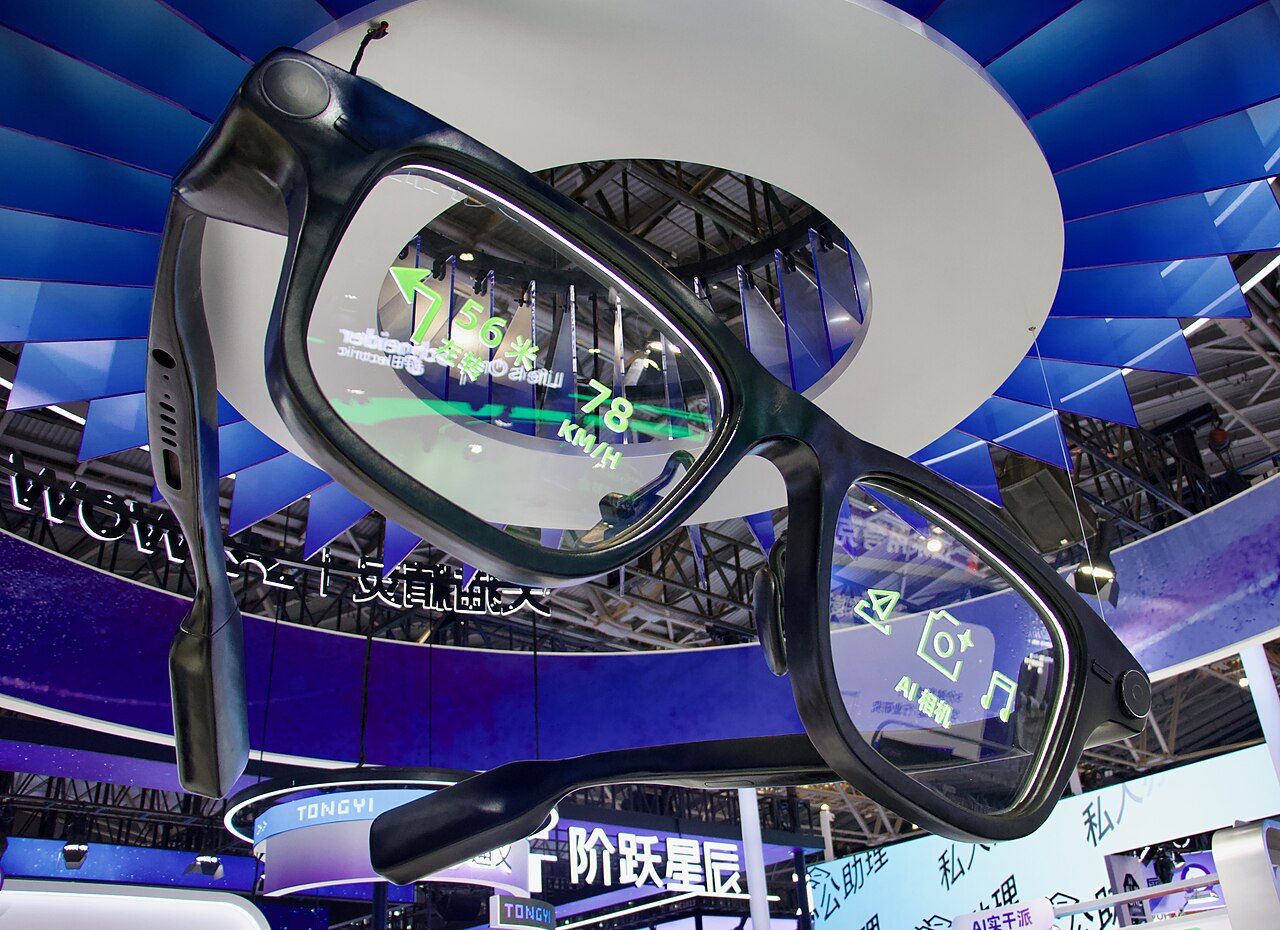
Hardware Cheat Sheet: Lens and Sensor Locations
| Device Model | Primary Lens Location | Secondary Sensor/Light | Physical Profile |
|---|---|---|---|
| Meta Ray-Ban | Outer End Piece (Left/Right) | Opposite End Piece (LED) | Near-identical to Wayfarer |
| Snap Spectacles | Both End Pieces | Internal Temple | Thicker, angular temples |
| Generic Spy Glasses | Center Nose Bridge | Hidden under hinge | Bulky, non-branded frames |
| Xreal / Viture | Not Applicable (Display only) | Proximity sensor in bridge | Dark, thick visor style |
Nearby Glasses: The Android App Features and Setup
When I first heard about the Nearby Glasses app, I saw it as a necessary counter-measure to the "glass-wing" era of tech. Developed by Yves Jeanrenaud, the app is designed to act as a digital sixth sense. It does not look for the camera lens itself, but rather the digital footprint the glasses leave behind.
The core of the Nearby Glasses app features and setup revolves around Bluetooth Low Energy (BLE). Even when they aren't actively streaming video, smart glasses are constantly "advertising" their presence to stay connected to a user's phone. They do this by sending out BLE advertising frames. These frames contain a Manufacturer ID—a unique digital signature assigned to companies like Meta, Snap, or Luxottica.
Setting up the app is straightforward for any Android user. Once installed, you grant it permission to use Bluetooth and Location services (required for BLE scanning). The app then runs in the background, quietly listening for those specific manufacturer signatures. When a pair of compatible glasses enters the 50-foot radius, the app can trigger real-time push notifications to your phone or smartwatch.
This is a powerful tool for those who want to protect privacy from smart glasses in sensitive areas. By using a smart glasses detector for privacy, you move from a state of passive vulnerability to active awareness. It is important to note that the app is an awareness tool, not a jammer. It cannot stop the recording, but it ensures that you are no longer an unwitting participant in someone else's digital archive.
Reality Check: Range, False Positives, and Limitations
While the technology behind a smart glasses detector is impressive, we must look at it through a realistic lens. In my testing of various Bluetooth LE scanning for hidden wearables, I have found that environmental factors play a massive role in performance.
The range of the Nearby Glasses app can vary significantly. In a crowded indoor gym or a cafe with heavy 2.4GHz interference, the reliable detection range might drop to 10 or 15 feet. Conversely, in an open park, you might pick up a signal from up to 50 feet away. The 'Nearby Glasses' app detects secret recordings by focusing on specific signals, but those signals are easily blocked by human bodies or thick walls.
Another factor to consider is signal false positives. Meta, for example, uses similar communication protocols for their Quest VR headsets as they do for their smart glasses. If you are using the app in a space where someone is using a VR headset, the app might alert you to the presence of "Meta hardware," even if there are no glasses in the room.
The most critical limitation of smart glasses detection technology is the "Offline Mode." If a user disables Bluetooth on their glasses and records directly to the internal storage, there is no signal for the app to catch. Because these apps rely on signal scanning, they cannot identify hardware recording in an offline mode. This means that while the app is a fantastic tool for detecting Meta Ray-Ban glasses in public when they are being used as intended, it is not a foolproof shield against a determined bad actor.
Privacy Protocol: What to Do if a Device is Detected
Understanding how to tell if smart glasses are recording is only half the battle. The other half is knowing how to react. If your phone buzzed right now and alerted you to a nearby recording device, what would you do?
First, verify the signal. Do not immediately assume the person nearest to you is a spy. Look for the physical indicators we discussed earlier—the glossy end pieces or unusually thick temples. Smart glasses are becoming common in professional settings, clinics, and during protests. In many cases, the user might not even be aware of the privacy concerns they are creating.
If you find yourself in a sensitive environment, such as a changing room or a private meeting, and a device is detected, the best protocol is to inform management or security. Digital privacy rights are still catching up to the hardware, but most private establishments have policies against recording without consent.
Using a smart glasses detector empowers you to have a conversation. In a social setting, you might simply ask, "Are those the new Ray-Ban Metas? They look great—are you recording right now?" Often, simply acknowledging the technology is enough to make the wearer mindful of their surroundings. As we move deeper into the era of ambient surveillance, maintaining our digital privacy rights requires both high-tech tools and old-fashioned situational awareness.
FAQ
How do you detect smart glasses?
You can detect smart glasses through two primary methods: physical inspection and digital scanning. Physically, look for cameras hidden in the end pieces or the nose bridge of the frames. Digitally, you can use a smart glasses detector app like Nearby Glasses, which scans for the Bluetooth Low Energy signals that these devices broadcast to stay connected to smartphones.
Is there an app to find hidden camera glasses?
Yes, the Nearby Glasses app for Android is specifically designed to identify the digital signatures of popular smart glasses like those from Meta and Snapchat. While it cannot "see" the camera, it identifies the Bluetooth signals that recording-capable eyewear emits, alerting you to their presence nearby.
Do smart glasses detectors actually work?
Smart glasses detectors are effective at identifying devices that have their Bluetooth radios enabled. They work by matching Manufacturer IDs in Bluetooth advertising frames. However, they cannot detect glasses that are in offline mode with Bluetooth turned off, nor can they detect purely analog spy glasses that do not have wireless connectivity.
Can smart glasses record video without a visible light?
While most mainstream smart glasses like Meta Ray-Bans include a recording indicator LED, this light can be easily covered or tampered with. Some off-brand spy glasses may not include a recording light at all. Therefore, you should never rely solely on the absence of a light to assume you are not being recorded.
What is the best way to spot a hidden camera in eyewear?
The best way to spot a hidden camera is to look for glossy, circular lens elements on the outer corners of the frames (the end pieces). These often look like decorative rivets but have a distinct camera lens depth. Additionally, check the nose bridge for small pinhole openings, which is a common location for cameras in generic surveillance eyewear.