Quick Facts
- The Berklee Conflict: Over 425 Berklee College of Music students and alumni signed a petition to cancel the elective course OSONG-100, Bots and Beats: AI and the Future of Songwriting.
- Ethical Friction: Critics argue that AI songwriting tools rely on training data scraping, using existing artists' intellectual property without permission or fair compensation.
- Industry Reality: A 2025 study found that 87% of music makers have already incorporated artificial intelligence into at least one part of their creative or production workflow.
- Economic Anxiety: Research by APRA AMCOS in 2024 revealed that 82% of musicians are concerned that AI integration could prevent them from making a living.
- Institutional Stance: Berklee defends the curriculum as essential career preparation, helping students master professional music applications of AI to remain competitive in a changing market.
- The Tools Involved: The controversy centers on generative platforms like Suno AI, which can create full compositions from simple text prompts.
AI songwriting is not necessarily killing creativity, but it is fundamentally altering the value of artistic integrity. While institutions like Berklee defend these courses as essential career preparation for professional music applications of AI, critics argue that generative tools rely on training data scraping that exploits existing artists' work without fair compensation.
The Berklee Controversy: Institutional Defense vs. Student Revolt
The hallowed halls of Berklee College of Music are currently the site of a profound philosophical schism. At the center of the storm is OSONG-100, a course titled Bots and Beats: AI and the Future of Songwriting. To the administration, this is a forward-thinking higher education curriculum designed to give students a competitive edge. To a significant portion of the student body, it represents what some have called industrial rot—the automation of the very soul of music.
The friction intensified when it was revealed that the course instructor, Ben Camp, serves as an advisor to Suno AI. This company is currently embroiled in high-stakes litigation regarding copyright infringement and how its models were trained. For the 425 students and alumni who signed the petition against the course, this felt less like an academic exploration and more like a conflict of interest. They argue that teaching students to use tools that may have been built on the backs of uncompensated artists undermines the very artistic integrity Berklee is supposed to protect.
Berklee’s defense rests on the idea of industry disruption. They argue that ignoring the existence of algorithmic composition won't make it go away. By teaching AI songwriting in a controlled environment, they believe they are preparing musicians to navigate a world where synthetic media is a daily reality. The goal is to turn a potential threat into a tool for career longevity, even as the ethical debate over intellectual property continues to rage.
Practical Utility: Integrating AI in Creative Music Workflows
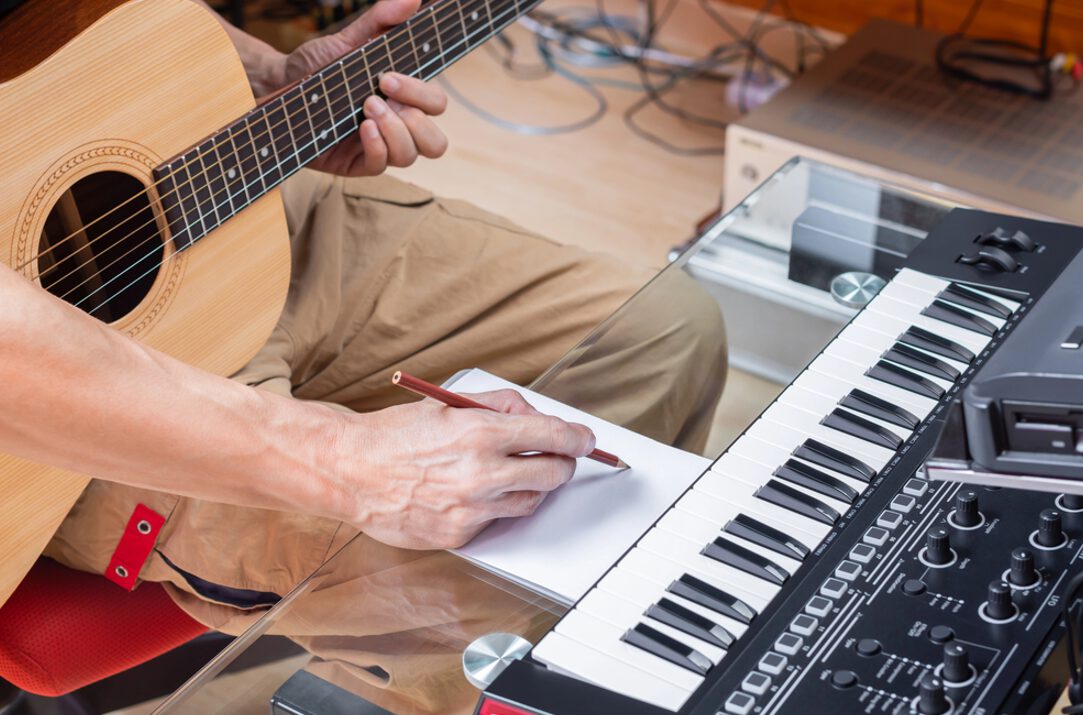
Beyond the ethical headlines, there is the practical reality of how musicians are actually integrating AI in creative music workflows. The OSONG-100 course isn't just about pressing a button and receiving a hit song; it explores specific AI music composition techniques that mirror how modern producers work in 2026. This involves a heavy emphasis on AI prompt engineering techniques for songwriters, where the human provides the creative direction and the machine handles the rapid prototyping.
Professional music applications of AI generally fall into three categories:
- Ideation and Drafting: Using Large Language Models to explore how to use AI for songwriting lyrics and melodies. This isn't about copying the output verbatim, but rather using it as a digital mood board to spark original thought.
- Audio Prototyping: Generating custom audio samples or drum patterns to quickly hear how a chord progression might sound in a specific genre before committing hours to manual programming.
- Vocal Processing: Utilizing AI vocals to create temporary "guide tracks" that help a songwriter pitch a song to a label or a lead artist without needing a full studio session.
By focusing on using AI to generate song ideas and themes, artists can bypass the dreaded creative block. Instead of staring at a blank DAW screen, a producer might use a tool to generate five different rhythmic variations of a baseline, then pick the one that feels most human and refine it manually. This shift toward creative automation is intended to streamline the technical hurdles of production, allowing the artist to focus on the high-level emotional arc of the music.
Professional Tools and Workflows in 2026
The landscape of professional music production has moved toward a co-producer model. We are no longer just talking about simple MIDI generators. Tools like Google’s Lyria 3 and Soundverse DNA have changed the game by offering advanced stem separation and automated mixing capabilities. When evaluating AI music tools for professional songwriting, the focus is now on how well they integrate into existing workflows rather than how well they can replace them.
In my experience testing these systems, the most successful human-AI music collaboration occurs when the AI handles the functional tasks while the human retains control over personal storytelling. There is a clear distinction emerging in the industry between music that serves a utility and music that serves an emotional purpose.
| Feature | Functional Music (AI-Friendly) | Personal Storytelling (Human-Led) |
|---|---|---|
| Primary Goal | Background atmosphere, ads, gaming loops | Emotional connection, shared experience |
| Production Speed | Near-instantaneous | Iterative and time-intensive |
| Creative Input | High-level prompt engineering | Deeply personal experience and technical skill |
| Ownership | Often royalty-free or shared license | Solely owned by the creator/publisher |
| Value Prop | Efficiency and low cost | Uniqueness and cultural relevance |
By integrating AI in professional music production workflows, creators are finding they can spend more time on the nuances of a performance and less time on repetitive tasks like cleaning up audio artifacts or searching for the perfect kick drum sample. The key to best practices for human-AI music collaboration is maintaining the "human in the loop" to ensure the final product doesn't lose its edge or sound too polished and robotic.
The Ethical Minefield: Copyright and Career Longevity
While the technical benefits of AI songwriting are clear, the legal and ethical foundation remains shaky. The core of the anger at Berklee—and across the globe—is the issue of training data scraping. Generative models require massive datasets to learn the patterns of music. When these datasets include copyrighted works used without permission, it creates a massive legal liability for the users and the companies involved.
For a student at Berklee paying significant tuition to learn a craft, the idea that their future career could be undercut by a machine trained on their own idols' work is terrifying. This isn't just about "robots taking jobs"; it's about the devaluation of the human effort required to create something from nothing. The 82% of musicians who fear for their livelihood aren't Luddites; they are professionals watching the commercial value of music-making plummet as supply becomes infinite.
We are seeing a shift where career longevity may depend on an artist’s ability to prove their "humanity." This might involve more focus on live performances, unique vocal timbres that AI can't perfectly replicate, and the cultivation of a brand that stands for more than just the notes on a page. The battle over AI songwriting at Berklee is just the first movement in a much larger symphony of legal and cultural change.
FAQ
How does AI songwriting work?
AI songwriting works by using large datasets of existing music to train neural networks. These models analyze patterns in melody, harmony, rhythm, and lyrics. When a user provides a prompt, the AI predicts the most likely sequence of notes or words that match that request, effectively synthesizing a new piece of music based on the statistical probabilities of its training data.
Who owns the copyright to AI-generated music?
Currently, the legal status of AI-generated music is in flux. In many jurisdictions, including the United States, works created entirely by a machine without significant human creative input cannot be copyrighted. However, if a human uses AI as a tool (similar to a synthesizer or a DAW) and exercises significant creative control, they may be able to claim copyright over the final arrangement.
Is AI-generated music royalty-free?
It depends on the platform's terms of service. Some AI songwriting tools grant users full commercial rights and royalty-free status if they have a paid subscription. However, if the underlying model was trained on copyrighted material without permission, there is a risk of future legal challenges or "takedowns" if the output too closely resembles an existing work.
How can I use AI to help write a song?
You can use AI as a creative partner in several ways. Some musicians use AI songwriting tools for overcoming creative blocks by generating lyric ideas or chord progressions. Others use AI for technical tasks, such as generating MIDI patterns that they then tweak by hand, or using AI-driven mixing tools to polish their tracks.
Will AI replace human songwriters?
While AI is becoming proficient at creating functional or background music, it struggles to replicate the deep emotional nuance and cultural context of human storytelling. AI is likely to replace certain commercial music roles, such as creating stock music for advertisements, but it is more likely to become a standard tool for human songwriters rather than a complete replacement for them.