Our Top Picks
- Freedom: Best for total digital detox via cross-device distraction blocking.
- Forest: Best for visual thinkers using gamified focus sessions to build habits.
- Focusmate: Best for remote workers and students needing live virtual accountability.
- Todoist: Best for task clarity to overcome executive function hurdles and structure deep work.
The best procrastination apps for 2026 include Freedom for cross-device distraction blocking, Forest for gamified focus sessions, Focusmate for live virtual accountability, and Todoist for structured task management. These tools help users overcome self-regulation challenges by physically blocking digital interruptions, providing visual rewards for focus, or utilizing social pressure through body doubling techniques.
Procrastination is often a failure of self-regulation rather than a lack of time management skills. In 2026, the best procrastination apps help you regain control of your attention economy. Whether you need a cross-device blocker or live virtual body doubling, these tools are designed to bridge the gap between intention and action. We are living in a time where digital noise is at an all-time high. In fact, AI-powered productivity tools experienced a massive surge in adoption leading into 2026, with the top five AI-centric apps generating over 1.4 billion downloads in a single year.
To help you navigate this crowded market, I have curated the four most effective tools to help you stop delaying and start doing.
Freedom: The Gold Standard for Digital Boundaries
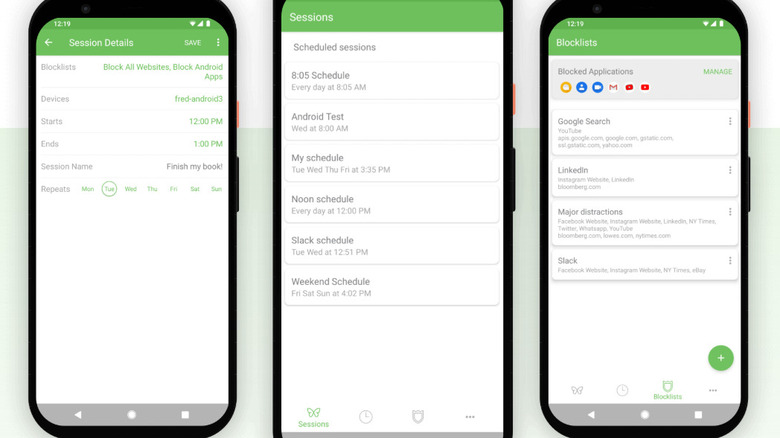
When your willpower fails, environmental control must take over. Freedom is widely considered the most powerful tool for creating a distraction-free digital environment. Unlike simple browser extensions, Freedom works at the network level to block apps and websites across your Mac, Windows, iOS, Android, and Chrome devices simultaneously.
The standout feature for chronic procrastinators is Locked Mode. Once a session begins, you cannot disable the block, preventing that impulsive "just one second" check of social media. This addresses the modern attention economy by removing the option to stray from your primary task. As of early 2026, Freedom Premium is verified at a highly accessible $3.33/mo when billed annually, making it a professional-grade investment for deep work.
Best for: Individuals who struggle with impulsive phone checking or multi-device hopping.
- Multi-Device Sync: One block starts a digital detox across all your screens.
- Locked Mode: Prevents you from ending a focus session early.
- Recurring Schedules: Automatically block distractions during your peak focus hours.
Where it falls short: The setup process can be slightly technical on mobile devices due to the permissions required for system-wide blocking.
Forest: Leveraging Behavioral Economics to Stay Focused
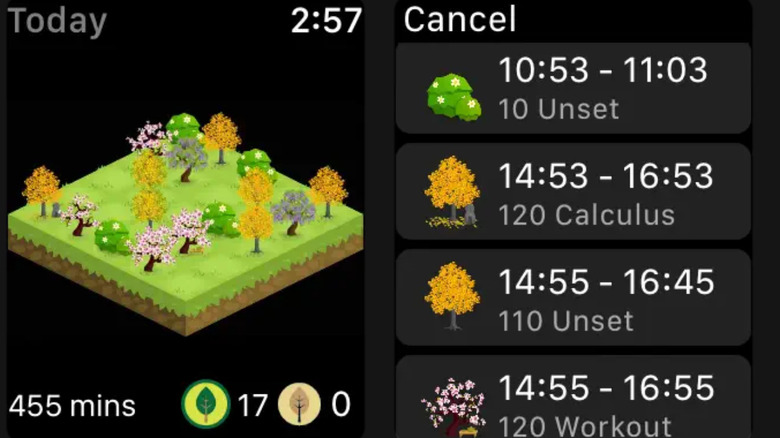
If traditional blockers feel too restrictive, gamified focus apps like Forest offer a more psychological approach. Forest uses behavioral economics to improve concentration by turning focus into a game of growth. When you want to work, you plant a virtual seed. Over the next 30 to 120 minutes, that seed grows into a lush digital tree.
However, there is a catch rooted in loss aversion: if you leave the app to check a message or browse a site, your tree withers and dies. This creates an emotional and visual feedback loop that rewards staying on task. Over time, you build a digital forest that represents your hard work. Forest also bridges the gap to the physical world by partnering with Trees for the Future to plant real trees using coins earned by users in the app.
Best for: Students and creative professionals who respond well to visual rewards and habit formation.
- Loss Aversion Mechanics: The psychological "cost" of killing a tree keeps you off your phone.
- White-listing: Allows essential work apps while blocking everything else.
- Ambient Noise: Built-in productivity timers with ambient noise for deep work like rain or forest sounds.
Where it falls short: It is primarily mobile-focused, meaning it may not stop you from procrastinating on your laptop unless you use the companion browser extension.
Focusmate: The Power of Virtual Body Doubling
Accountability apps for productivity have shifted from simple checklists to human-centric experiences. Focusmate leverages a psychological phenomenon known as body doubling. By pairing you with a live partner for a 25, 50, or 75-minute video session, it creates a sense of mutual presence that significantly reduces the tendency to delay work.
When you join a session, you briefly state your goals to your partner, work in silence, and then check in at the end. This social pressure is remarkably effective for self-regulation. According to user data, Focusmate users report a 161% increase in productivity. It is a game-changer for accountability apps for work from home productivity, providing the structure of a shared office without the commute.
Best for: Freelancers, remote workers, and anyone struggling with the isolation of working from home.
- Virtual Coworking: Live accountability apps for virtual body doubling provide instant social motivation.
- Flexible Timing: Book sessions on-demand or schedule them days in advance.
- Global Community: Find partners in any time zone at any hour of the day.
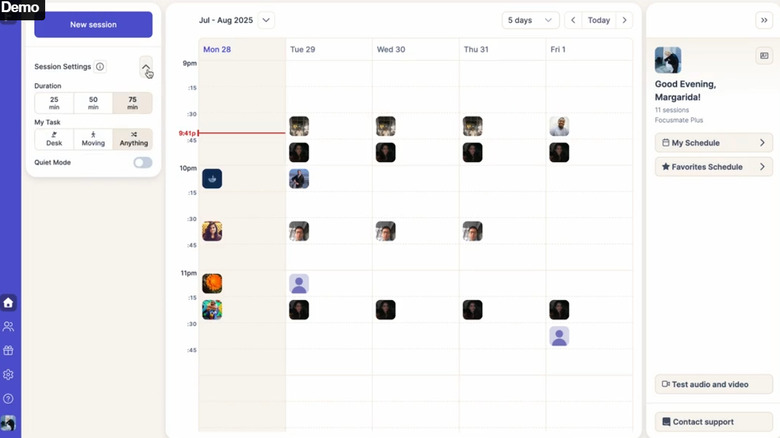
Where it falls short: It requires a webcam and a stable internet connection, which might not be ideal for those who prefer working in total privacy.
Todoist: Breaking the 'Akrasia Horizon'
Sometimes we procrastinate not because we are distracted, but because we are overwhelmed. This is where productivity tools to break down large tasks become essential. Todoist helps you overcome the "Akrasia Horizon"—the point where a task feels so large or distant that your brain refuses to start it.
By using Todoist to break complex projects into small, actionable steps, you reduce the executive function strain required to begin. It serves as an external brain, ensuring that your cognitive load is spent on the work itself rather than trying to remember what to do next. Its clean interface and natural language processing make it one of the most efficient procrastination apps for maintaining flow state throughout the day.
Best for: Project managers and individuals with heavy workloads who need high-level task prioritization.
- Sub-tasks and Sections: Essential for breaking down "daunting" projects into 10-minute wins.
- Priority Levels: Use color-coded flags to distinguish between "must-do" and "nice-to-do."
- Karma Tracking: Provides a visual sense of progress to keep motivation high.
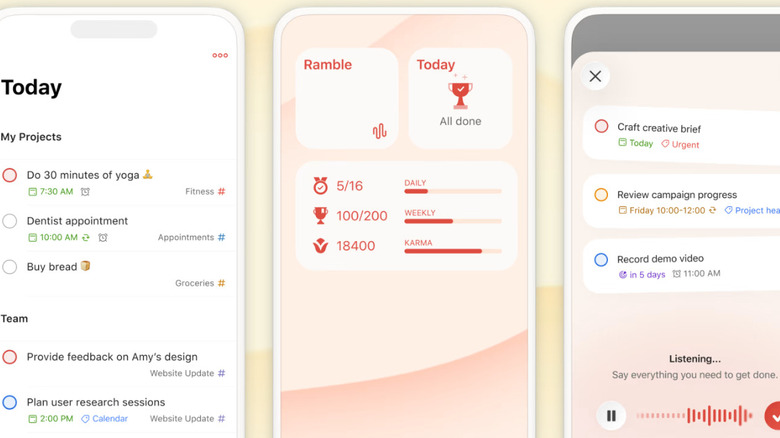
Where it falls short: Without self-discipline, it is easy to engage in "productive procrastination" by spending too much time organizing tasks instead of doing them.
FAQ
What are the best apps to help with procrastination?
The most effective choices for 2026 are Freedom for blocking distractions, Forest for gamified focus, Focusmate for human accountability, and Todoist for task organization. The right choice depends on whether your main hurdle is digital distraction or a lack of structure.
Do procrastination apps actually improve productivity?
Yes, when used correctly. Tools like Focusmate have shown a 161% increase in reported productivity by utilizing social pressure, while blockers like Freedom remove the cognitive load of resisting social media, allowing for deeper focus.
Are there apps that use gamification to stop procrastination?
Forest is the leading example of gamified focus apps. It uses the visual growth of a digital tree to reward focus sessions, leveraging the psychological principle of loss aversion to keep users away from distracting apps.
How do website blockers help with staying focused?
Website blockers like Freedom physically remove the temptation to stray. By using screen time blockers for proactive focus management, you preserve your limited supply of willpower for your actual work rather than wasting it on resisting the urge to check notifications.
Can apps help with chronic procrastination?
While apps are not a cure for underlying issues, they provide the necessary scaffolding for better self-regulation. Apps to stop procrastinating on homework and studies provide external structure that helps bridge the gap between intending to work and actually starting.