Our Top Picks
The Vantrue Pilot 2 is a premium, all-in-one safety solution that redefines the category. It offers top performance with its integrated 256x192 thermal sensor, making it the most advanced option for low-visibility driving. It is the best for pros who require 4-channel recording with Sony STARVIS 2 sensors for total coverage. Additionally, it serves as the best smart feature hub with its seamless wireless CarPlay and Android Auto integration.
The Vantrue Pilot 2 is the industry's first 4-channel thermal dash cam system, offering a dedicated external thermal sensor that detects heat signatures up to 200 feet away. This allows drivers to identify hazards through thick fog and complete darkness that typically obscure traditional optical lenses.
As an editor who spends the majority of my time analyzing the technical nuances of high-end lenses and imaging sensors, I have seen every iteration of night vision dash cam technology. Traditionally, these systems have relied on infrared LEDs or high-sensitivity CMOS sensors to "see" in the dark. While effective for recording evidence after an accident, they have always lacked one critical component: the ability to proactively prevent a collision before it happens.
The Vantrue Pilot 2 changes that narrative entirely. By moving beyond visible light and into the long-wave infrared spectrum, this device acts less like a camera and more like a tactical sensor. It is designed to fill the safety gap left by standard headlights and human vision, providing a level of road safety innovation that was previously exclusive to high-end military tech or luxury flagship sedans.
Reason 1: Unrivaled Night Vision Through Thermal Imaging
Standard automotive safety relies on the visible light spectrum. Even the most advanced LED headlights have a functional limit, usually reaching about 100 to 150 feet before the light begins to scatter and fade. When you add adverse weather conditions like heavy rain, thick fog, or woodsmoke into the mix, that range drops significantly. This is where the thermal dash cam technology of the Pilot 2 provides a massive advantage.
Instead of looking for light reflections, the Vantrue Pilot 2 utilizes a dedicated external thermal sensor mounted to the vehicle's grille. This sensor detects heat signatures, or the infrared radiation emitted by objects. Because heat passes through atmospheric obstructions that block visible light, this system is capable of detecting heat signatures from pedestrians and wildlife up to 200 feet away in total darkness or heavy fog.
The external module is built with an IP67 rating, ensuring that the grille-mounted hardware remains functional even in the harshest environments. For drivers in rural areas, this is often the difference between a near-miss and a catastrophic collision. Whether it is a deer standing on the shoulder or a jogger in dark clothing, the thermal sensor highlights these obstacles in high contrast against the cold background of the road.
| Feature | Standard Dash Cam | Vantrue Pilot 2 Thermal |
|---|---|---|
| Detection Basis | Reflected Visible Light | Emitted Heat Signatures |
| Visibility in Fog | Limited to 20-30 feet | Up to 200 feet |
| Wildlife Detection | Requires Headlight Contact | Detects Body Heat at Distance |
| Dynamic Range | Struggling in Shadows | Exceptional Thermal Contrast |
| Sensor Placement | Interior Windshield | Exterior IP67 Grille Mount |
This "Predator-style" heat mapping provides a layer of safety that standard optics simply cannot match. It essentially extends your vision beyond the reach of your high beams, giving you the best thermal dash cam for driving in fog currently available on the consumer market.
Reason 2: Comprehensive 4-Channel Professional Monitoring
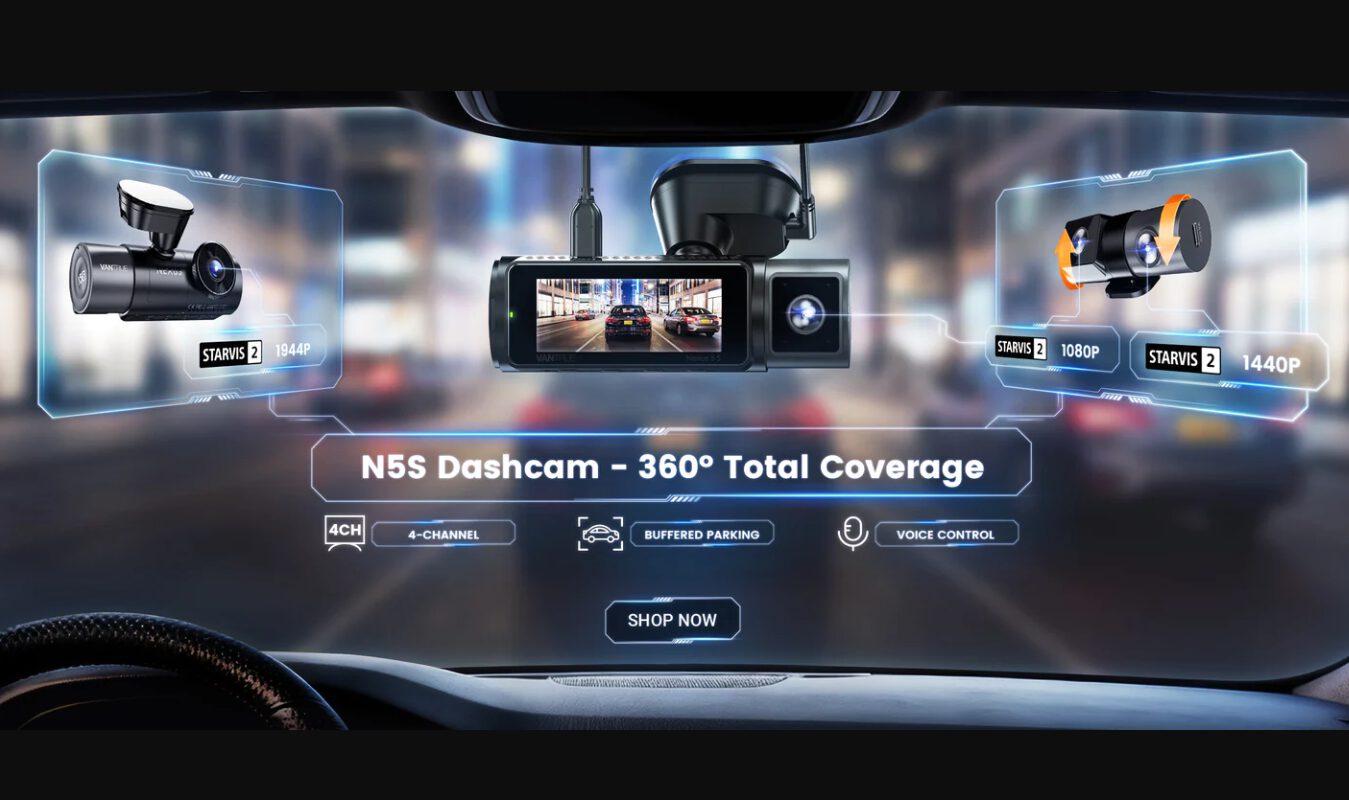
While the thermal capabilities are the headline feature, the Vantrue Pilot 2 is also a powerhouse for evidence collection. It is the first system to combine thermal imaging with a synchronized 4-channel recording setup. This provides a 360-degree digital shield around and inside the vehicle, which is essential for fleet safety and professional drivers.
The imaging pipeline is built around Sony STARVIS 2 sensors, which are the gold standard in the photography world for high-dynamic-range video. The front and rear channels record in 1440p resolution, while the cabin interior and the thermal feed capture at 1080p. This multi-channel recording ensures that every angle is covered, from the license plate of a tailgater to the behavior of passengers inside the vehicle.
- Front Camera: 1440p Sony STARVIS 2 for crisp daylight and low-light street footage.
- Rear Camera: 1440p coverage to monitor rear-end impacts or road rage incidents.
- Cabin Camera: 1080p with IR night vision to protect gig workers and professional drivers.
- Thermal Channel: Dedicated 1080p feed from the external sensor for active hazard monitoring.
For those using this for professional work, the Vantrue Pilot 2 supports microSD cards of up to 1TB, allowing for hundreds of hours of high-resolution footage before the system needs to loop. This makes it a top-tier thermal imaging dash cam for professional drivers who need reliable, long-term data storage for insurance and liability purposes.
Reason 3: Proactive AI Alerts for Hazard Detection
In the imaging world, we distinguish between "passive" and "active" systems. A passive system just records what it sees; an active system interprets it. The Pilot 2 falls firmly into the latter category by functioning as a part of a vehicle’s Advanced Driver Assistance Systems.
Using sophisticated object recognition, the system processes the thermal data in real-time. When the ai animal detection for cars identifies a heat signature that matches the profile of a deer, dog, or pedestrian, it doesn't just record it—it warns you. The AI provides real-time visual alerts on the dashboard display, highlighting the threat before it even enters the throw of your vehicle's headlights.
This is where the math of safety becomes clear. At 60 mph, a vehicle travels about 88 feet per second. By detecting a hazard at 200 feet instead of 80 feet, the thermal sensor driving assistance gives the driver more than two seconds of extra reaction time. In the context of collision avoidance, two seconds is an eternity. It is the difference between a controlled braking maneuver and a high-speed impact.
The ai thermal sensor for night pedestrian detection is particularly impressive in urban environments. It can spot a person stepping out from between parked cars or a cyclist hidden in the glare of oncoming traffic. By focusing on heat signatures, the AI bypasses the "blinding" effect that bright headlights often have on standard CMOS sensors, ensuring that the obstacle detection remains reliable regardless of light pollution.
Reason 4: A Modern Cockpit Upgrade for Older Vehicles
One of the most compelling aspects of the Vantrue Pilot 2 is its ability to act as a vehicle retrofitting kit. Many safety features, like high-resolution cameras and thermal vision, are usually reserved for high-end luxury vehicles. This device allows owners of older cars to perform a comprehensive digital cockpit upgrade without needing a new vehicle.
The centerpiece of the interior unit is a 6.25-inch IPS touchscreen display. This isn't just a monitor for your cameras; it's a full-featured infotainment hub. It supports wireless Apple CarPlay and Android Auto, allowing you to bring modern navigation, music, and communication apps to an older dashboard.
- Wireless Connectivity: Built-in Wi-Fi 6 for ultra-fast video downloads to your smartphone.
- Smart Integration: Voice commands and hands-free control for safer operation while driving.
- User Interface: The IPS panel offers wide viewing angles and high brightness, ensuring the thermal feed and AI alerts are visible even in direct sunlight.
By integrating these features, the Vantrue Pilot 2 serves as a thermal camera safety upgrade for older vehicles that previously lacked any form of smart connectivity. It transforms a basic dashboard into a high-tech command center, combining modern entertainment with cutting-edge safety sensors.
FAQ
What is a thermal dash cam?
A thermal dash cam is a vehicle security system that uses a microbolometer sensor to detect infrared radiation (heat) rather than visible light. Unlike a standard camera that needs streetlights or headlights to see an object, a thermal camera creates an image based on the temperature difference between an object and its surroundings.
How does a thermal dash cam work?
The device uses a specialized lens made of materials like germanium to focus infrared energy onto a thermal sensor. This sensor, often made of Vanadium Oxide, translates the heat energy into an electronic signal, which is then processed into a visual image where hotter objects (like living beings or running engines) appear brighter than the cold environment.
Can thermal dash cams see through fog and rain?
Yes, this is one of the primary benefits of thermal dash cam technology. Because infrared radiation has a longer wavelength than visible light, it can pass through atmospheric particles like fog, haze, smoke, and light rain that would normally scatter visible light and blind a standard camera or the human eye.
Are thermal dash cams better than standard night vision?
They serve different purposes. Standard night vision (using IR LEDs or high ISO) is better for identifying fine details like license plate numbers at close range. However, thermal imaging is far superior for long-range detection and hazard awareness because it does not rely on any external light source and can see through visual obstructions.
Can a thermal camera detect pedestrians at night?
Absolutely. Pedestrians emit a significant amount of body heat, which creates a high-contrast signature against the cooler road surface. The Vantrue Pilot 2 uses AI to specifically look for these signatures, providing visual alerts to the driver long before the pedestrian is illuminated by the car's headlights.
What are the best uses for thermal dash cams in vehicles?
The best uses for thermal dash cams in vehicles include driving in rural areas with high wildlife activity, navigating through heavy fog or smoke, and providing an extra layer of safety for professional drivers who operate frequently at night. It is also an excellent tool for fleet managers looking to reduce collision rates.
Conclusion
The Vantrue Pilot 2 represents a significant leap forward in the evolution of automotive imaging. By combining the evidentiary power of a 4-channel Sony STARVIS 2 system with the proactive safety of a thermal sensor, it offers a level of protection that is currently unmatched in the consumer space.
For rural commuters who worry about wildlife, or professional drivers who need the ultimate digital eyewitness, this system is more than just an accessory—it is a vital safety upgrade. It effectively turns the darkness and the weather from a hazard into a manageable environment, proving that the best way to stay safe on the road is to see what others cannot.