Quick Facts
- Verdict: Wait for the 2026 refresh
- Key Hardware: S10 Silicon with Apple Intelligence
- Rumored Price: $99 - $114
- Release Window: May-June 2026
- New Colors: Deep Crimson and Sage Green
- Current Age: 2,000+ days since original launch
- Connectivity: Wi-Fi 6E and U2 Ultra Wideband
Planning to buy an Apple HomePod Mini this week? You might want to hold off. As of May 2026, the current model has gone over 2,000 days without an update. With a Brain Transplant coming in the form of the S10 chip, this HomePod Mini guide explains why waiting is the smartest move for your smart home.
Buying a first-generation HomePod Mini in mid-2026 is generally discouraged due to imminent update rumors. Reports suggest a second-generation version is arriving soon, featuring the S10 chip and enhanced Apple Intelligence support. Waiting ensures access to modern hardware like the U2 Ultra Wideband chip for more precise Handoff 2.0 functionality.
The 2,000-Day Gap: Why the Current Model is a Risk
In the world of personal audio and music technology, five years is an eternity. When the original Apple HomePod Mini first hit shelves in October 2020, it was a marvel of computational audio. However, as of early 2026, the device has officially logged more than 2,000 days without a significant hardware update. For a tech product that serves as a central hub for smart home automation, relying on the aging S5 chip is becoming a liability.
The S5 System-in-Package (SiP) was originally designed for the Apple Watch Series 5. While it handles basic music playback and Siri requests reasonably well, it lacks the neural overhead required for the next generation of smart home interactions. We are currently seeing a massive shift in how devices process language and intent. The current HomePod Mini sale cycles often see the device discounted to around $79, but even at that price, you are buying into a platform that is reaching its architectural ceiling.
The smart home landscape has evolved significantly since 2020. Industry reports from early 2026 indicate that the Apple HomeKit ecosystem now supports more than 160 million connected smart home devices worldwide. Managing a network of that size requires modern networking protocols and faster on-device processing. The aging internals of the first-generation model struggle with the complex logic needed for modern multi-device environments, making it a risky investment for anyone looking for long-term product lifecycle management.
HomePod Mini 2: The 'Brain Transplant' and Apple Intelligence
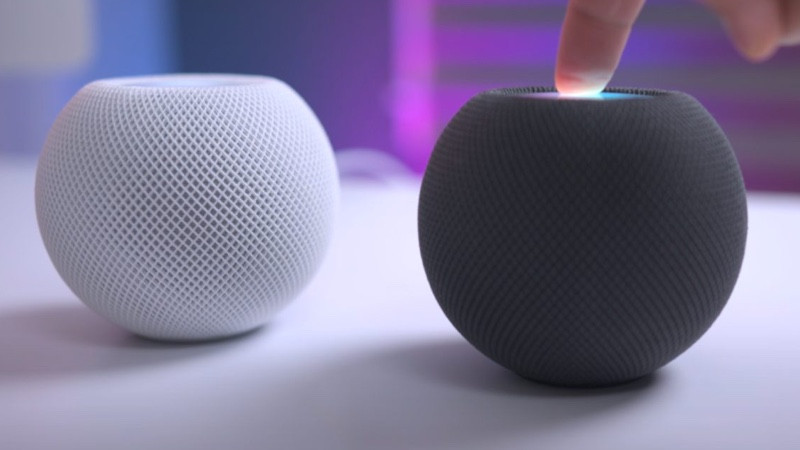
The most compelling reason to hold your wallet is the rumored second-generation model, currently circulating in supply chain leaks under the codename B525. The headline feature is a literal brain transplant: the transition from the S5 to the S10 Silicon. This isn't just a minor speed boost; it is a foundational shift that enables Apple Intelligence support within the sphere of the smart home.
Unlike the current model, which offloads much of its heavy lifting to the cloud, the S10 chip is designed for robust on-device processing. This means that Siri will finally be able to handle complex, multi-step requests without the lag associated with sending data to a remote server. Furthermore, the integration of Private Cloud Compute ensures that even when the device needs to access more powerful models, your data remains cryptographically secure.
Apple HomePod Mini 2 release date and price rumors suggest a launch in the late spring or early summer of 2026. Despite the massive internal upgrades, recent supply chain leaks suggest that the new model will maintain a starting price of $99. For the same price you would pay today for a five-year-old device, you could soon own a speaker capable of vastly improved voice assistant accuracy and native AI integration.
Sound Radar and Connectivity: What's New in 2026
Audio quality is the heartbeat of any HomePod Mini guide, and the 2026 refresh is expected to bring more than just smarter chips. Rumors point to a new feature called Sound Radar technology. This system uses the internal microphones and the S10 chip to perform real-time spatial awareness scans of your room. By mapping out walls and furniture, the speaker can adjust its beamforming drivers to optimize sound for your specific environment. It is essentially a miniaturized version of the room-sensing tech found in the larger HomePod, but refined for a smaller footprint.
In terms of connectivity, the move to the U2 Ultra-Wideband technology is a game-changer. This chip allows for much more precise Handoff 2.0 functionality. Instead of needing to tap your phone against the top of the speaker, the U2 chip can sense your proximity from across the room, allowing for a seamless transition of music or podcasts as you walk through the door.
Furthermore, the addition of Wi-Fi 6E and the latest Thread networking protocol will reduce smart home latency to sub-200ms levels. This means when you ask the speaker to turn on the lights, the response will feel instantaneous rather than delayed. Aesthetic enthusiasts also have something to look forward to: the HomePod Mini 2 new colors deep crimson and sage green are expected to join the lineup, offering a fresh look that moves away from the safe, muted tones of the original release.
| Feature | HomePod Mini (Current) | HomePod Mini 2 (Rumored 2026) |
|---|---|---|
| Processor | S5 SiP | S10 Silicon |
| AI Support | Basic Siri | Full Apple Intelligence |
| Ultra-Wideband | U1 Chip | U2 Chip |
| Wireless | Wi-Fi 4 | Wi-Fi 6E |
| Special Audio | Computational Audio | Sound Radar Spatial Mapping |
| Starting Price | $99 | $99 |
The Exception: When You Should Buy Today
While my primary HomePod Mini buyer recommendations usually lean toward waiting, there are specific scenarios where buying the current model makes sense. If you are currently building out an Apple TV 4K home theater setup and desperately need a pair of speakers for stereo pairing, waiting three months might not be feasible. The current Mini still sounds excellent for its size and supports multi-room synchronization perfectly well.
Another factor is the existing ecosystem. If you already have four or five Minis in your house and simply need one more to fill a guest room or a bathroom, the lack of Apple Intelligence might not be a dealbreaker. Current models will continue to function as basic Thread border routers for years to come. However, if this is your first foray into the ecosystem or you want the best possible music technology, the argument for patience is overwhelming. Is the current Apple HomePod Mini still worth it? Only if you find a refurbished unit for under $60. At the full $99 retail price, it is impossible to recommend with the successor looming so close.
As we look toward the potential May or June 2026 launch window, the smart move is to keep your credit card in your pocket. The technological leap from the S5 to the S10 is one of the largest generational gaps in Apple’s history. You don't want to be the person who bought the "old" tech just weeks before the most significant smart home upgrade of the decade.
FAQ
What is the difference between the HomePod and the HomePod mini?
The full-sized HomePod is a high-fidelity audio powerhouse with a high-excursion woofer and seven tweeters, designed primarily for room-filling music. The HomePod mini is a smaller, more affordable alternative that uses a single full-range driver and passive radiators. While the larger model offers superior bass and volume, the mini is better suited for smaller rooms, voice assistant tasks, and serving as a smart home hub at a fraction of the cost.
Can I use two HomePod minis as stereo speakers?
Yes, you can pair two HomePod minis to create a stereo pair. This significantly widens the soundstage and provides a much more immersive listening experience for music and movies. However, keep in mind that you can only create a stereo pair using two of the same model (e.g., two Minis or two full-sized HomePods); you cannot pair a Mini with a full-sized HomePod for stereo output.
What can you do with a HomePod mini?
The HomePod mini serves three main purposes: music playback, smart home control, and personal assistance. You can stream Apple Music or use AirPlay from other devices, control HomeKit-enabled lights and thermostats via Siri, and use the Intercom feature to send voice messages to other Apple devices in your household. It also acts as a hub for remote access to your smart home devices when you are away from home.