Choosing between Echo Pop and Echo Dot can be tricky. While both are the best budget Alexa speakers, they serve different needs. We compare sound, sensors, and the new Alexa+ features to help you decide which one fits your home. As we look ahead to the smart home landscape of 2026, the choice between these two entry-level devices comes down to whether you need a simple voice interface or a more capable automation hub.
Quick Facts
- Price Difference: Typically a $10 gap, with the Echo Pop retailing at $39.99 and the 5th Gen Echo Dot at $49.99.
- Audio Profile: The Pop uses a front-firing directional design, while the Dot offers a 360-degree spherical soundstage.
- Automation: The Echo Dot includes a temperature sensor and ultrasound motion detection; the Pop lacks these sensors.
- Hardware: The Echo Pop features a 1.95-inch driver, whereas the Echo Dot utilizes a 1.73-inch driver.
- Network: Both devices provide up to 1,000 square feet of additional Wi-Fi coverage via eero Built-in.
- Best for Small Rooms: The compact Echo Pop is the clear winner for tight spaces like a bedside nightstand or office desk.
- Best for Smart Homes: The Echo Dot is the superior choice for those building complex home automation routines.
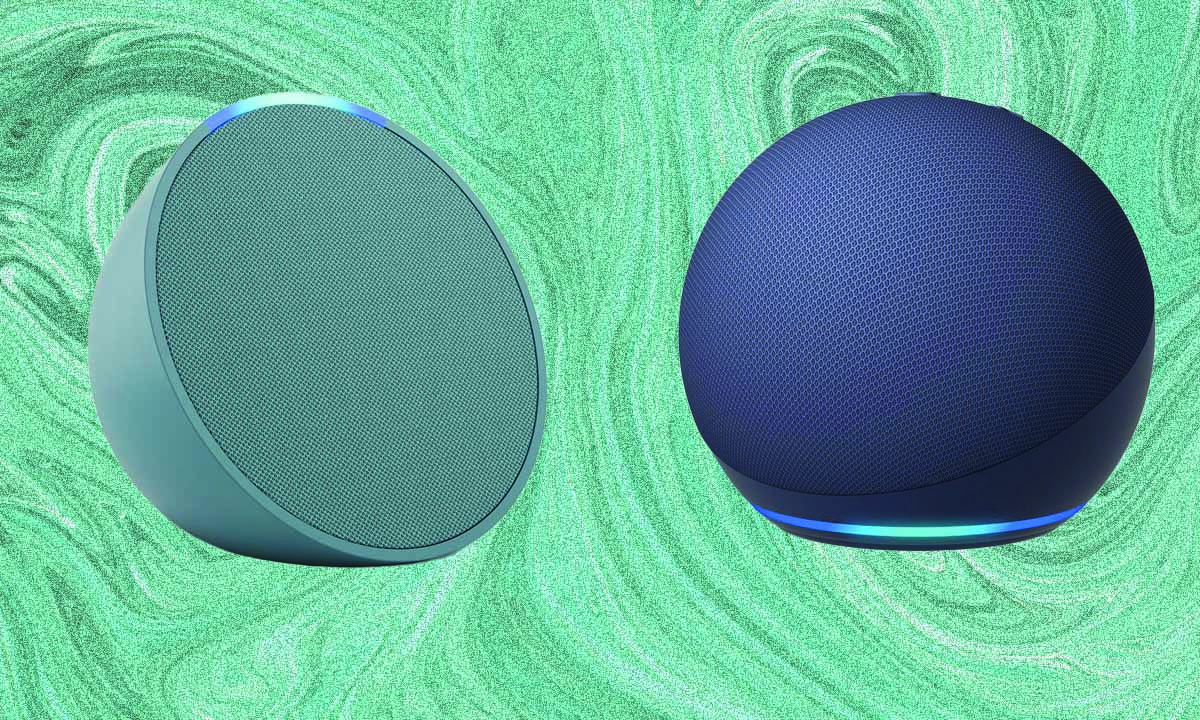
The primary difference between the Echo Pop and Echo Dot lies in their design and integrated smart features. The Echo Dot is a spherical speaker equipped with a temperature sensor, ultrasound motion detection, and tap controls for ease of use. In contrast, the Echo Pop features a semi-sphere 'sliced' design intended for compact spaces like nightstands and lacks the advanced automation sensors found in the Dot.
Design: Semi-Sphere vs. Full Sphere
When you first look at these two devices, the visual contrast is immediate. The Echo Dot 5th Gen continues the classic spherical form factor that Amazon perfected a few years ago. It is a soft, fabric-covered ball that feels substantial and premium for its price point. Its design is intended for central placement in a room, where it can be seen and heard from all angles.
The Echo Pop, however, introduces a completely different aesthetic. It looks like an Echo Dot that has been sliced in half at an angle. This semi-sphere design creates a flat, front-facing speaker surface that is intentionally directional. This makes the Echo Pop vs Echo Dot design for desk comparisons very interesting; the Pop is designed to sit flush against a wall or nestled into the corner of a bookshelf without losing its voice.
One of the most practical differences in daily use is the light ring. On the Echo Dot, the light ring is at the base, reflecting off the surface it sits on. On the Echo Pop, the light bar is located at the top of the "slice." For a bedside nightstand, I find the Pop's light bar slightly less intrusive because it doesn't illuminate the entire tabletop when Alexa is processing a command at 3:00 AM. If you are choosing between Echo Pop and Echo Dot for small apartment bedroom use, the Pop’s smaller footprint and front-facing light often make it the more ergonomic choice.
Winner: Echo Pop (for aesthetics and space-saving)
Audio Performance: The Technical Paradox
On paper, you might expect the Echo Pop to outperform the Dot. After all, the Echo Pop features a larger 1.95-inch front-firing speaker driver compared to the 1.73-inch driver in the Dot. In the world of audio, larger usually means better, right? Not exactly.
When comparing Amazon Echo Pop vs Echo Dot sound quality, the Echo Dot remains the champion for music lovers. Because the Dot uses a full sphere, it has more internal volume to allow for air movement, which results in much better bass resonance. The Dot produces a warmer, more balanced sound that can comfortably fill a medium-sized room.
The Echo Pop is built for audio projection in a single direction. While it is incredibly clear for podcasts, news briefings, and Alexa voice responses, it lacks the depth required for a high-quality music experience. If you crank the volume up, the Pop can sound a bit thin or "tinny" compared to the Dot. In my testing, the Amazon Echo Pop vs Echo Dot sound quality comparison shows that while the Pop is louder at certain frequencies, the Dot is more musical. The Dot provides a room filling sound that the Pop simply cannot match due to its directional nature.
Winner: Echo Dot (for audio quality and bass)
Smart Features: Sensors and Automation
This is where the distinction becomes truly significant for anyone interested in home automation. The Echo Dot isn't just a speaker; it is an entry-level smart hub. It comes packed with two critical sensors that the Pop lacks: a temperature sensor and ultrasound motion detection.
These sensors allow for sophisticated, hands-free automation. For example, you can set a routine where your smart fan turns on automatically if the Echo Dot senses the room temperature has exceeded 75 degrees. Or, you can have your smart lights turn on the moment the Dot detects movement in the room. When choosing between Echo Pop and Echo Dot for smart home routines, these hardware inclusions make the Dot vastly more powerful.
The Echo Pop is much more of a "request and response" device. It supports the Matter protocol, so it can control your smart plugs and bulbs just fine, but it cannot trigger actions based on the environment of the room. It relies entirely on your voice or the Alexa app. Furthermore, the Echo Dot features tap controls—you can tap the top of the device to pause music or dismiss an alarm. The Echo Pop does not have this capability, meaning you'll need to use your voice or the app for every interaction.
Winner: Echo Dot (for sensors and automation)
2026 Connectivity: Alexa+ and Eero
Looking toward the future, both of these devices are remarkably well-equipped for the evolving Amazon ecosystem. Both utilize the AZ2 Neural Edge processor, which is designed to handle on-device processing of voice commands. This is particularly relevant as we move into the era of the 2026 Alexa+ subscription model, where generative AI features will require more robust processing power to ensure fast, natural conversations.
Connectivity is another area where Amazon hasn't cut corners. Both the Pop and the Dot feature Eero Built-in. If you use an eero mesh Wi-Fi system, each of these speakers can act as a Wi-Fi extender, adding up to 1,000 square feet of coverage to your home. This is a massive value-add for a budget device, especially for a best budget Alexa speaker for college students 2026 might see living in dorms or shared apartments with spotty Wi-Fi.
Regardless of which you choose, you are getting a device that supports the Matter protocol over Wi-Fi, ensuring it will play nicely with your future smart home purchases. However, it is worth noting that neither device supports Zigbee or Thread Border Router functionality; for that, you would need to step up to the full-sized Echo (4th Gen).
Final Verdict: Which Budget Speaker Should You Buy?
Choosing between Echo Pop and Echo Dot comes down to your specific use case and whether you feel the Echo Dot is worth the extra 10 dollars over Echo Pop.
The Echo Pop is a fantastic "filler" device. If you already have a main speaker in the living room and just need a way to set timers in the kitchen or check the weather from your bedside nightstand, the Pop is perfect. Its vibrant color options (like Lavender Bloom and Midnight Teal) also make it a more stylish choice for modern decor. It is the best budget Alexa speaker for college students 2026 will find for desk-bound tasks and quick voice queries.
The Echo Dot 5th Gen remains the "gold standard" of budget smart speakers. For $10 more, you get a much more capable device that functions as a thermometer, a motion sensor, and a better-sounding music player. If this is going to be your primary Alexa device or if you want to experiment with automation, the extra investment is absolutely justified.
| Feature | Echo Pop | Echo Dot (5th Gen) |
|---|---|---|
| Price | $39.99 | $49.99 |
| Form Factor | Semi-sphere (front-firing) | Sphere (360-degree) |
| Speaker Size | 1.95-inch | 1.73-inch |
| Motion Sensor | No | Yes (Ultrasound) |
| Temp Sensor | No | Yes |
| Tap Controls | No | Yes |
| Wi-Fi Extender | Yes (eero Built-in) | Yes (eero Built-in) |
Overall Winner: Echo Dot (for most users)
FAQ
Is the Echo Pop better than the Echo Dot?
The Echo Pop is better than the Echo Dot only if you have limited space or a very tight budget. It is more compact and comes in unique colors, but the Echo Dot offers more features and better sound quality for a small price increase.
What is the main difference between Echo Pop and Echo Dot?
The main difference is that the Echo Dot includes built-in sensors for temperature and motion detection, along with a spherical design for better audio. The Echo Pop is a simpler, front-facing speaker without those extra sensors.
Does the Echo Pop sound as good as the Echo Dot?
No, the Echo Pop does not sound as good as the Echo Dot for music. While the Pop is very clear for Alexa voice response clarity, it lacks the bass and depth that the Echo Dot provides.
Which Echo device has better bass?
The Echo Dot has better bass resonance due to its spherical design and internal acoustic chamber. Even though the Echo Pop has a larger driver, it sounds thinner than the Dot during music playback.
Does the Echo Pop have a clock display?
The standard Echo Pop does not have a clock display. While there have been versions of the Echo Dot with an LED clock, the Pop is strictly a fabric-faced speaker.
Does the Echo Pop have a built-in temperature sensor?
No, the Echo Pop does not have a built-in temperature sensor. If you want to use your Alexa speaker to trigger routines based on room temperature, you will need to purchase the Echo Dot 5th Gen.