Quick Facts
- Price Benchmark: $30,000 - $35,000 (Based on 2026 Camry MSRP)
- Top Performance Choice: Infiniti Q50 Red Sport 400
- Top Luxury Choice: Lexus LS 500
- Best Value Daily: Kia Stinger GT
- Power Range: 325 - 415 HP
- Key Consideration: Higher maintenance costs compared to a factory warranty
- Recommended Age: Models less than a decade old for better reliability
Why buy a basic sedan when you can own a performance legend? We look at 5 used twin-turbo cars that offer supercar performance for the price of a new Camry. High-performance used twin-turbo cars like the Kia Stinger GT and Infiniti Q50 Red Sport 400 offer over 350 horsepower for under $35,000, providing far more power than a new Toyota Camry for a similar price.
Why Settle for a Camry? The Twin-Turbo Advantage
Choosing a new vehicle usually involves a compromise between sensibility and soul. The 2026 Toyota Camry is a marvel of efficiency, offering a hybrid powertrain that sips fuel at a rate of 44 to 51 MPG. It is the safe, logical choice, backed by a fresh factory warranty and the latest safety tech. However, for the same $35,000 investment, the used market opens a door to a completely different world of automotive excitement. By opting for used twin-turbo cars, you are trading that new-car smell for massive torque delivery and the kind of acceleration that pins you to your seat.
The secret lies in the Depreciation curves of high-end performance vehicles. A luxury flagship or a high-output sports sedan can lose half its value in just four or five years, while its performance remains world-class. When you look at best performance cars for Camry price, you aren't just buying a mode of transportation; you are buying into a higher tier of engineering. Forced induction via twin turbochargers allows smaller engines to produce massive power, turning a daily driver into a Sleeper sedan that can shame modern sports cars at a stoplight.
However, moving away from a new Toyota means navigating the reality of maintenance costs of used twin turbo cars vs new camry. While the Camry offers two years of free maintenance, a used high-performance vehicle requires a more proactive approach. We generally recommend the 10-Year Rule: focus on vehicles built within the last decade to ensure you still have access to modern infotainment and safety features while avoiding the deepest reliability pitfalls of aging European or domestic performance builds.
1. Kia Stinger GT: The Modern Value King
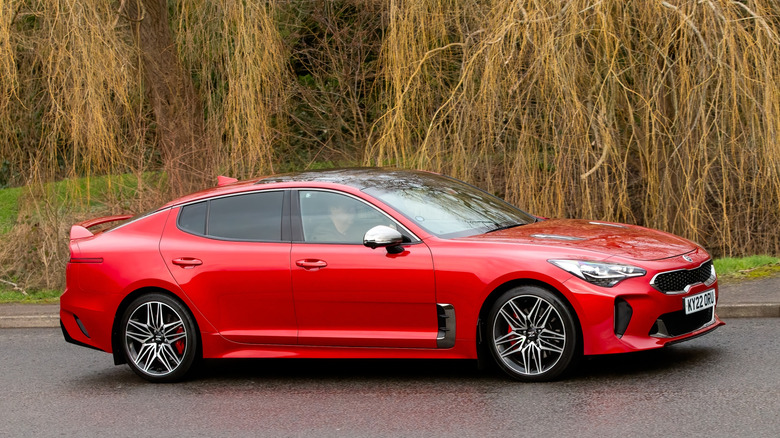
The Kia Stinger GT changed the perception of the Korean brand overnight. It wasn't just a fast Kia; it was a legitimate grand tourer designed to take on the likes of Audi and BMW. At the heart of the GT trim is a 3.3L Twin-Turbo V6 that produces a stout 368 horsepower. For those searching for best used twin turbo cars under 35000, the Stinger is often the first recommendation because it offers a liftback design that is arguably more practical than the Camry’s traditional trunk.
In the current market, you can find well-maintained 2021 or 2022 models with reasonable mileage for right around $30,000. These cars often come with a balance of their original 10-year/100,000-mile powertrain warranty if purchased as Certified Pre-Owned, which significantly narrows the "risk gap" between it and a new Toyota. The interior features premium materials and a cockpit layout that feels much more driver-centric than a standard mid-size sedan.
| Metric | Specification |
|---|---|
| Estimated Used Price | $28,000 - $34,000 |
| Engine | 3.3L Twin-Turbo V6 |
| Horsepower | 368 HP |
| Torque | 376 lb-ft |
| 0-60 MPH | 4.7 seconds |
Pros & Considerations
- Pros: Exceptional cargo space thanks to the hatch, aggressive styling, and a surprisingly refined ride.
- Considerations: Fuel economy is significantly lower than a hybrid Camry, and some interior plastics don't quite reach German luxury standards.
2. Infiniti Q50 Red Sport 400: Pure Power
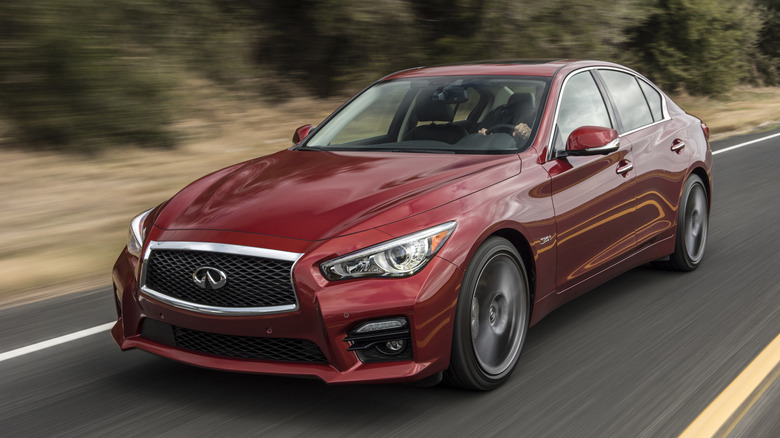
If your priority is the highest Performance-to-price ratio, the Infiniti Q50 Red Sport 400 is difficult to beat. While the standard Q50 is a fine car, the Red Sport 400 utilizes the VR30DDTT engine to its full potential, pumping out 400 horsepower. This makes it one of the best twin turbo sleeper cars for daily driving because, to the untrained eye, it looks like a standard executive commuter.
The infiniti q50 red sport 400 used car value has stabilized in a way that benefits the second-hand buyer. You can easily find 2020-2021 models for under $35,000. Unlike many competitors that shifted to complex mild-hybrid systems, the Q50 stays relatively old-school, focusing on raw power and a mechanical feel. It is a purist's choice in a segment that is rapidly becoming digitized.
| Metric | Specification |
|---|---|
| Estimated Used Price | $30,000 - $35,000 |
| Engine | 3.0L Twin-Turbo V6 |
| Horsepower | 400 HP |
| Torque | 350 lb-ft |
| 0-60 MPH | 4.5 seconds |
Pros & Considerations
- Pros: Incredible acceleration for the price, beautiful exterior design, and a robust aftermarket for enthusiasts.
- Considerations: The dual-screen infotainment system feels dated, and the "steer-by-wire" system on some models lacks road feel.
3. Lexus LS 500: The $80k Flagship for $30k
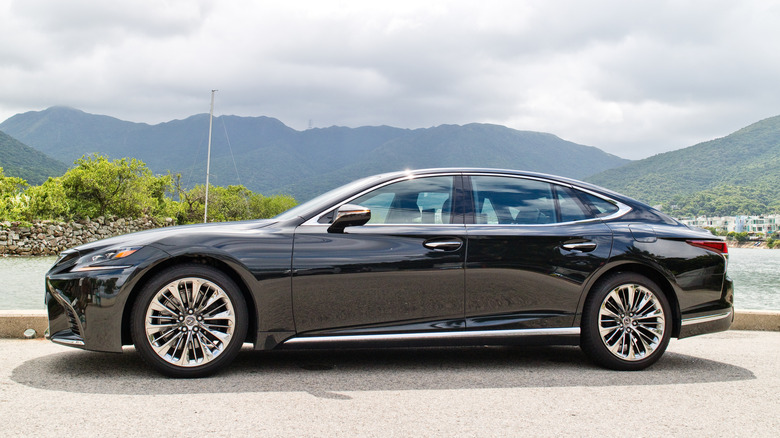
Stepping into a Lexus LS 500 is a transformative experience. This is a Luxury flagship that originally retailed for over $80,000. Because high-end luxury cars suffer from steep initial depreciation, a 2018 or 2019 model can now be acquired for the price of a well-equipped Camry. It features a 3.5L twin-turbo V6 producing 415 horsepower, delivered with a level of smoothness that few other used twin-turbocharged luxury sedans can match.
What sets the LS 500 apart is the build quality. While a Camry is built to last, the LS is built to be perfect. The cabin is an oasis of leather, wood, and glass, offering a level of quietness that makes highway commuting feel like sitting in a library. When looking for reliable used twin turbocharged luxury sedans, Lexus is the gold standard, consistently topping reliability charts from organizations like J.D. Power.
| Metric | Specification |
|---|---|
| Estimated Used Price | $32,000 - $36,000 |
| Engine | 3.5L Twin-Turbo V6 |
| Horsepower | 415 HP |
| Torque | 442 lb-ft |
| 0-60 MPH | 4.6 seconds |
Pros & Considerations
- Pros: Unrivaled interior luxury, legendary Lexus reliability, and massive presence on the road.
- Considerations: Maintenance on a flagship is expensive—tires, brakes, and specialized parts cost significantly more than those for a Toyota.
4. Ford Explorer ST: The Twin-Turbo SUV Alternative
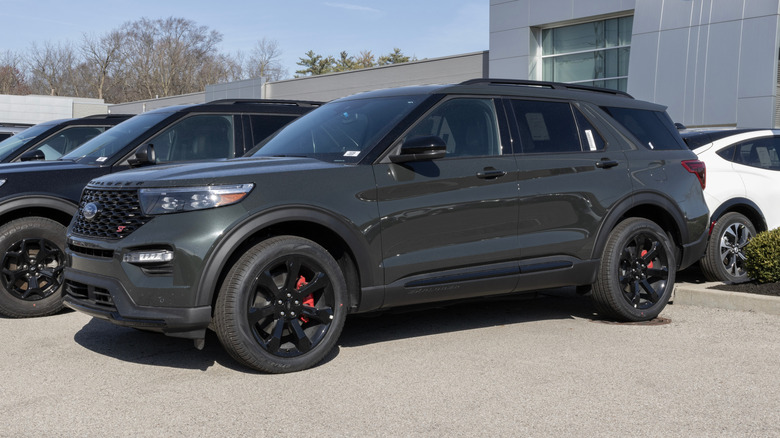
Not everyone wants a sedan. For the family buyer who still wants to win the school-run drag race, the Ford Explorer ST is a compelling alternative. Using a 3.0L EcoBoost V6, this SUV produces 400 horsepower and 415 lb-ft of torque. It is a unique entry in this price bracket, offering three rows of seating and genuine towing capability without sacrificing speed.
Early 2020 models have now dipped into the low $30,000 range, making them one of the best used twin turbo cars with all wheel drive for 30k if you need extra ground clearance. The Explorer ST isn't just about a big engine; Ford Performance tuned the suspension to handle much better than the standard Explorer, giving it a surprisingly agile feel for its size.
| Metric | Specification |
|---|---|
| Estimated Used Price | $31,000 - $35,000 |
| Engine | 3.0L EcoBoost V6 |
| Horsepower | 400 HP |
| Torque | 415 lb-ft |
| 0-60 MPH | 5.2 seconds |
Pros & Considerations
- Pros: Incredible utility, fast for its size, and shares many parts with standard Fords for easier repairs.
- Considerations: Interior fit and finish can be inconsistent, and the 10-speed transmission can sometimes feel indecisive.
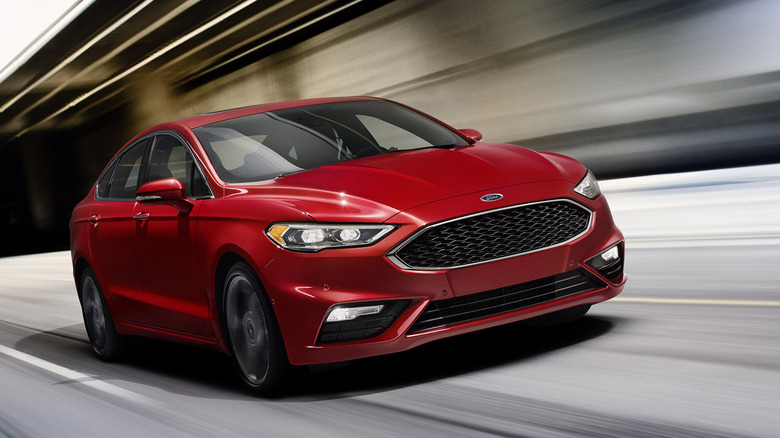
5. Ford Fusion Sport: The Ultimate Budget Sleeper
If you want to spend far less than the cost of a new Camry and still have twin-turbo power, the Ford Fusion Sport is the "hacker" choice. Produced between 2017 and 2019, it features a 2.7L twin-turbo V6 and standard all-wheel drive. It produces 325 horsepower and a massive 380 lb-ft of torque, which was unheard of for a mainstream mid-size sedan at the time.
You can pick up a clean, low-mileage Fusion Sport for under $20,000. This leaves you with $15,000 in the bank compared to buying a new Camry—plenty of money to cover years of maintenance or even a few performance upgrades. It is truly the ultimate daily driver twin-turbo cars choice for those who value stealth and savings.
| Metric | Specification |
|---|---|
| Estimated Used Price | $17,000 - $22,000 |
| Engine | 2.7L Twin-Turbo V6 |
| Horsepower | 325 HP |
| Torque | 380 lb-ft |
| 0-60 MPH | 5.1 seconds |
Pros & Considerations
- Pros: Extremely affordable, very comfortable seats, and standard AWD for all-weather traction.
- Considerations: Discontinued model means no future updates, and the fuel tank is somewhat small for the engine's thirst.
Ownership Reality Check: Maintenance & Reliability
Transitioning from the world of new hybrids to used twin-turbo cars requires a mindset shift regarding finances. While you are saving on the initial purchase price or getting more car for your money, your operating costs will rise. Twin-turbocharged engines generate significant heat, which can lead to faster wear on gaskets, hoses, and the turbos themselves if not properly maintained.
Premium fuel requirements are another factor. Most of these high-performance engines require 91 or 93 octane to achieve their rated horsepower and protect the engine from knocking. Over a year of driving, this can add $500 to $1,000 to your fuel bill compared to a Camry that runs on regular 87 octane. Insurance rates may also be higher for a vehicle with "Red Sport" or "GT" in the name, as insurers view them as higher-risk performance machines.
The most critical tool in your arsenal is a detailed Vehicle history report. When buying a used performance car, you aren't just buying the car; you are buying the previous owner's habits. Look for frequent oil changes (every 5,000 miles is ideal for turbo cars) and evidence that major service intervals were met. Avoid cars with multiple "minor" accidents or those that have been heavily modified with aftermarket tunes, as these can drastically shorten engine life.
FAQ
Are used twin-turbo cars reliable?
Reliability varies by brand and maintenance history, but modern twin-turbo systems are significantly more robust than those from twenty years ago. Brands like Lexus and Kia have proven that forced induction can be reliable if the owner follows the recommended service schedule. The key is avoiding deferred maintenance, as small leaks or sensor issues can escalate quickly in a turbocharged system.
Is maintenance expensive for twin-turbo engines?
Maintenance is generally more expensive than a naturally aspirated or hybrid engine because there are more components and higher operating temperatures. You can expect to pay more for high-quality synthetic oil, spark plugs that need more frequent replacement, and potential cooling system repairs. However, choosing a domestic model like a Ford can help keep parts costs down compared to European alternatives.
How long do twin-turbo engines typically last?
With meticulous care, many modern twin-turbo engines can easily surpass 150,000 to 200,000 miles. The turbochargers themselves are wear items and may require rebuilding or replacement between 120,000 and 150,000 miles depending on how hard the car was driven. Cooling down the engine after a spirited drive before shutting it off can help extend the life of the turbo bearings.
What should I check before buying a used twin-turbo vehicle?
Beyond a standard inspection, you should specifically look for signs of oil leaks around the turbocharger seals and listen for any unusual whining sounds, often called the "police siren" noise, which indicates a failing turbo. It is also wise to check the intercooler for debris and ensure the transmission shifts smoothly under load, as the high torque of these engines can stress older gearboxes.
Do twin-turbo engines require premium fuel?
In almost all cases, yes. High-performance turbocharged engines use high-octane fuel to prevent pre-ignition (knock) caused by the high pressure and heat in the combustion chamber. Running low-grade fuel can cause the car's computer to pull back timing, resulting in a significant loss of power and potentially damaging the engine over time.
Choosing Your Path: Performance or Peace of Mind
Ultimately, the choice between a new Toyota Camry and a high-performance used alternative comes down to what you value in your daily commute. If you view a car as an appliance designed to get you from point A to point B with the least amount of friction and cost, the Camry is unbeatable. It is the sensible choice that preserves your Resale value and offers total peace of mind.
However, if you are an enthusiast who wants every drive to be an event, the used twin-turbo market offers incredible value. Whether it is the executive luxury of the Lexus LS 500, the raw 400-horsepower punch of the Infiniti Q50, or the budget-friendly speed of the Ford Fusion Sport, these cars offer a level of engagement that a standard hybrid sedan simply cannot match. By doing your homework and keeping a small maintenance fund on the side, you can enjoy flagship performance without the flagship price tag.