Quick Facts
- Market Growth: The global modular laptop core module market is projected to expand significantly, growing from an estimated $1.42 billion in 2024 to approximately $6.11 billion by 2033 as demand for sustainable and upgradable hardware increases.
- The Modularity Tax: Buyers should expect a 20-40% higher initial cost compared to integrated laptops with similar specifications.
- Base Entry: The Framework 13 DIY Edition remains the most accessible entry point, starting around $549 for older generation mainboards.
- Flagship Pricing: A fully equipped Framework Laptop 16 featuring Strix Point architecture can easily exceed $2,000.
- Repairability: Framework maintains a perfect 10/10 iFixit score, a rarity in an industry dominated by glue and solder.
- Sustainability: Choosing modular systems significantly reduces electronic waste by preventing entire devices from being scrapped due to a single failed port or outdated processor.
Modular laptop cost is higher than traditional alternatives due to the complexity of repairable design and lower production scales. Unlike mass-produced laptops with soldered components, modular systems use custom connectors and separate modules for storage, memory, and ports. This design allows for easier repairs and upgrades but results in a higher initial purchase price compared to integrated single-build machines from major manufacturers.
The 'Modularity Tax': Why Modular Laptop Cost is Higher
As a hardware editor, I have spent countless hours tearing down machines from every major brand. When you open a typical Dell XPS or a MacBook, you see a masterclass in spatial efficiency. However, that efficiency comes at the cost of serviceability. Manufacturers use soldered components and glue because they are cheap to assemble at scale and allow for thinner chassis. When Framework decides to buck this trend, they immediately run into what I call the modularity tax.
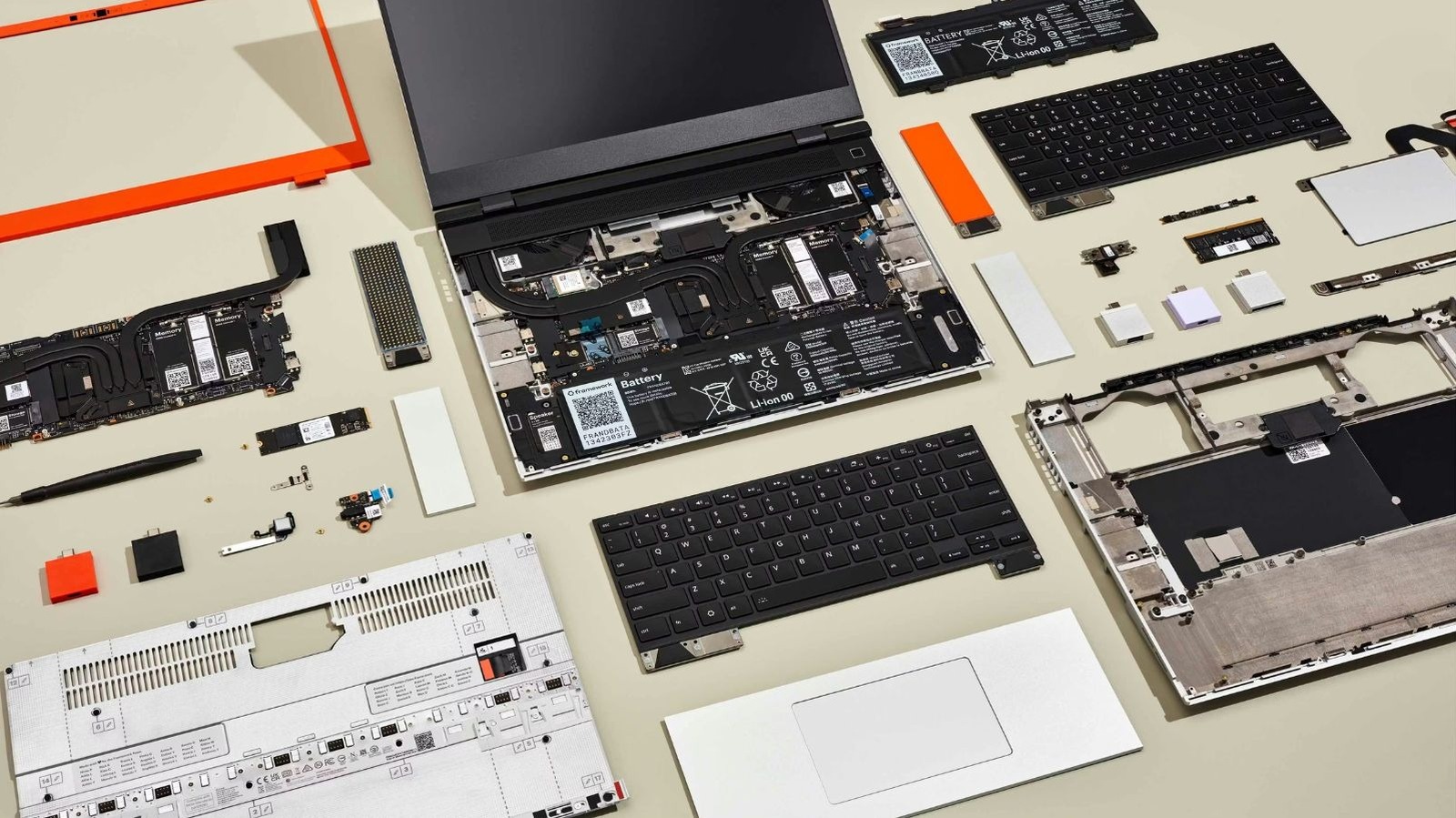
The primary driver of modular laptop cost is the mechanical complexity required to make a machine user-serviceable. In a standard laptop, the ports are soldered directly to the motherboard. If a USB-C port breaks, you are looking at a motherboard replacement that could cost $600. Framework uses an Expansion Card system, which requires internal recessed bays and custom mezzanine connectors. This adds significant cost to the bill of materials. You are not just paying for the port; you are paying for the engineering that allows that port to be swapped in three seconds.
Furthermore, Framework does not move the same volume as HP or Lenovo. When Apple buys millions of displays, they get a massive discount. Framework, even with its growing popularity, operates at a lower production scale. They also prioritize premium materials, like CNC-machined aluminum, to ensure the chassis can survive being opened and closed dozens of times over a decade. In the world of tech, rigidity and longevity are expensive features that do not show up on a standard spec sheet.
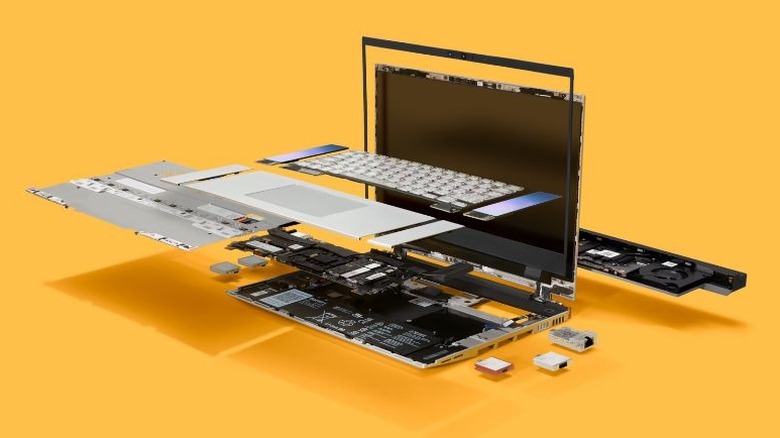
2026 Spec Benchmarks: Framework vs. The Competition
In 2026, the landscape of mobile computing has shifted toward AI-heavy workloads, and the hardware requirements have risen accordingly. This makes the framework laptop vs traditional laptop value debate even more nuanced. If we look at a mid-to-high-end configuration, the price gap becomes glaringly obvious. Most shoppers find that pre-built modular laptops often start at a higher price point than comparable models from brands like Dell or Acer.
Let's look at the current 2026 benchmarks. A Framework Laptop 16 equipped with the latest AMD Strix Point architecture and an RTX 5070 module sits at a premium. Meanwhile, a traditional gaming or creator laptop with the same CPU and GPU can often be found for $400 to $600 less.
| Feature | Framework Laptop 16 (2026) | Traditional Laptop (e.g., Acer/Dell) |
|---|---|---|
| Processor | AMD Strix Point (Upgradable) | AMD Strix Point (Soldered) |
| Memory | 32GB LPCAMM2 (User Swappable) | 32GB LPDDR5x (Soldered) |
| GPU | RTX 5070 (Modular Expansion) | RTX 5070 (Soldered) |
| Storage | 2x M.2 PCIe 5.0 Slots | 1x or 2x M.2 Slots |
| Estimated Price | $1,899 - $2,100 | $1,299 - $1,499 |
| Repairability Score | 10/10 | 3/10 to 5/10 |
This comparison highlights that is framework laptop worth the premium price in 2026 depends entirely on your perspective. With the Framework, you are getting LPCAMM2 memory modules, which combine the speed of soldered RAM with the flexibility of a socket. Most traditional laptops in 2026 have moved entirely to soldered memory to save space, meaning if you want 64GB of RAM four years from now, you have to buy a whole new computer. When performing a repairable laptop price comparison, you must account for this "locked-in" factor of traditional builds.

Long-Term Financials: Is it Cheaper to Repair or Upgrade?
If you only look at the receipt on day one, the modular laptop cost is hard to swallow. However, the narrative changes when we analyze the total cost of ownership over a five-to-seven-year period. This is where the modular laptop upgradability benefits truly shine.
Consider the "three-year itch." For most users, after three years, the battery starts to fade, the storage is full, and a new generation of processors makes the old ones feel sluggish. In a traditional ecosystem, you sell your old laptop for pennies on the dollar and spend another $1,200+ on a new machine. With a modular system, you can spend $450 on a new mainboard featuring the latest Strix Point architecture, $60 on a fresh battery, and keep your screen, chassis, keyboard, and storage.
This approach offers significant long term cost savings of repairable laptops. You are essentially bypassing the "chassis tax" and "display tax" of every subsequent upgrade. However, there are some hidden costs of owning a modular laptop that enthusiasts often overlook. The Expansion Card system requires you to buy the specific ports you need, and if you lose them, that is an extra $10 to $20 per port. Additionally, while the mainboard ecosystem is growing, you are tied to one manufacturer’s internal form factor for the time being.
The decision often comes down to a simple question: is it cheaper to repair or upgrade a modular laptop? The answer is a resounding yes, provided you actually keep the machine for more than four years. If you are the type of person who likes a fresh design every two years, modularity will never pay for itself. But for the professional who wants a reliable tool that evolves with them, electronic waste reduction and hardware longevity become financial assets, not just environmental ones.
Budget Strategy: How to Save Money with a Modular Setup
If the sticker shock of a pre-built Framework is too much, there are ways to navigate the system to find a better price-to-performance ratio. The most effective method is choosing the DIY Edition.
By selecting the DIY path, you can avoid the "RAM and SSD tax" that almost all laptop manufacturers charge. You can buy your own NVMe drive and LPCAMM2 or SO-DIMM modules from third-party retailers at market prices, which is often 30% cheaper than what's offered in a configurator. This is how to save money with framework laptop diy edition: use the parts you already have or shop for deals on the components that don't need to be proprietary.
Another strategy is to look at the "Factory Seconds" or older generation mainboards. Framework often sells the previous year's Intel or AMD boards at a steep discount. For a student or a writer who doesn't need cutting-edge AI processing, a $549 entry point for a Framework 13 chassis with an older board is a fantastic value. You get the same 10/10 repairability and the ability to upgrade to a powerhouse processor two years later when your budget allows.
The modular laptop cost remains a barrier in 2026 because we are still fighting against decades of planned obsolescence and high-volume manufacturing norms. But as the market grows toward that $6.11 billion mark, the ecosystem will only become more robust. For now, the premium is real, but so is the freedom it buys you.
FAQ
Are modular laptops more expensive than traditional laptops?
Yes, modular laptops generally carry a 20% to 40% higher upfront cost. This is due to the more complex engineering required for swappable components, the use of premium materials like CNC aluminum, and the lower production volumes compared to giants like Dell or HP.
Is it cheaper to upgrade a modular laptop than to buy a new one?
In the long run, yes. While the initial modular laptop cost is high, replacing just the mainboard or individual components typically costs 40% to 60% less than purchasing an entirely new laptop with equivalent modern specs.
Do modular laptops save money over time?
Modular laptops save money if you keep the device for more than four years. By avoiding the need to replace the screen, chassis, and keyboard when you only need a faster processor or more memory, the total cost of ownership becomes lower than buying multiple traditional laptops.
Are modular laptops worth the extra cost?
They are worth the cost for users who value repairability, sustainability, and the ability to customize their hardware. If you are a professional who relies on specific port configurations or someone who wants to fight planned obsolescence, the premium is a justified investment in hardware longevity.
Can you buy a budget-friendly modular laptop?
The best way to get a budget-friendly modular laptop is through the DIY Edition or by purchasing a discounted previous-generation mainboard. Starting with a basic configuration and upgrading components like RAM and storage over time allows you to spread the modular laptop cost out rather than paying a large sum upfront.