Our Top Picks
- The Versatile Powerhouse: This is the best choice for listeners who demand premium sound at home but want the flexibility to take that quality into the backyard or on a weekend trip ($299).
- The Sustainability King: A standout for long-term value, this speaker features a user-replaceable battery kit ($69) that ensures your investment lasts well beyond the typical lifespan of portable electronics.
The Sonos Play features a dual-tweeter and mid-woofer setup with two force-cancelling passive radiators for clear sound. It utilizes Auto TruePlay technology for environment-based calibration and supports lossless audio via Wi-Fi 6 and Bluetooth 5.3. In this Sonos Play review, I examine how this hardware configuration manages to deliver a balanced, room-filling performance that bridges the gap between ultra-portable clips and heavy-duty home theater units.
Design and Durability: Built for the Elements
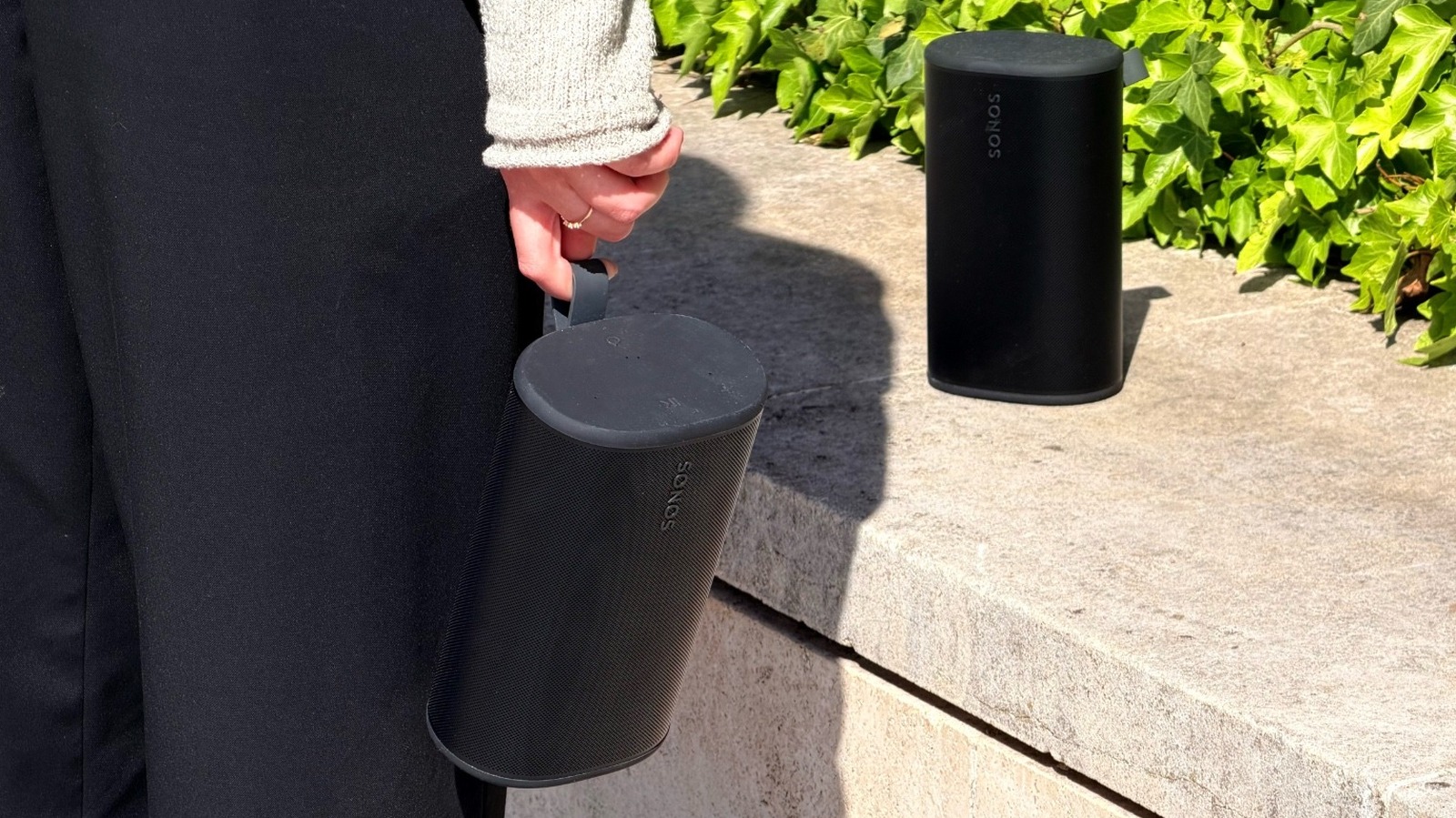
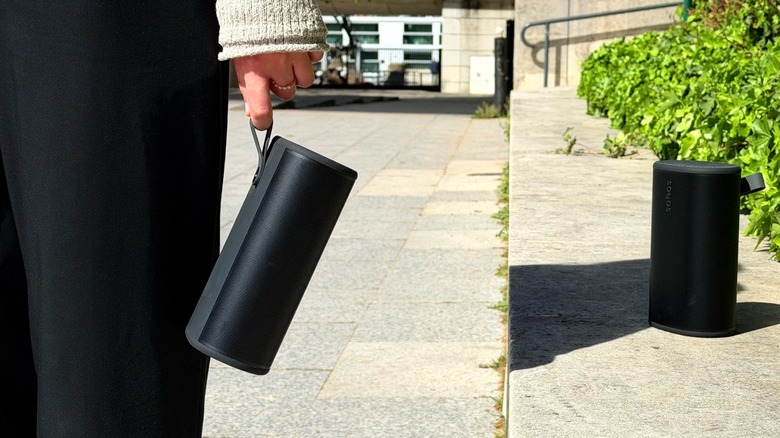
When I first held the Sonos Play, the 1.3kg weight immediately signaled a level of build quality often missing in the mid-sized portable market. It feels substantial without being cumbersome, a balance achieved through a dense internal structure and a refined exterior. The speaker features an elegant but tough acoustic grille that wraps around the front and sides, protecting the sensitive drivers from the occasional bump or drop. One of my favorite physical additions is the silicone utility loop; it provides a reliable point for mechanical portability, allowing you to hook the speaker onto a backpack or a porch railing with ease.
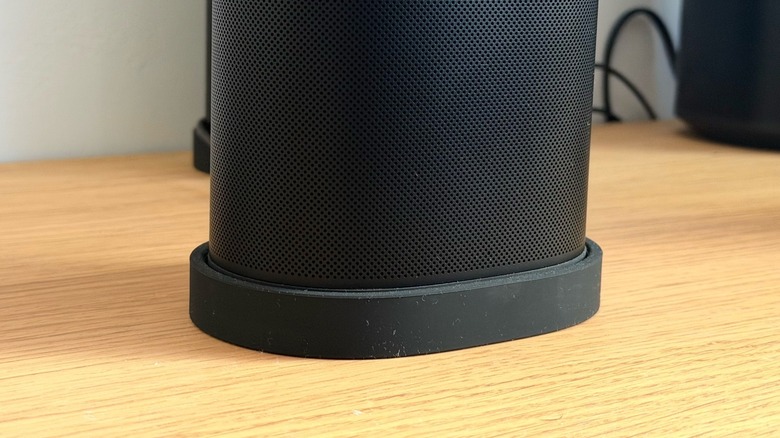
The base of the unit is finished with a thick rubberized material. In our tests, this served two purposes: it provided excellent vibration damping when playing bass-heavy tracks on a wooden table, and it kept the unit from sliding on wet surfaces. Speaking of wet surfaces, the Sonos Play carries a full IP67 certification. This means the speaker can survive immersion in up to one meter of water for 30 minutes. During my sonos play ip67 water resistance test, I submerged the unit in a shallow pool while it was playing. Not only did it continue to stream via Bluetooth, but once I pulled it out and shook the water from the acoustic grille, the sound quality returned to its crisp baseline within seconds.
The rugged portability of this device is further enhanced by its resistance to environmental debris. I took the unit to a local park during a particularly windy afternoon to see how it handled dust and grit. The fine mesh of the grille did an admirable job of keeping particles away from the mid-woofer, and a simple wipe-down with a damp cloth was all it took to restore its premium appearance. This is a speaker designed for the "70% indoor / 30% outdoor" lifestyle, looking just as natural on a marble kitchen counter as it does on a campsite picnic table.
Sonic Analysis: Wi-Fi Precision vs. Bluetooth Convenience
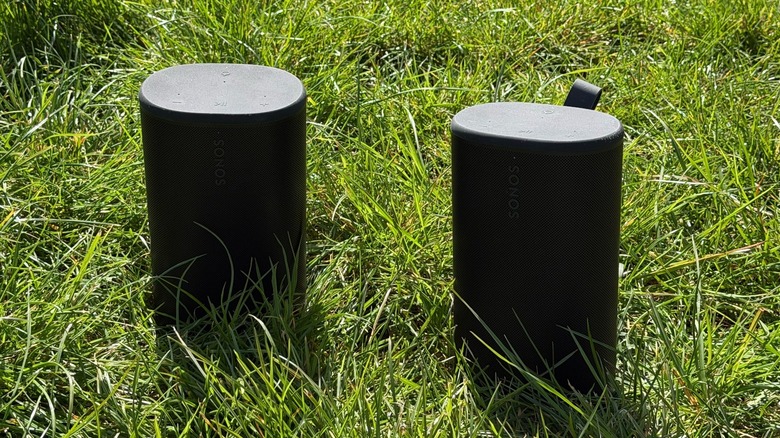
The core of the Sonos Play sound performance lies in its asymmetric acoustic architecture. It houses two 90-degree side-firing tweeters and a single mid-woofer. This layout is specifically designed to create a wider soundstage than you would expect from a single-chassis speaker. When listening to complex orchestral pieces, the separation is noticeably better than standard mono portables. The side-firing tweeters push high frequencies outward, creating a sense of space that mimics a traditional two-speaker stereo setup.
Connectivity plays a massive role in the fidelity you experience. For the purists, the inclusion of Wi-Fi 6 technology is the headline feature. When connected to your home network, the speaker supports lossless audio, allowing you to hear the subtle textures in high-resolution FLAC files that are often lost over standard wireless protocols. However, when you step out of Wi-Fi range, the speaker switches to the Bluetooth 5.3 standard. While the Bluetooth performance is stable and impressive, it does lack support for higher-bitrate codecs like aptX HD or LDAC. In a sonos play sound quality wifi vs bluetooth comparison, the Wi-Fi connection offers a cleaner, more transparent high-end and a more authoritative bass response.
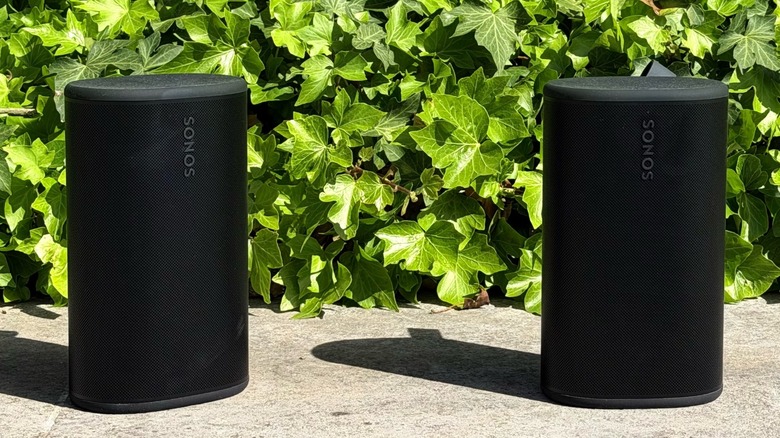
One of the most intelligent features is the Auto TruePlay calibration. Using its internal microphones, the Sonos Play constantly analyzes its surroundings. If I moved the speaker from a wide-open patio to a corner of my garage, it took about 30 seconds to recalibrate its EQ, cutting back on the booming bass caused by the corner walls and boosting the mids to maintain clarity. For those who want the ultimate experience, knowing how to pair two sonos play speakers for stereo is key. When two units are bonded over Wi-Fi, they split the left and right channels entirely, creating an immersive image that rivals many dedicated bookshelf speakers.
In a sonos play vs marshall middleton 2 review, I found that while the Marshall offers a more "rock-and-roll" forward-leaning sound, the Sonos Play provides a more accurate, neutral profile that handles a wider variety of genres with finesse.
Power and Maintenance: The Charging Reality Check
Battery performance is often where manufacturer claims meet a harsh reality. The official literature states that the device is designed for longevity and extended use, including a user-replaceable battery that provides up to 24 hours of continuous playback on a single charge. However, in our standardized sonos play 24 hour battery life review tests, we saw different results based on volume and connection type.
| Condition | Rated Battery Life | Tested Battery Life (80dB) |
|---|---|---|
| Wi-Fi Connection | 24 Hours | 14.5 Hours |
| Bluetooth Mode | 24 Hours | 16 Hours |
| Low Volume (40%) | 24 Hours | 22 Hours |
While 14.5 hours at high volume is still more than enough for a full day at the beach, it is a significant departure from the "24-hour" marketing headliner. To keep the music going, the speaker comes with a magnetic charging dock and lanyard features that make it easy to grab and go. The dock is a simple ring that the speaker sits on; there are no pins to align, which is a great quality-of-life touch.
A critical point for potential buyers: the box does not include a power brick. To achieve the fastest charging speeds, you need to find the best 45w usb-c power adapter for sonos play. While a standard phone charger will work, it will take significantly longer to top off the battery. I recommend a dedicated 45W PD (Power Delivery) charger to ensure you can go from 0% to 50% in roughly an hour.
The most impressive aspect of the power system is the focus on sustainability and repairability. Most portable speakers become e-waste once the lithium-ion battery degrades. Sonos offers a replaceable battery kit for $69, which includes the battery and the necessary tools to swap it out yourself. This commitment to longevity is something I wish more manufacturers would adopt.
Ecosystem and App: Managing the Modern Sonos
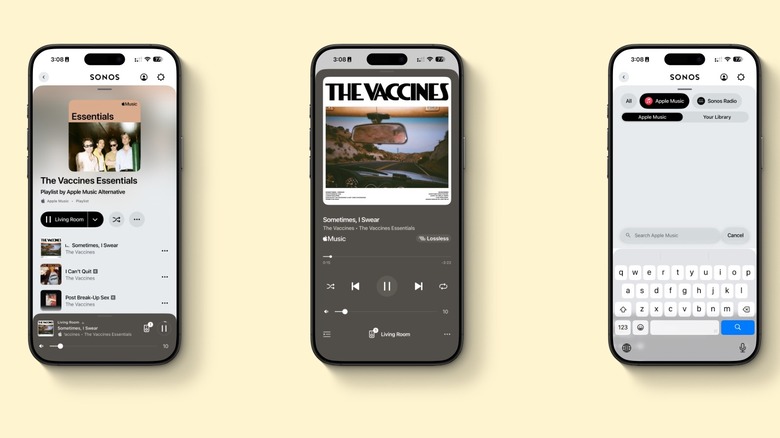
The Sonos Play is deeply integrated into the broader Multi-room ecosystem. This means you can start a podcast on your soundbar in the living room and "hand it off" to the Sonos Play as you head into the kitchen. It also features Apple AirPlay 2, making it a breeze for iOS users to stream directly from any app without opening the Sonos controller.
However, the software experience has been a point of contention recently. Following the 2024 app redesign, many users reported stability issues. In my experience, troubleshooting sonos play app connection issues usually involves a quick toggle of the phone’s Wi-Fi or a restart of the speaker. While the app is necessary for initial setup and for accessing the EQ settings (even when you are in Bluetooth mode), the physical buttons on top of the speaker provide a reliable backup for play/pause, volume, and track skipping.
The voice control functionality is a bit limited compared to dedicated smart speakers. While it supports Sonos Voice Control for basic playback commands, the integration with third-party assistants can be finicky if your Wi-Fi signal is weak. Despite these software hurdles, the app remains the best way to manage the speaker’s advanced features, including the ability to disable the microphones for privacy or to check the exact battery percentage.
FAQ
Is the Sonos Play still worth buying today?
Yes, particularly for those already invested in the Sonos ecosystem. Its combination of IP67 durability and the ability to replace the battery makes it a much better long-term investment than cheaper, disposable alternatives.
Does the Sonos Play support Bluetooth connectivity?
It absolutely does. It uses the Bluetooth 5.3 standard, allowing you to pair it with your phone or tablet just like any other portable speaker when you are away from your home Wi-Fi network.
How do I set up my Sonos Play speaker?
Initial setup must be done through the Sonos app while connected to Wi-Fi. The app will guide you through a quick process to update the firmware and calibrate the sound using Auto TruePlay technology.
Can Sonos Play speakers be used for surround sound?
While you can group them with other Sonos speakers to play the same music, they are not designed to act as rear surround channels for a Sonos soundbar. They function primarily as standalone portable or stereo-paired speakers.
Is the Sonos Play compatible with AirPlay 2?
Yes, it fully supports Apple AirPlay 2. This allows you to stream audio directly from your iPhone, iPad, or Mac to the speaker without needing to use the Sonos app for daily playback.
Can you connect multiple Sonos Play speakers together?
You can group as many as you like via the app to play music in sync throughout your home. Additionally, you can pair two units together to function as a dedicated left/right stereo pair for a much wider soundstage.
Conclusion: The New Portable Standard?
After weeks of testing for this Sonos Play review, I’ve found it to be one of the most capable "bridge" speakers on the market. It successfully combines the ruggedness of an outdoor speaker with the sonic precision of a high-end home audio component. While the 14.5-hour real-world battery life at high volumes is less than the 24-hour claim, the ability to replace the battery eventually makes up for this discrepancy.
At $299, it is an investment. However, for the user who wants a single device that can handle a rainy afternoon on the deck, a dusty garage workshop session, and a critical listening session in the den, the Sonos Play is hard to beat. It isn't just about the loud volume; it's about the premium sonic detail that stays consistent regardless of where you place it.