Quick Facts
- Peak Brightness: 3000 nits available on the latest iPhone 17 series for unparalleled outdoor visibility.
- Color Accuracy: Measured at 0.5 JNCD, making the colors visually indistinguishable from perfect.
- Contrast Ratio: A massive 2,000,000:1 ratio specifically designed for true blacks and high dynamic range.
- Refresh Rate: ProMotion technology providing a fluid 1Hz to 120Hz range depending on on-screen content.
- Durability: Featuring Ceramic Shield 2 which offers up to 3x better scratch resistance than previous generations.
- Efficiency: Custom M14 material sets that reduce power consumption by approximately 20% compared to older panels.
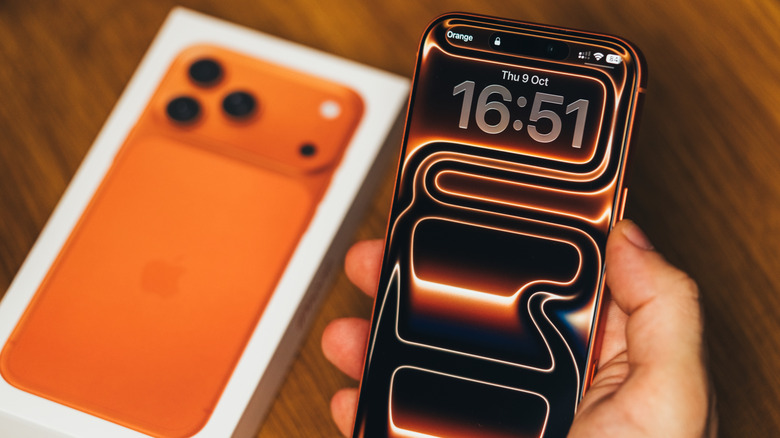
iPhone OLED display technology has evolved into a masterclass of engineering. While many screens use organic light-emitting diodes, Apple's implementation—specifically the Super Retina XDR—sets it apart. Apple uses a combination of custom M14 material sets and Tandem OLED Architecture to achieve up to 3000 nits of peak brightness while maintaining industry-leading color accuracy. This guide explains the tech behind the world's best mobile screen.
Understanding the Basics: OLED Display Meaning and Mechanics
When we talk about the oled display meaning in the context of a modern smartphone, we are referring to a screen where every single pixel is its own light source. Unlike traditional LCDs that require a bulky backlight, oled display technology relies on organic compounds that glow when an electric current is applied. This fundamental shift is what allows for the stunning visual depth we see on the latest iPhones.
The true meaning of oled display performance comes down to the control of light at a microscopic level. Because each pixel can be turned completely off, the iPhone achieves a literal infinite Contrast Ratio. This is handled by a sophisticated Display Driver IC, a specialized chip that manages the current flowing to millions of subpixels with nanosecond precision. In my years of testing mobile devices, the transition from LCD to OLED remains the single most significant upgrade in user experience because it fundamentally changes how we perceive dark scenes in movies and depth in photography.
The M14 Secret: iPhone OLED vs AMOLED Standards
One of the most frequent questions I receive is about the difference between oled display vs amoled. Technically, Apple’s screens are AMOLED (Active Matrix Organic Light Emitting Diode), which means they use an light-controlling layer behind the pixels to switch them on and off faster and more efficiently. However, Apple markets their version as Super Retina XDR to signify that their specific implementation goes far beyond the baseline industry standard.
The "XDR" or Extreme Dynamic Range is largely possible because of the exclusive M14 material sets developed for the high-end iPhone models. While competitors often use standard M13 or earlier material formulations, the M14 set is engineered for higher luminous efficiency and a longer lifespan. This is where the super retina xdr oled display vs amoled comparison becomes evident; Apple isn't just using a shelf-ready part but is specifying a unique chemical recipe for the organic layers.
Furthermore, the ltpo oled vs amoled display distinction is critical for battery life. LTPO (Low-Temperature Polycrystalline Oxide) is a special backplane technology that allows the iPhone to drop its refresh rate all the way down to 1Hz for the Always-On display or ramp up to 120Hz for smooth scrolling. This ensures oled vs amoled display battery efficiency remains a top priority, giving you the best of both worlds: high performance when playing games and extreme power saving when reading text.
| Feature | M13 Material Set (Standard) | M14 Material Set (iPhone 17 Pro) |
|---|---|---|
| Peak Brightness | ~2,000 Nits | 3,000 Nits |
| Power Efficiency | Baseline | 20% More Efficient |
| Lifespan (Burn-in Resistance) | Standard | Enhanced (Tandem Ready) |
| Performance | High Dynamic Range (HDR) | Ultra-High Dynamic Range |
The Paradox: Who Manufactures iPhone OLED Displays?
It is often surprising to readers when they learn about the complex relationship between Apple and its suppliers. To clarify who owns oled technology, the fundamental patents are held by various entities, including Universal Display Corporation, but the actual production is a multi-vendor effort. If you are wondering who manufactures iphone oled displays, the answer is usually a trio of industry giants: Samsung Display, LG Display, and BOE.
Samsung Display has historically held the largest share of the pie. Despite being Apple’s main rival in the smartphone market, their manufacturing capacity and expertise in advanced material sets make them an indispensable partner. Apple provides the specific display architecture and color management software, while these vendors build the panels in high-tech cleanrooms. This Supply Chain Diversification allows Apple to maintain high Manufacturing Yield Rates while ensuring that every screen meets the same rigorous calibration standards, regardless of which factory it came from.
Longevity and Resilience: Solving the Burn-in Problem in 2026
For many years, the Achilles' heel of this tech was the risk of permanent image retention. However, internal hardware and software advances have made this a non-issue for the vast majority of users today. One of the most significant leaps in 2026 is the widespread adoption of Tandem OLED Architecture. By stacking two layers of organic light-emitting material, each layer needs to work half as hard to achieve the same brightness, which significantly slows down Organic Material Degradation.
When looking for iphone oled burn in prevention tips, it is helpful to know that Apple already does the heavy lifting for you. The iOS software includes a sophisticated algorithm that subtly shifts pixels and monitors the usage of individual subpixels to ensure uniform wear. Hardware-wise, the use of Ceramic Shield 2 not only protects from drops but also acts as a better thermal interface. Keeping the screen cool is essential because heat is the primary catalyst for pixel aging. Also, the high PWM Dimming Frequency used in modern iPhones helps reduce flicker, which is better for both the screen’s longevity and your own eye comfort.
To maintain your screen in peak condition, I recommend:
- Using Auto-Brightness to allow the sensor to manage intensity.
- Setting a short "Auto-Lock" timer so the screen isn't on while not in use.
- Avoiding keeping static, high-contrast images at 100% brightness for hours on end.
Final Verdict: Why It Remains the Gold Standard
The reason the iPhone’s oled display technology continues to lead the industry isn't just about the raw hardware; it’s about the synergy between that hardware and Apple’s software. Every single panel is factory-calibrated to map perfectly to the P3 Color Gamut. In fact, third-party testing from DisplayMate has shown that the iPhone achieves an absolute color accuracy that is visually indistinguishable from perfect.
While Apple officially rates the latest models for 2,000 nits of outdoor brightness, independent labs have reached up to 2,740 nits under high ambient light conditions. Combined with a 2,000,000:1 contrast ratio and an adaptive refresh rate ranging from 1Hz to 120Hz, the Super Retina XDR display provides a visual experience that is as reliable as it is beautiful. Whether you are editing professional photos or simply scrolling through social media under the harsh midday sun, the Peak Brightness Nits and precision engineering of this screen ensure it remains the benchmark for all mobile devices.
FAQ
What is OLED screen technology?
It is a display type where each pixel is made of organic material that emits its own light. This removes the need for a backlight, allowing for thinner designs, perfect black levels, and excellent energy efficiency compared to traditional LCD screens.
What is the downside of OLED?
Historically, the main downsides were the risk of burn-in (permanent ghost images) and the higher cost of manufacturing. However, modern advancements like tandem architectures and software-based pixel management have largely mitigated these issues for the average user.
Does OLED help with eye strain?
It can. Because OLED allows for a true Dark Mode where pixels are completely off, it reduces the total blue light emission at night. However, some users are sensitive to the pulse-width modulation (PWM) used for dimming, though recent iPhones have high-frequency dimming to minimize this effect.
Does OLED still burn in 2026?
While it is technically possible for any organic material to degrade over time, burn-in in 2026 is extremely rare. Between the new M14 material sets and the dual-stack tandem designs, the lifespan of these panels now typically exceeds the useful life of the smartphone itself.
Who is better, QLED or OLED?
For mobile devices, OLED is the clear winner due to its thinness and ability to turn off pixels entirely. QLED is essentially an LCD with a quantum dot filter, which is great for large, super-bright living room TVs, but it cannot match the pixel-level precision and contrast of OLED in a smartphone form factor.