Our Top Picks
- Top Gadget Pick: Synth-a-Sette (Best for STEM and experimentation). This device wins for its sheer versatility and the ability to turn a banana into a keyboard.
- Runner Up: Dubreq Stylosette (Best for retro lo-fi tones). A perfect choice for those who want a classic brand heritage and built-in effects like delay and vibrato.
The Synth-a-Sette is a miniature pocket analog synthesizer under $50 that uses a monophonic oscillator and conductive touch technology to turn everyday objects into musical instruments. It combines a 1980s aesthetic with a simple circuit-based design that is perfect for both casual hobbyists and music students looking for an affordable way to explore sound.
Retro Aesthetics Meets Analog Sound: The Synth-a-Sette
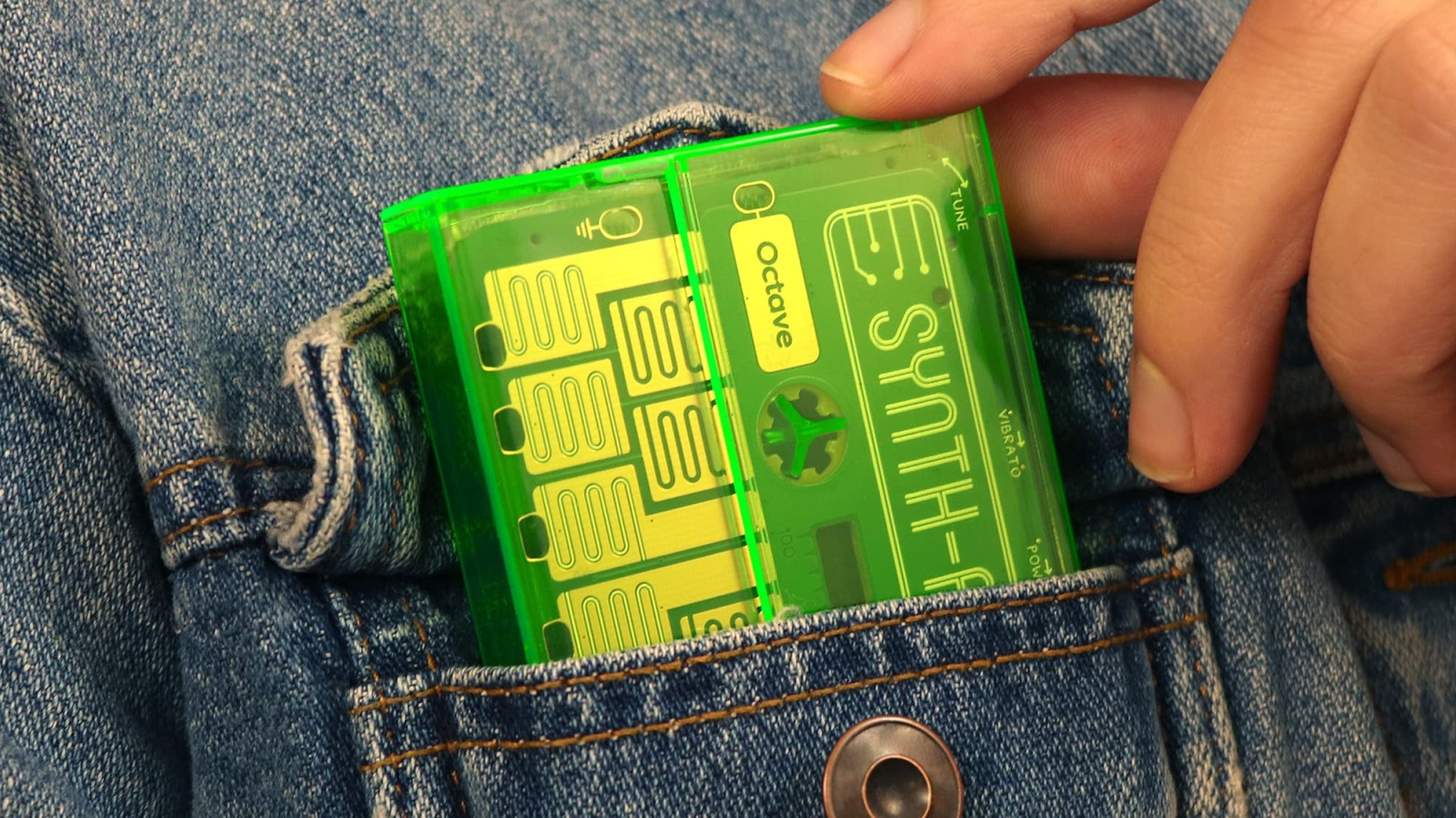
There is something undeniably satisfying about tech that looks like it was pulled straight from a 1984 record store shelf. The Synth-a-Sette leans hard into this nostalgia with a transparent audio cassette aesthetic that serves as the housing for its entire internal engine. Unlike modern digital controllers that rely on microprocessors and complex code, this device is built on circuit-based sound synthesis. When you press a key, you are interacting directly with the flow of electricity through an analog oscillator.
The tactile user interface consists of a 13-key capacitive touch interface. It is monophonic, meaning it plays one note at a time, which is characteristic of many classic budget analog synths under $50. While it might look like a toy, the sound it produces is surprisingly rich. It delivers those warm, slightly gritty lo-fi audio textures that producers often spend hundreds of dollars trying to emulate with software plugins.
Using the device is incredibly straightforward. It runs on two AAA batteries, making it one of the most convenient portable music making gadgets for travel. There are no menus to navigate and no firmware to update. You simply flip the switch, adjust the volume, and start playing. The inclusion of an octave button allows you to jump between frequency ranges, giving this tiny cassette a much wider musical reach than its small footprint suggests.
Creative Chaos: How to Use Conductive Touch Musical Instruments
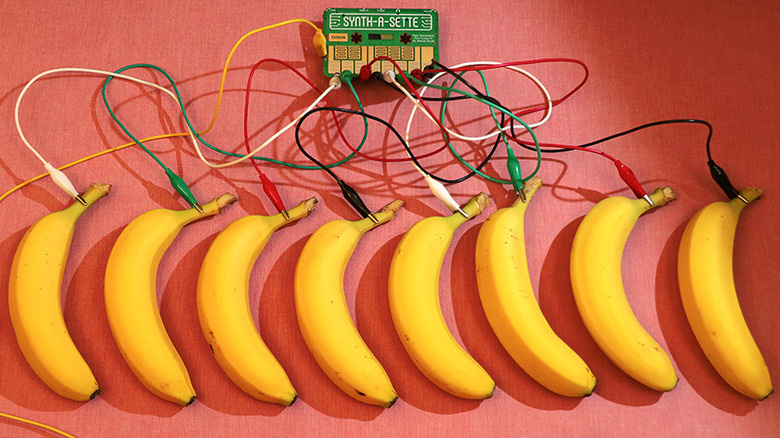
The real magic of the Synth-a-Sette happens when you step away from the built-in keyboard. One of the most common budget analog synthesizers under $50 review complaints is that small keyboards can feel cramped. This device solves that problem by transforming into a hub for conductive touch musical instruments. By using the included alligator lead cables, you can clip one end to the bottom of the keys and the other to almost anything that conducts electricity.
This "invent your own keyboard" feature is what makes it one of the best electronic music gifts under $50 for students or curious creators. We spent an afternoon testing this in the studio, and the results were chaotic in the best way possible. We successfully played a C-major scale using a row of apples and even triggered a baseline by dipping the clips into bowls of water. Because it uses a capacitive touch interface, your body completes the circuit, turning you into a literal part of the instrument.
This functionality is a goldmine for STEM classroom activities. It provides a visible, audible way to teach children about conductivity and electronic circuits. Instead of reading about how electricity moves, students can see it happen as they create custom keyboards with alligator clips and synths. It bridges the gap between a science experiment and a creative jam session, proving that miniature analog synthesizers for music education don't have to be expensive or overly complicated.
Head-to-Head: Synth-a-Sette vs. Dubreq Stylosette
If you are looking for the best pocket analog synthesizer for beginners, you will likely come across the Dubreq Stylosette. While both devices share a similar form factor and price point, they offer different experiences for the user.
The Dubreq Stylosette is a miniature, cassette-shaped synthesizer released in late 2024 that features a single-octave touch-capacitive keyboard and built-in delay and vibrato effects. It comes from a heavy-hitting lineage; Dubreq is the brand behind the original Stylophone, which has sold more than 4 million units since its invention in 1968.
| Feature | Synth-a-Sette | Dubreq Stylosette |
|---|---|---|
| Keyboard | 13-key touchpad | Single-octave touchpad |
| Expansion | Alligator clips for external objects | Built-in effects (Delay/Vibrato) |
| Power | 2 x AAA Batteries | 2 x AAA Batteries |
| Connectivity | 3.5mm Output | 3.5mm Output |
| Vibe | Experimental & Educational | Classic Lo-fi & Performance |
| Estimated Price | Under $30 | $30 to $40 |
The choice between these two retro style analog synth amazon gadgets comes down to your goals. If you want to experiment with conductive materials and learn about circuit-based sound synthesis, the Synth-a-Sette is the clear winner. However, if you want built-in effects to create more polished lo-fi audio textures right out of the box, the Stylosette's vibrato and delay give it a slight edge for musical performance.
Portability and Performance: What’s in Your Pocket?
One of the biggest advantages of these miniature analog synthesizers is their portability. Weighing almost nothing and measuring the size of a standard cassette tape, they fit easily into a jacket pocket or a laptop bag. This makes them excellent portable music making gadgets for travel. Whether you are on a plane or sitting in a park, you can generate experimental noise generation without carrying a full-sized keyboard.
For those worried about bothering their neighbors, the 3.5mm auxiliary output is a vital feature. You can plug in a pair of standard headphones for private practice or run a cable into your computer's audio interface to record the output into a DAW. While the built-in speaker is fine for casual play, using the 3.5mm auxiliary output allows you to hear the full frequency range of the monophonic oscillator, which can get surprisingly deep in the lower octaves.
The build quality is exactly what you would expect for a budget analog synthesizer. It is made of lightweight plastic, so it won't survive being stepped on, but it feels sturdy enough for regular use. The touch response is consistent, and the buttons have a clicky, tactile feel that adds to the retro experience.
Editor's Tip: If you find the touch sensitivity is low when using the alligator clips, make sure you are holding the "ground" or touching a metal part of the circuit. Your body needs to be part of the loop for the capacitive touch to work effectively!
What Else You Need Checklist
- Two AAA batteries (rarely included in the box)
- A pair of wired 3.5mm headphones for private listening
- A few conductive objects (spoons, fruit, or even a glass of water)
- A 3.5mm to 1/4 inch adapter if you plan to plug into a professional amplifier
FAQ
What is a pocket analog synthesizer?
A pocket analog synthesizer is a small, battery-powered musical instrument that generates sound using physical electronic circuits rather than digital software. These devices typically use oscillators to create waveforms and are designed to be highly portable, often fitting in the palm of your hand.
Are pocket synthesizers good for beginners?
Yes, they are excellent for beginners because they offer a simplified, tactile introduction to how sound is created. Without the distraction of complex screens or thousands of presets, a beginner can learn the fundamentals of pitch, rhythm, and signal flow through direct interaction with the hardware.
How do pocket analog synths differ from digital ones?
The primary difference lies in how the sound is produced. Analog synths use continuous voltage changes in their circuits to create sound waves, often resulting in a warmer, more organic tone. Digital synths use microprocessors to calculate mathematical representations of sound, which offers more versatility but can sometimes sound more clinical or "perfect."
Can you make professional music with a pocket synthesizer?
While they are often marketed as gadgets, many professional musicians use pocket synthesizers to add unique textures to their tracks. Their lo-fi character and unpredictable nature make them great for creating transition effects, bass lines, or lead melodies that stand out from standard digital sounds.
Do pocket synthesizers require external speakers or headphones?
Most pocket synthesizers, including the Synth-a-Sette and Stylosette, feature a small built-in speaker for immediate play. However, for the best sound quality and to hear the full bass response of the oscillator, it is highly recommended to use the 3.5mm auxiliary output with a pair of headphones or an external speaker.
Final Verdict: Is it Worth $50?
After spending a few weeks with these devices, the answer is a resounding yes—but with a caveat. If you are looking for a professional-grade workstation to replace your MIDI controller, this isn't it. However, as a budget analog synthesizers under $50 review, the Synth-a-Sette stands out as one of the most fun and educational tech gadgets on the market.
It captures the magic of 1980s music technology and pairs it with modern conductive touch technology. Whether you are a parent looking for a creative gift, a teacher wanting to spice up a science lesson, or a lo-fi producer looking for a new "secret weapon" for your tracks, this pocket analog synthesizer offers incredible value for the price. It reminds us that music making doesn't always have to be serious—sometimes, it’s just about clipping an alligator lead to a lime and seeing what kind of noise it makes.