Our Top Picks
- The Hidden Gem: High Fidelity Video Processing (HF Mode) is the standout addition, treating every single video frame as an AI-optimized photograph to deliver unmatched clarity and detail.
- Low Light King: Combining a new f/1.4 main aperture with the sheer power of the Snapdragon 8 Elite Gen 5 NPU ensures noise-free night recording that finally rivals dedicated mirrorless cameras.
- Creator's Dream: Professional workflows are now a reality thanks to the APV (Intraframe) codec reaching 1,600 Mbps and full USB4 support for lag-free external editing.
To activate the hidden S26 Ultra AI video features, navigate to the Camera app settings and select Camera Assistant. Look for the Labs or Good Lock menu to find the High Fidelity Video Processing toggle. Once enabled, an HF badge will appear in the video interface, indicating that Continuous Computational Photography Mode is active for your recordings. This mode utilizes the S26 Ultra AI video engine to significantly enhance dynamic range and reduce noise in real-time.
Unlocking the Labs: S26 Ultra Camera Assistant Settings
The Galaxy S26 Ultra hides its most powerful tool in the sub-menus. By enabling S26 Ultra AI video processing via the Camera Assistant, you can transform standard mobile footage into cinematic clips. For years, Samsung has used its Camera Assistant app as a playground for power users, but with the S26 series, it has become the gateway to the device's true potential. Most users will never venture into these settings, leaving a significant amount of performance on the table.
To begin the transformation, you must first ensure you have the latest version of Camera Assistant installed from the Galaxy Store. Once inside the app, the path to superior quality is deliberate. You will navigate through the Labs section—which Samsung uses to test cutting-edge features before they become mainstream. Here, you will find the toggle for Galaxy S26 Ultra High Fidelity Video Processing.
Activating this feature changes the fundamental way the phone captures motion. Instead of standard compression, the device begins a process known as Continuous Computational Photography Mode. You will know it is active when a small, white HF badge appears in the corner of your viewfinder. This Meaning of HF badge in S26 Ultra video camera is your confirmation that the device is no longer just "recording video" but is instead capturing a stream of high-resolution, AI-enhanced data.
Steps to Activate
- Open the native Camera app and tap the Settings (gear) icon.
- Scroll down and select Camera Assistant.
- Locate the Labs menu (or Good Lock integration depending on your region).
- Toggle on High Fidelity Video Processing.
- Return to the video viewfinder and look for the HF badge.
It is worth noting the S26 Ultra Camera Assistant Labs vs Good Lock settings debate that often surfaces in enthusiast forums. While Good Lock offers deeper UI customization, the Camera Assistant Labs menu is where the hardware-level optimizations for S26 Ultra Camera Assistant settings for video live. If you want the best possible image quality, this is the specific toggle you need.
Hardware Meets AI: f/1.4 Aperture and NPU Performance
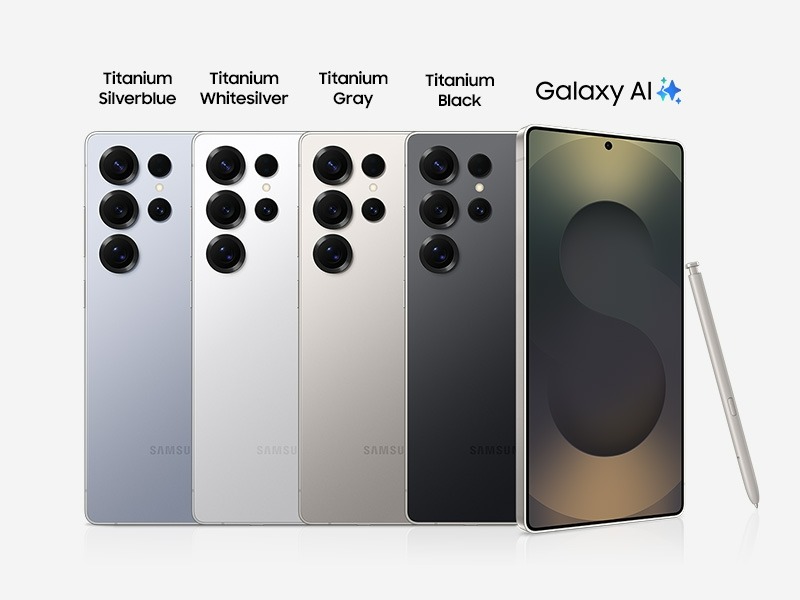
While the software provides the brains, the hardware on the Galaxy S26 Ultra provides the raw vision. The primary 200MP camera on the Galaxy S26 Ultra features an f/1.4 aperture, a massive hardware upgrade that enables the sensor to capture approximately 50% more light than the f/1.7 aperture found on the S25 Ultra. This physical change is the foundation for the S26 Ultra low light video AI mode performance.
However, capturing light is only half the battle. The Galaxy S26 Ultra is powered worldwide by the Snapdragon 8 Elite Gen 5 for Galaxy, which features a 39% faster NPU, a 24% more powerful GPU, and a 19% faster CPU compared to the previous generation. This upgraded Neural Processing Unit is what allows for frame-by-frame optimization.
In traditional mobile video, the processor applies a blanket set of filters to the entire stream. With S26 Ultra AI video, the NPU treats each frame as an individual photograph, applying noise reduction, tone mapping, and edge sharpening in the millisecond before the next frame is captured. This level of computational videography is why the S26 Ultra low light video AI mode performance looks so drastically different from its predecessors. Shadows remain clean and devoid of that "dancing grain" typically found in dark mobile footage, while highlights are preserved with professional-grade dynamic range.
Pro Features: APV Codec and Horizontal Lock
For the mobile filmmaking community, the S26 Ultra introduces features that were previously the domain of dedicated cinema cameras. The most significant of these is the support for the APV codec. This intraframe codec allows for a massive bitrate of up to 1,600 Mbps. When Optimizing S26 Ultra video for professional quality, the APV codec ensures that every bit of data from the f/1.4 sensor is preserved for post-production.
Unlike standard HEVC recording, which uses interframe compression (predicting what happens between frames), the APV codec records every frame in full. This makes color grading and Log profile recording much more flexible. You can push the exposure in the shadows or pull back the highlights in DaVinci Resolve without the image falling apart into blocks of digital artifacts.
Another game-changer is the Horizontal Lock feature. By utilizing the ultra-wide lens and significant AI cropping, the phone can maintain a perfectly level horizon even if you rotate the device 360 degrees during a shot. It effectively kills the need for a gimbal in most handheld scenarios. Combined with the high-speed USB4 port, which allows you to record directly to an external NVMe SSD, the S26 Ultra becomes a legitimate tool for content creators who need to move from shooting to editing in minutes.
The Price of Power: Battery Drain and Thermal Throttling
Pushing the Snapdragon 8 Elite Gen 5 NPU to its limits comes with a cost. During my testing, the S26 Ultra AI video battery drain was noticeable. When the High Fidelity mode is active, the device is essentially running a high-intensity AI model 30 or 60 times per second. This leads to a discharge rate that is nearly double that of standard video recording.
Heat management is the other side of this coin. Although the Galaxy S26 Ultra includes a 21% more efficient vapor chamber cooling system, the computational workload of Continuous Computational Photography Mode generates significant thermal energy. Samsung has implemented a thermal cap at 40°C. Once the internal temperature hits this threshold, the phone may begin thermal throttling, slightly reducing the NPU's clock speed or, in extreme cases, disabling the HF mode until the device cools down.
Users should also be prepared for a S26 Ultra video processing delay and heat issues when recording long clips. After you hit the stop button on a 10-minute 4K clip in HF mode, the phone will stay warm for a few moments as it finalizes the frame-by-frame optimizations. If you are planning a long shoot, applying S26 Ultra AI video battery drain fixes like using an external power bank or a MagSafe-style cooling fan is highly recommended.
Standard Mode vs. High Fidelity AI Mode
| Feature | Standard Mode | High Fidelity AI Mode |
|---|---|---|
| Clarity | High | Exceptional (AI-optimized) |
| Low Light Noise | Visible in shadows | Significantly reduced |
| Battery Impact | Moderate | High (NPU intensive) |
| Device Temp | 32-36°C | 38-40°C (Throttle point) |
| Max Bitrate | 150 Mbps | 1,600 Mbps (APV) |
| Post-Processing | Instant | 1-3 second delay per clip |
Ergonomics and the Privacy Display Trade-off
Samsung has finally listened to ergonomics complaints. The Galaxy S26 Ultra moves away from the sharp, boxy corners of the past, adopting a slightly rounded frame that makes it much more comfortable to hold during long filming sessions. Even though it is a large device, the fact that it weighs 214 grams—making it lighter than its 218-gram predecessor—helps reduce wrist fatigue.
However, there is a technical trade-off involving the new Privacy Display feature. When you enable the Privacy Mode via the quick toggles, the S26 Ultra display hardware narrows the viewing angle so people sitting next to you cannot see your screen. While great for commuters, this mode limits the display to 8-bit color depth. If you are trying to review footage or perform color grading on the go, you must ensure Privacy Mode is off to utilize the full 12-bit color depth of the OLED panel. For content creators, this is a vital distinction: always check your display settings before judging the color accuracy of your S26 Ultra AI video clips.
FAQ
What are the best AI video features on the S26 Ultra?
The standout features include High Fidelity Video Processing for frame-by-frame clarity, AI-powered Object Eraser for video, and the new Horizontal Lock which acts as a digital gimbal. The S26 Ultra AI video engine also excels at real-time noise reduction in low-light environments.
How do I use AI video enhancement on the S26 Ultra?
To get the most out of the AI, you should download the Camera Assistant app from the Galaxy Store. Navigate to the Labs menu and enable High Fidelity Video Processing. Once enabled, the phone will automatically enhance your footage whenever the HF badge is visible in the viewfinder.
Can the S26 Ultra use AI for low-light video recording?
Yes, the S26 Ultra low light video AI mode performance is a significant upgrade. By combining the wide f/1.4 aperture with NPU-driven noise reduction, the phone can brighten dark scenes while maintaining sharp edges and natural colors that were previously lost in digital noise.
Does S26 Ultra AI video processing work offline?
Yes, all High Fidelity Video Processing and NPU-based enhancements happen locally on the Snapdragon 8 Elite Gen 5 chip. No internet connection is required for these features, ensuring your privacy and allowing for use in remote filming locations.
How do I enable AI slow motion on the S26 Ultra?
AI slow motion, known as Instant Slow-Mo, is enabled by default. While playing back any video in the Gallery app, simply tap and hold on the screen. The NPU will generate intermediate frames to turn standard 30fps or 60fps footage into smooth slow motion.
Conclusion: Is the Hidden AI Worth It?
The Galaxy S26 Ultra is a masterclass in the intersection of hardware and software. By digging into the S26 Ultra Camera Assistant settings, you unlock a level of video quality that Samsung seemingly wants to keep as a "secret" for those who truly care about the craft. The High Fidelity Video Processing mode is a transformative feature, though it demands respect for its battery and thermal requirements.
For casual users, the standard mode remains the best mobile experience on the market. But for content creators and tech enthusiasts, the extra effort to activate these hidden features is well worth the S26 Ultra review verdict. You get a camera that doesn't just record reality but uses the most advanced Neural Processing Unit ever put in a phone to perfect it. If you have the S26 Ultra in your pocket, don't let it stay in its default "out of the box" state—dive into the settings and unlock the cinema camera hidden inside.