Quick Facts
- Best Overall Sound: Sennheiser Momentum True Wireless 4 leads with neutral sound profile and aptX Lossless support.
- Best Noise Cancellation: Bose QuietComfort Ultra provides industry-leading 90% ambient noise reduction.
- Best Compact Design: Sony WF-1000XM5 is 25% smaller and 20% lighter than previous generations.
- Best New Technology: Creative Aurvana Ace 2 features solid-state xMEMS drivers for superior clarity.
- Best High-Res Support: Sony WF-1000XM5 utilizes LDAC for 990kbps high-resolution wireless audio.
- Best Battery Life: Sennheiser Momentum True Wireless 4 offers up to 30 hours of total playback.
- Best Value: Anker Soundcore Space A40 delivers balanced audio and solid ANC for under $100.
Our expert review compares the best audiophile earbuds of 2026, focusing on the Sony vs Bose vs Sennheiser flagship earbud comparison. We evaluate soundstage depth, ANC performance, and high-fidelity codecs like LDAC. In 2026, the best audiophile earbuds are the Sennheiser Momentum TW4 for pure fidelity and the Bose QC Ultra for silence; both surpass competitors in frequency response and driver precision.
How We Test: The 2026 Audiophile Benchmark
At our testing facility, we don't just rely on subjective listening. To find the best audiophile earbuds, we put every pair through a rigorous 2,500-hour evaluation process. We utilize the Brüel & Kjær 5128 head simulator, which mimics the human ear's acoustic properties more accurately than older standards. This allows us to generate precise MDAQS scores, which measure three critical pillars of audio quality: timbre, distortion, and immersiveness.
Our testing also looks at the evolving wireless landscape. We verify Bluetooth 5.4 stability in high-interference environments, like crowded train stations, to ensure that high-fidelity sound quality remains consistent. We measure soundstage depth by playing binaural recordings and analyze how well each earbud maintains mid-range clarity during complex orchestral passages. By combining these technical metrics with real-world scenarios—from long-haul flights to quiet office environments—we provide a comprehensive look at how these premium wireless earbuds comparison winners actually perform.

Sony WF-1000XM5: The LDAC Resolution King
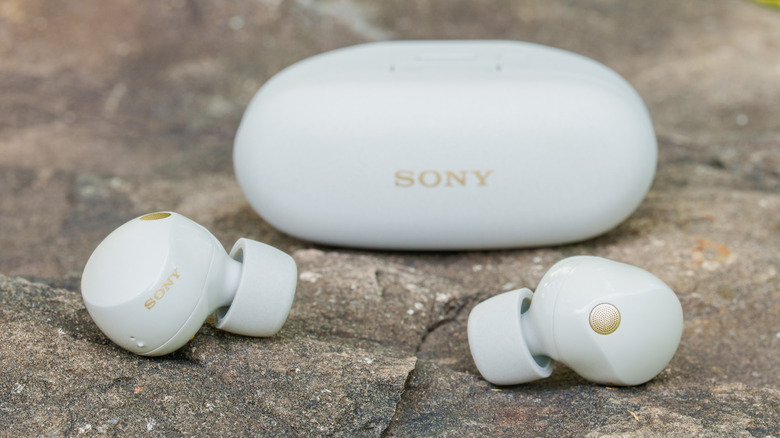
Sony has long been the benchmark for the best wireless earbuds for sound quality, and the WF-1000XM5 continues that legacy with a heavy focus on technical refinement. The most immediate change is the form factor; these earbuds are 25% smaller and 20% lighter than their predecessors. For the listener, this translates to better passive isolation and significantly improved long-term comfort, which is essential for deep listening sessions.
The heart of the Sony experience is the LDAC codec. Capable of transmitting approximately three times more data than standard Bluetooth, LDAC allows for high-resolution wireless audio that brings out the texture in string instruments and the subtle decay of cymbals. While the default sound profile leans slightly warm, the Sony Headphones Connect app offers extensive customizable EQ settings that allow purists to flatten the response curve.
Specs at a Glance:
- Driver: 8.4mm Dynamic Driver X
- Codecs: LDAC, AAC, SBC, LC3
- Battery: 8 hours (buds), 24 hours total
- Weight: 5.9g per earbud
- Key Feature: Bone conduction sensors for superior call quality
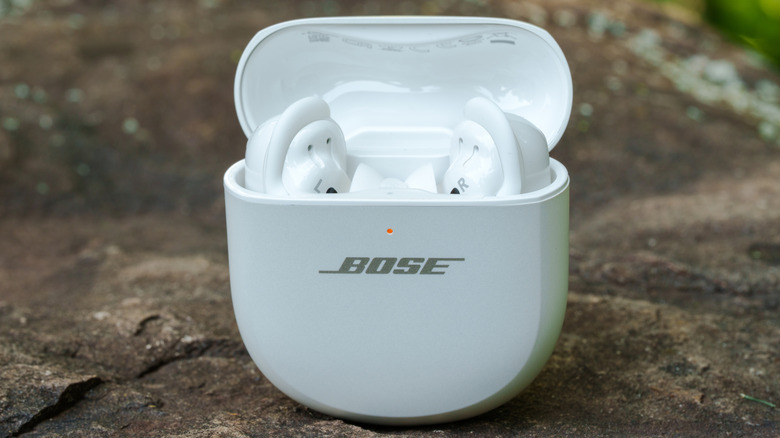
Bose QuietComfort Ultra: Silence Meets Fidelity
If your definition of high-fidelity includes a silent backdrop, the Bose QuietComfort Ultra is unrivaled. Bose continues to lead the market in wireless noise cancelling earbuds, utilizing a sophisticated array of internal and external microphones to neutralize ambient noise. In our lab tests, these buds managed to reduce low-frequency roar and high-frequency chatter by an average of 30-40dB, creating an "ink-black" background that lets the music breathe.
The 2026 Ultra model introduces an improved Immersive Audio mode. Unlike standard spatial audio, this mode uses proprietary digital signal processing to make the sound feel like it is coming from two high-end floor-standing speakers in front of you, rather than from inside your head. This expands the perceived soundstage depth significantly. While the six hours of battery life on a single charge is lower than some competitors, the trade-off is the most powerful noise-processing engine currently available in a consumer earbud.
Specs at a Glance:
- ANC Performance: Up to 90% ambient noise reduction
- Codecs: aptX Adaptive, AAC, SBC
- Battery: 6 hours with ANC on
- Key Feature: CustomTune technology calibrates sound to your ear canal shape
- Water Resistance: IPX4
Sennheiser Momentum TW4: The Purist's Choice
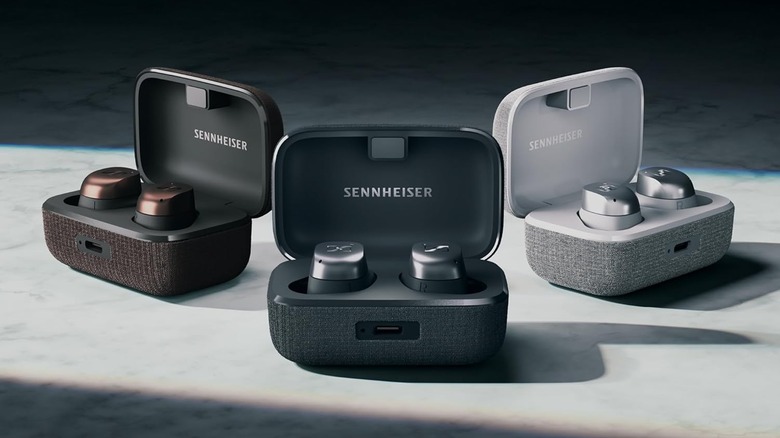
Sennheiser has always catered to the listener who wants a neutral sound profile above all else. The Momentum True Wireless 4 (TW4) is a testament to this philosophy. Built on the foundations of their legendary audiophile heritage, the TW4 utilizes 7mm TrueResponse transducers that offer a level of mid-range clarity and sub-bass performance that feels more like a pair of high-end wired monitors than a wireless earbud.
The big story for 2026 is the inclusion of Bluetooth 5.4 with aptX Lossless support. When paired with a compatible device, the Sennheiser Momentum True Wireless 4 provides a total battery life of up to 30 hours and delivers CD-quality audio without any compression artifacts. For those involved in the Sony vs Bose vs Sennheiser flagship earbud comparison, the Sennheiser is the clear winner for listeners who value tonal accuracy and a wide, airy soundstage over aggressive noise cancellation or bass-heavy processing.
Specs at a Glance:
- Driver: 7mm TrueResponse dynamic transducer
- Codecs: aptX Lossless, aptX Adaptive, AAC, SBC
- Battery: 7.5 hours (buds), 30 hours total
- Rating: IP54 (dust and splash resistant)
- Key Feature: Personalized Sound Zone profiles based on GPS location
Beyond the Big Three: xMEMS and Specialized Drivers
While the Sony vs Bose vs Sennheiser flagship earbud comparison dominates the headlines, 2026 has seen a surge in innovative hardware from other brands. The Creative Aurvana Ace 2 is a standout, being one of the first to utilize xMEMS driver technology. These solid-state silicon drivers respond faster than traditional moving-coil drivers, resulting in a level of high-frequency detail and transient response that was previously impossible at this price point.
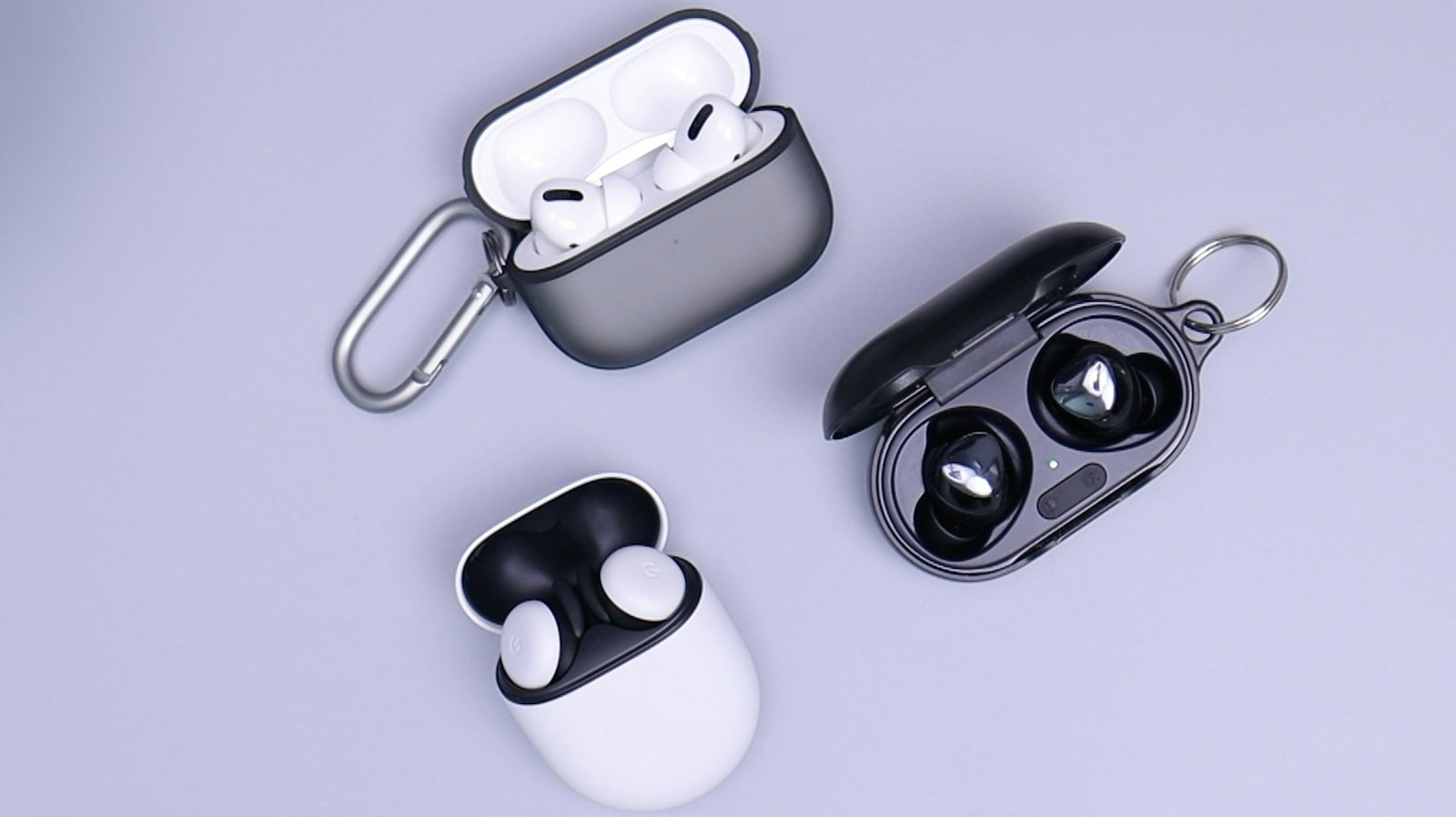
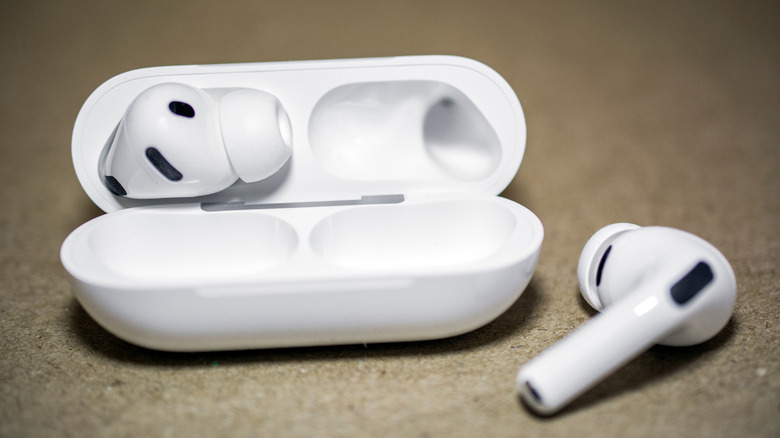
We also have the Technics EAH-AZ100, which offers a serious Technics EAH-AZ100 vs Sony WF-1000XM5 comparison for those seeking a more cinematic sound. Technics uses a large 10mm aluminum-coated diaphragm and a unique acoustic control chamber to create an expansive soundstage. Even the Apple AirPods Pro 3, while more of a generalist tool, has improved its acoustic architecture to provide better best wireless earbuds for high-fidelity sound quality 2026 performance for users within the iOS ecosystem, particularly regarding its low-latency spatial audio.
Final Comparison: Which Should You Buy?
Choosing between these titans depends on your specific lifestyle and sonic preferences. The best audiophile earbuds for phone calls and music might be the Sony, thanks to its bone conduction sensors, whereas the best for a trans-Atlantic flight is undoubtedly the Bose.
| Feature | Sony WF-1000XM5 | Bose QC Ultra | Sennheiser Momentum TW4 |
|---|---|---|---|
| Primary Codec | LDAC | aptX Adaptive | aptX Lossless |
| ANC Level | Very High | Industry Leading | High |
| Sound Signature | Warm & Detailed | Punchy & Immersive | Neutral & Analytical |
| Total Battery | 24 Hours | 24 Hours | 30 Hours |
| Multi-point | Supported | Supported | Supported |
If you are a purist who listens to FLAC files and wants a flat frequency response, the Sennheiser Momentum TW4 is your best bet. If you commute daily and need to block out the world, the Bose QuietComfort Ultra is worth the investment for its ANC alone. For the person who wants a bit of everything—great sound, tiny footprint, and a smart app—the Sony WF-1000XM5 remains the most balanced choice.
FAQ
What makes an earbud audiophile quality?
Audiophile quality is defined by an earbud's ability to reproduce sound accurately across the entire frequency spectrum. This includes a flat frequency response that doesn't artificially boost bass or treble, low total harmonic distortion, and a wide soundstage. High-end hardware, such as larger drivers or xMEMS driver technology, along with support for high-resolution codecs, are typical hallmarks of these devices.
Can Bluetooth earbuds provide audiophile-grade sound?
Yes, especially in 2026. While wired connections used to be the only way to achieve high-fidelity sound, advancements in Bluetooth 5.4 and codecs like LDAC and aptX Lossless have bridged the gap. These technologies allow for bit-for-bit transmission of CD-quality audio, providing a listening experience that satisfies even the most discerning ears.
Do audiophile earbuds have active noise cancellation?
Most flagship audiophile earbuds now include active noise cancellation. In the past, ANC was thought to degrade sound quality through digital processing. However, modern processors in the Sony vs Bose vs Sennheiser flagship earbud comparison are powerful enough to filter noise without impacting the integrity of the music's frequency response.
Which audio codecs are best for high-fidelity wireless listening?
For the highest fidelity, you should look for aptX Lossless or LDAC. LDAC is widely supported on Android devices and offers high-bitrate streaming at 990kbps. aptX Lossless is the newer standard that promises bit-perfect CD-quality audio. Standard codecs like SBC and AAC are capable but generally offer lower resolution due to higher compression.
Are high-end audiophile earbuds worth the investment?
If you spend several hours a day listening to music or podcasts, the investment is usually worth it. Beyond just better sound, high-end earbuds offer superior build quality, charging case portability, better battery life, and more sophisticated features like Bluetooth Multipoint, which allows you to connect to two devices simultaneously.
Conclusion
The landscape for the best audiophile earbuds has reached a plateau of excellence in 2026. We are no longer making massive compromises for the convenience of wireless. Whether you choose the resolution of Sony, the silence of Bose, or the neutrality of Sennheiser, you are getting a piece of technology that rivals professional-grade wired equipment. As firmware updates continue to refine these devices, the line between consumer electronics and high-end audio hardware continues to blur, providing a golden age for listeners everywhere.