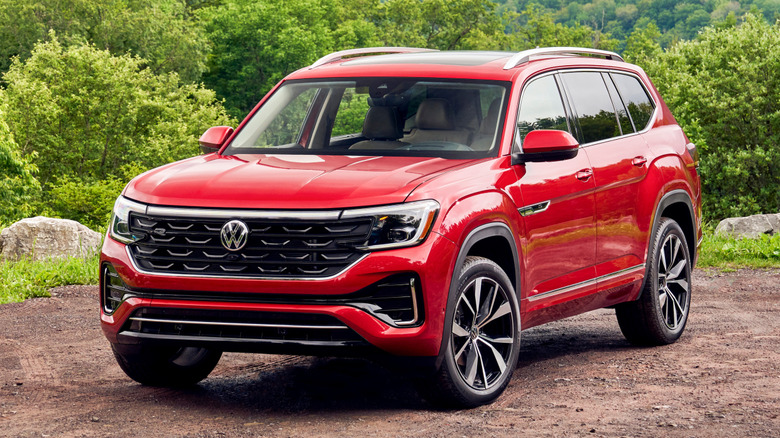
Quick Facts
- Most Affordable: 2026 Taos ($26,920)
- Best Family Value: 2026 Atlas ($40,785)
- Tech Leader: 2026 ID.4 ($46,570)
- Max Cargo: Atlas (96.8 cu ft)
- Towing Champ: Atlas/Cross Sport (5,000 lbs)
- Top Award: 2026 Tiguan (Best Compact SUV)
| Model | Starting MSRP (Incl. Dest.) | Horsepower | Max Cargo Volume (cu ft) |
|---|---|---|---|
| Taos | $26,920 | 158 hp | 65.9 |
| Tiguan | $32,280 | 184 hp | 73.4 |
| Atlas Cross Sport | $39,775 | 269 hp | 77.6 |
| Atlas | $40,785 | 269 hp | 96.8 |
| ID.4 (Electric) | $46,570 | 201–335 hp | 64.2 |
The 2026 Volkswagen SUV lineup offers a diverse range of options for every driver, from efficient urban commuters to spacious family haulers. In this guide, we rank the latest models by value, comparing specs like cargo volume and towing capacity. The 2026 Volkswagen SUV lineup features five primary models starting at $26,920 for the Taos and reaching $46,570 for the electric ID.4, with the Atlas serving as the premier 3-row choice. Selecting the best 2026 Volkswagen SUVs involves balancing the $26,920 entry price of the Taos against the expansive utility of the Atlas or the high-tech efficiency of the electric ID.4.
2026 Volkswagen Taos: The Budget-Friendly Urban Commuter
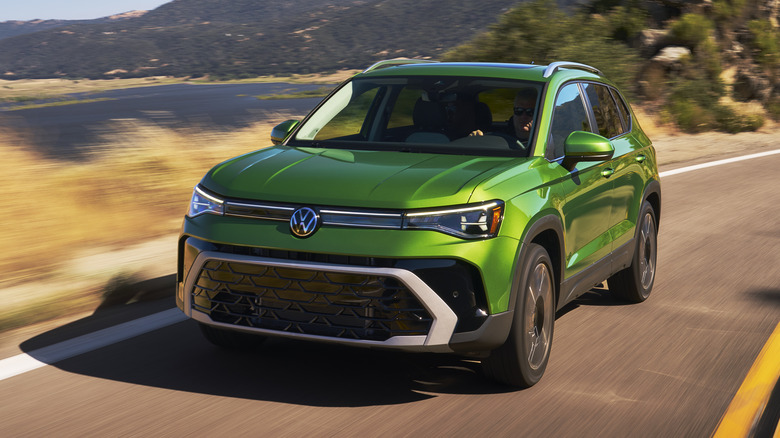
For many drivers, the most important metric of value is the entry price. The 2026 Volkswagen Taos remains the most accessible model in the lineup, making it a favorite for young professionals and city dwellers. As the most affordable 2026 VW SUV for urban commuters, it manages to pack a surprising amount of utility into a small footprint. Despite its compact dimensions, it offers a respectable 65.9 cubic feet of cargo space when the rear seats are folded down.
The 2026 model year brings a refined focus to the cabin experience. The Volkswagen Digital Cockpit comes standard across all trims, replacing traditional gauges with a high-resolution display that can be customized to show navigation, media, or driver assistance data. Under the hood, the 1.5-liter engine provides balanced performance, ensuring that fuel economy ratings remain competitive for those looking to minimize their monthly operating costs.
While it is the entry-level option, the Taos does not feel like a "budget" car in terms of safety. It includes the IQ.DRIVE suite of driver assistance features, which provides a layer of security during stop-and-go city traffic. For a starting price of $26,920 including a $1,425 destination fee, the Taos delivers the core Volkswagen experience without the premium price tag of its larger siblings.
Who is this for?
- First-time SUV buyers looking for a manageable size.
- Commuters prioritizing high fuel economy ratings.
- Urban residents who frequently deal with tight parallel parking.
2026 Volkswagen Tiguan: The Award-Winning Balanced Choice
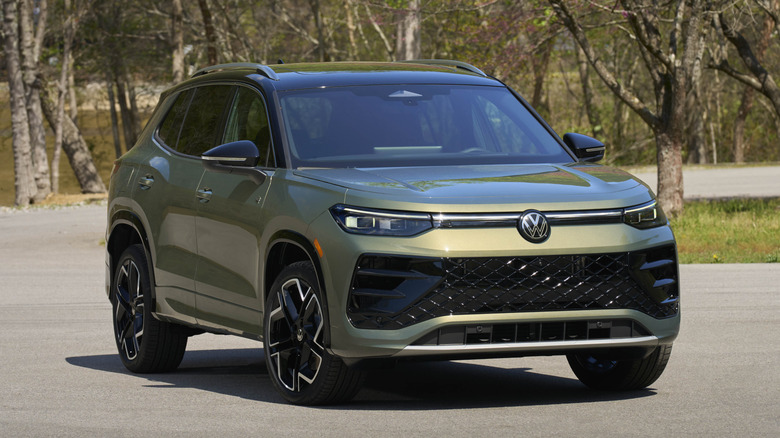
Sitting in the middle of the lineup, the Tiguan has long been the "Goldilocks" of the Volkswagen family. It is large enough to handle a small family’s gear but small enough to remain nimble on the road. This balance has not gone unnoticed by critics; the 2026 Volkswagen Tiguan was named the 'Best Compact SUV' in Good Housekeeping's 2026 Best Family Car Awards. This accolade highlights the model's ability to blend safety, comfort, and value into a single package.
When exploring the 2026 Volkswagen Tiguan trim levels and standard equipment, most buyers will find the SE trim to be the "sweet spot." It adds essential comforts like V-Tex leatherette seating and a power tailgate, which significantly improve daily usability. All models are powered by the tried-and-true 2.0-liter TSI turbocharged engines, which offer a smooth delivery of power that is well-suited for highway merging and suburban errands.
The 2026 model year maintains a focus on two-row seating for the U.S. market, which maximizes the available cargo area behind the second row. This makes it a formidable competitor for those who don't quite need the bulk of an Atlas but find the Taos a bit too snug for a week's worth of groceries and sports equipment.
Key Value Features:
- Standard IQ.DRIVE safety technology: Includes Travel Assist, Lane Assist, and Emergency Assist.
- 4MOTION all-wheel drive: Available on all trims to provide extra confidence in rainy or snowy conditions.
- Cargo Versatility: 73.4 cubic feet of space with the rear seats down.
2026 Volkswagen Atlas & Atlas Cross Sport: The Family Powerhouses
When the conversation shifts to maximum utility, the Volkswagen 3-row SUV models take center stage. The 2026 Volkswagen Atlas is the definitive choice for large families. It is the only model in the lineup to offer seven-passenger seating across three spacious rows. Unlike many competitors in the mid-size segment, the third row in the Atlas is actually usable for adults, not just small children.
The mechanical heart of both the Atlas and its sportier sibling, the Atlas Cross Sport, is a 269-horsepower turbocharged engine. This powerplant provides a significant jump in horsepower and torque compared to the smaller SUVs, enabling a 5,000 lbs towing capacity when properly equipped. Whether you are towing a small boat or a utility trailer, the Atlas has the muscle to get the job done.
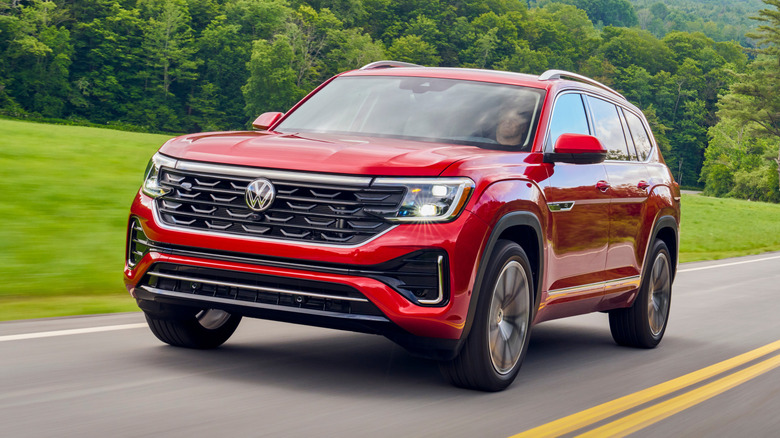
There are distinct VW Atlas vs Atlas Cross Sport interior space differences that buyers should consider. The standard Atlas prioritizes passenger volume and a massive 96.8 cubic feet of total cargo room. In contrast, the Atlas Cross Sport removes the third row entirely and adopts a more aggressive, sloped roofline. This results in a slightly smaller 77.6 cubic feet of cargo space but offers a more stylish silhouette and more legroom for second-row passengers.
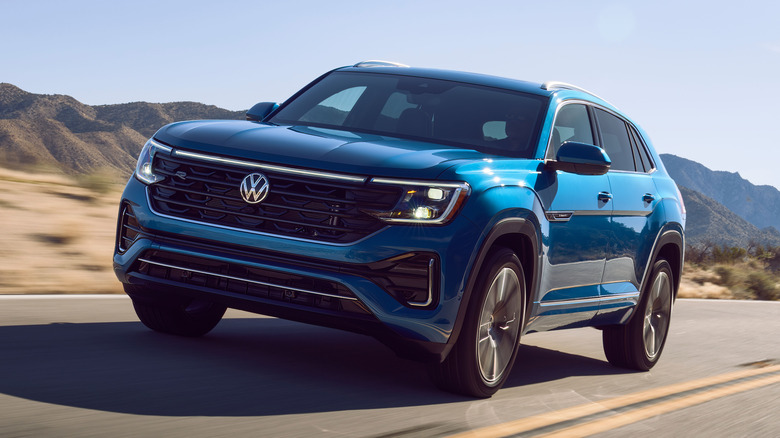
As of early 2026, it was reported that SUVs accounted for more than 78.5 percent of Volkswagen's total vehicle deliveries in the United States, a statistic largely driven by the success of the Atlas family. It is the best Volkswagen 3-row SUV for large families who refuse to compromise on interior room.
2026 VW ID.4: Evaluating the Electric Value Proposition
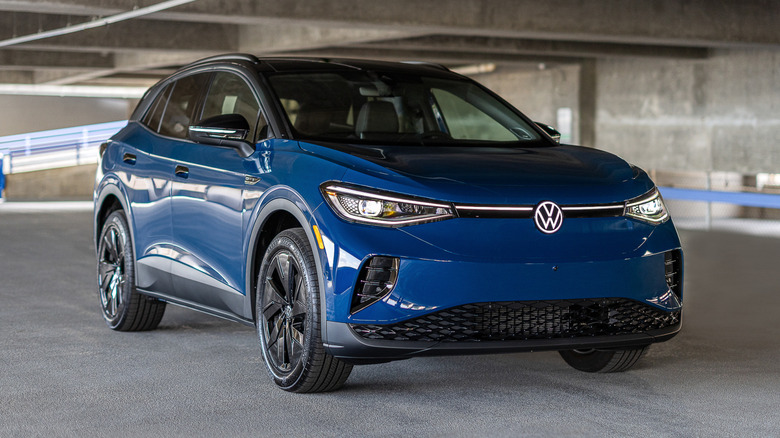
For drivers looking to move away from the internal combustion engine, the ID.4 represents the flagship of VW's electrification efforts. The 2026 VW ID.4 electric range compared to gas SUVs is a primary point of discussion for potential buyers. While the gas-powered Atlas can travel over 400 miles on a single tank, the ID.4 offers a maximum range of 291 miles in its most efficient configuration.
However, the value of the ID.4 lies in its performance capabilities and lower long-term fuel costs. The all-wheel-drive version of the ID.4 produces a staggering 335 horsepower, making it the quickest-accelerating SUV in the current Volkswagen fleet. It also features a futuristic interior with a large touchscreen that controls nearly every vehicle function, appealing to those who want a tech-forward driving experience.
The starting price of $46,570 reflects the higher cost of battery technology, but for many, the trade-off is worth it for the smooth, silent ride and the convenience of charging at home. When comparing VW electric vs gas SUVs, the ID.4 is the winner for suburban dwellers with predictable daily commutes, whereas the gas models remain the champions for cross-country road trips.
Who is this for?
- Early tech adopters who want the latest in-car software.
- Drivers with access to home charging who want to avoid gas stations.
- Performance enthusiasts looking for instant electric torque.
FAQ
Which 2026 VW SUVs offer three-row seating?
The 2026 Volkswagen Atlas is the primary model offering three rows of seating. It is designed to comfortably accommodate seven passengers. While the Tiguan has offered a small third row in previous years, the 2026 U.S. model focuses on a two-row configuration to maximize cargo space, leaving the Atlas as the dedicated family hauler.
How much will the 2026 Volkswagen ID.4 cost?
The 2026 Volkswagen ID.4 starts at $46,570. This price can increase depending on the battery size and whether you opt for the rear-wheel-drive or the more powerful all-wheel-drive version. Various federal or state tax credits may apply to this model, potentially lowering the effective cost for eligible buyers.
What are the main differences between the 2025 and 2026 VW SUVs?
The 2026 model year focuses on refining the technology suite across all models. Specifically, the Volkswagen Digital Cockpit and IQ.DRIVE have become standard or more deeply integrated into the base trims. There are also minor aesthetic refreshes for the Taos and updated infotainment software for the Atlas and ID.4 to improve response times and user interface.
Will the 2026 Volkswagen Taos get a refresh?
Yes, the 2026 Volkswagen Taos features a refresh that includes updated exterior styling, particularly in the front and rear light signatures. Inside, the dashboard layout has been tweaked to improve ergonomics, and new wheel designs are available to give the entry-level SUV a more premium look.
Is Volkswagen releasing a hybrid SUV in 2026?
Currently, the 2026 Volkswagen SUV price guide focuses on traditional gas-powered TSI engines and the all-electric ID.4. While Volkswagen has a strong global portfolio of plug-in hybrids, the 2026 U.S. lineup remains split between efficient combustion engines and pure battery-electric power.
Conclusion & Final Recommendation
Choosing the right SUV from the 2026 Volkswagen lineup requires a clear understanding of your daily needs versus your weekend aspirations. For the budget-conscious driver who spends most of their time in the city, the Taos at $26,920 is an unbeatable value proposition. It offers the brand's signature German engineering at a price point that undercuts much of the competition.
However, if we are looking for the "sweet spot" of the entire lineup, the 2026 Volkswagen Atlas in the SE with Technology trim stands out as the ultimate winner. For roughly $40,785, you receive a vehicle with enough room for a growing family, a robust 269-horsepower engine, and a towing capacity that allows for true adventure. While the ID.4 is the future of the brand, the Atlas remains the most practical choice for the American lifestyle in 2026.
When choosing the best value 2026 VW SUV for safety and long-term utility, consider the total ownership costs. Gas models like the Tiguan and Atlas offer lower initial purchase prices and a vast network of service centers, while the ID.4 offers a glimpse into a zero-emissions future with higher upfront costs. Regardless of your choice, the 2026 fleet ensures that there is a Volkswagen SUV built for every driveway.