Quick Facts
- First Failure: The 1946 wooden rice cooker was Sony’s first product and a complete commercial disaster.
- Most Interactive: The Rolly was a $400 dancing MP3 player that could perform synchronized choreography.
- Iconic Robotics: Aibo redefined robot-human interaction, becoming a genuine member of thousands of families.
- Wearable Tech: The Reon Pocket series brings personal climate control to the luxury fashion market.
- Era Trend: Sony's 1980s history was defined by extreme miniaturization, often making devices smaller than the media they played.
- Cult Classic: The Xperia Pureness remains one of the most sought-after collector phones due to its transparent screen.
Sony is the king of experimental consumer electronics history. While they gave us the PlayStation and Walkman, they also birthed some of the most weird gadgets ever seen.
Sony has a long history of experimental electronics, ranging from the Rolly dancing MP3 player and Aibo robotic pet to the Reon Pocket Pro Plus wearable air conditioner. These weird gadgets often pushed the boundaries of traditional consumer tech by integrating niche features like transparent displays on the Xperia Pureness or combining computer mice with VOIP handsets in the Vaio Mouse Talk. Many unusual Sony products focus on practical lifestyle improvements through unconventional designs. For example, the Wena Wrist Pro converts traditional luxury watches into smartwatches via a smart strap, while the SRS-LSR100 serves as a portable wireless speaker and TV remote hybrid. Other niche inventions include organic glass cylinder speakers and smart bulbs that double as wireless audio systems for the home.
Sony’s obscure gadget history includes early attempts at mobile computing and internet connectivity, such as the Magic Link PDA and the eVilla networking station. While these devices were often ahead of their time, they frequently struggled with hardware limitations like underpowered processors or high subscription fees. Today, these products are remembered as innovative but experimental form factors that paved the way for modern mobile technology.
The Root of Weirdness: Sony’s 1946 Wooden Rice Cooker
Long before the world knew Sony for high-fidelity audio or high-definition gaming, the company was a tiny shop in a bombed-out department store in Tokyo. Founded by Masaru Ibuka and Akio Morita, the initial venture was called Tokyo Tsushin Kogyo. Their first attempt at a commercial consumer product wasn't a radio or a recorder—it was a wooden tub rice cooker.
Consisting of interlocking electrodes at the bottom of a wooden bucket, the device was supposed to cook rice perfectly every time. However, the result depended heavily on the type of rice and how much water was used. The outcome was almost always a pot of mushy, overcooked paste or crunchy, half-raw grains. This failure was pivotal; it taught the founders that modern technology must be reliable to succeed in a domestic setting. Yet, even in this failure, we see the sparks of Sony's origin as a creator of weird japanese gadgets. It established a corporate DNA where engineering curiosity often outpaced market readiness, leading to a century of niche hardware inventions that dared to be different.
The Era of Extreme Miniaturization (1980s-1990s)
By the 1980s, Sony had mastered the art of making things small. This was the era of obsession where the company pushed the limits of physics to see just how literal they could take the word "portable." This period produced some of the most fascinating weird gadgets for geeks who valued form over function.
- Walkman WM-10 The WM-10 wasn't just a portable tape player; it was an engineering marvel that was actually smaller than a standard cassette case when closed. To insert a tape, the user had to slide the device open, expanding the chassis to fit the media. It was a peak example of retro-futuristic design that prioritized the "wow" factor of small tech.
| Category | The Ambition | The Reality |
|---|---|---|
| Goal | A tape player smaller than a cassette case. | High price point and a fragile sliding mechanism. |
| Status | Engineering Milestone | Collector's Item |
-
Discman D-88 Following the shrinking Walkman, Sony turned its attention to the Discman. The D-88 was designed to play 3-inch mini-CDs, which were popular for a fleeting moment in Japan. However, the real weirdness happened when you tried to play a standard 5-inch CD. The disc would actually protrude out of the sides of the player while spinning at high speeds—a terrifying sight for anyone protective of their music collection.
-
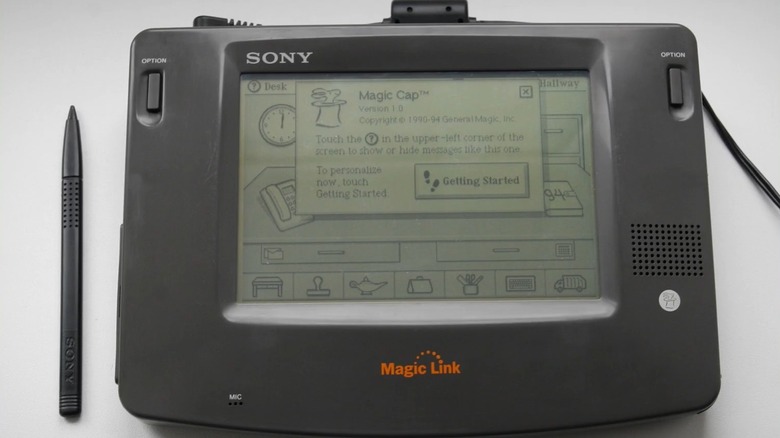
Magic Link PIC-1000 Before the smartphone, there was the PDA, and Sony’s Magic Link was perhaps the most ambitious of them all. Released in 1994, it used the Magic Cap operating system which featured a literal "desktop" UI—an image of a desk with a telephone, a rolodex, and a trash can. It was a visionary attempt at mobile computing that failed due to a lack of pervasive internet and its bulky size.
| Category | The Ambition | The Reality |
|---|---|---|
| Goal | A fully connected personal digital assistant. | Underpowered 16MHz CPU and no built-in wireless. |
| Status | Early Tech Pioneer | Forgotten Innovation |
Niche Hybrids: When Sony Merged Random Tech
There was a time in the late 90s and early 2000s when Sony seemed to believe that every device should do at least two unrelated things. This led to some of the most obscure gadgets in the Vaio and consumer electronics lines, often characterized as audio-visual gimmicks that struggled to find a permanent home in the office.
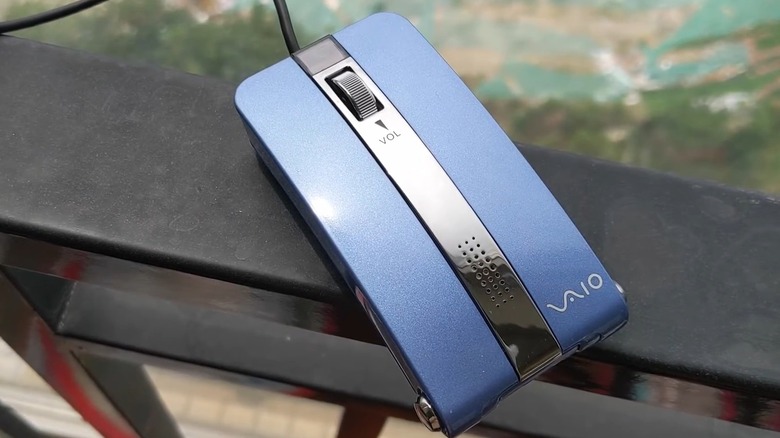
- Vaio Mouse Talk VN-CX1 At first glance, it appeared to be a standard, somewhat bulky Vaio computer mouse. However, it featured a clamshell design. When a Skype call came in, you could flip the mouse open and hold it to your ear like a flip phone. It remains one of the most practical weird office gadgets in theory, but in practice, it meant you couldn't use your cursor while talking.
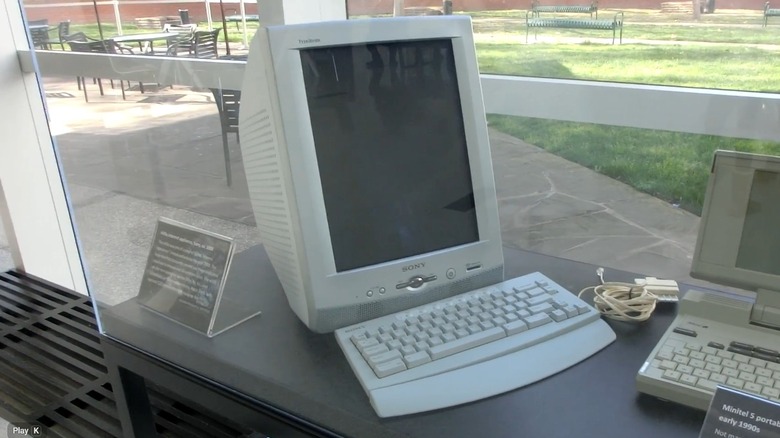
- eVilla Network Station Sony’s eVilla was an early 2000s "internet appliance." It wasn't quite a PC and wasn't quite a TV. Designed for the kitchen or living room, it was meant strictly for web browsing and email. Unfortunately, it weighed 30 pounds, used a proprietary "BeIA" operating system, and required a monthly $21.95 subscription fee just to access the web.
- eMarker The eMarker was a tiny keychain gadget designed for the radio era. If you heard a song you liked on the FM dial, you would press the button on the eMarker. Later, you would plug the device into your PC via USB, and it would supposedly tell you the name of the song and the artist based on the timestamp and the radio station you were listening to. It was a precursor to Shazam but required about ten extra steps.
| Category | The Ambition | The Reality |
|---|---|---|
| Goal | Instant song identification on the go. | Data synchronization was clunky and inaccurate. |
| Status | Niche Accessory | Obsolete Idea |
- SRS-LSR100 TV Speaker Still available in various iterations, this device is a wireless speaker with a built-in TV remote. It’s designed for those who want to hear the TV clearly while in the kitchen or for elderly users who struggle with TV volume. It’s one of those weird audio gadgets sony developed that actually found a small, loyal following.
The Sensory & Robotics Boom
As the digital age matured, Sony shifted its focus from purely functional items to sensory experiences. They began experimenting with autonomous robotic pets and wearable technology that interacted with the user's environment in tactile ways.
- Aibo (ERS Series) Aibo is the gold standard for nerd gadgets that actually work. First launched in 1999, these autonomous robotic pets could see, hear, and develop a personality based on how they were treated. Unlike other toys of the era, Aibo felt like a living creature, leading to heartfelt funerals in Japan when Sony eventually stopped offering repairs for original models.

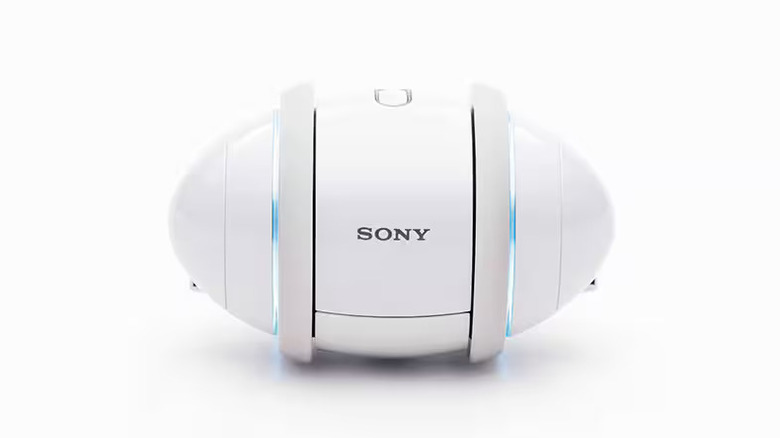
- Rolly (SEP-10BT) The Sony Rolly, a spherical music player released in 2007 that used motors to roll and 'dance' in synchronization with music, launched at a price of nearly $400 but was discontinued by 2009 due to limited commercial success. Source: obsoletesony.substack.com. It featured two light-up rings and butterfly-like flappers that acted as speakers. While it was an incredible show of kinetic engineering, its high price and low storage make it one of the most famous experimental product flops.
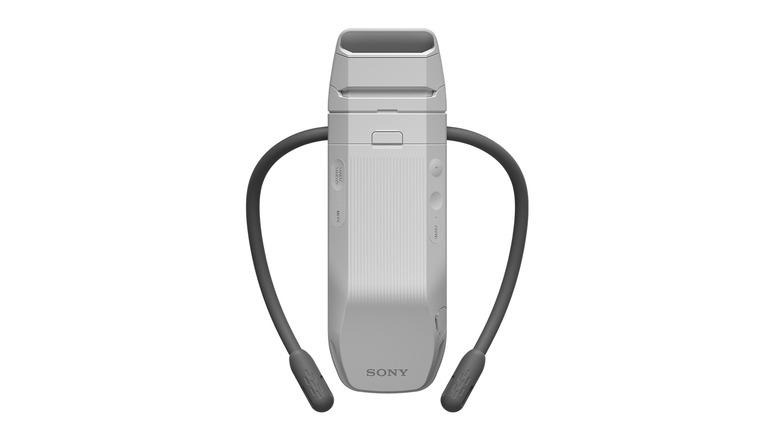
- Reon Pocket One of the most modern weird wearable tech gadgets in Sony’s stable is the Reon Pocket. It is a small, smartphone-controlled thermo-electric device that slips into a pocket on the back of a special undershirt. It can cool or warm the wearer’s body temperature on demand. It is a smart lifestyle peripheral designed for the humid summers of Tokyo, showing that Sony still values niche hardware inventions.
| Category | The Ambition | The Reality |
|---|---|---|
| Goal | Personal, wearable air conditioning. | Requires specific proprietary clothing to use. |
| Status | Modern Innovation | Active Niche Product |
- LSPX-S1 Glass Sound Speaker Sony took the idea of interactive home decor to its logical extreme with this organic glass cylinder speaker. The glass vibrates to produce high-frequency sounds while a warm LED filament glows inside, making it look more like a vintage lantern than a Bluetooth speaker. It’s a beautiful example of how weird gadgets for the home can blend high-end audio with interior design.
Future Glimpse: Cool 2026 Weird Gadgets and the Sony Legacy
As we look toward the horizon, the spirit of Sony’s experimentalism remains alive. We are already seeing the influence of past failures in today’s most successful tech. The Vaio UX, a tiny handheld computer from 2006, essentially laid the groundwork for the modern Steam Deck and the digital nomad accessories we use today.
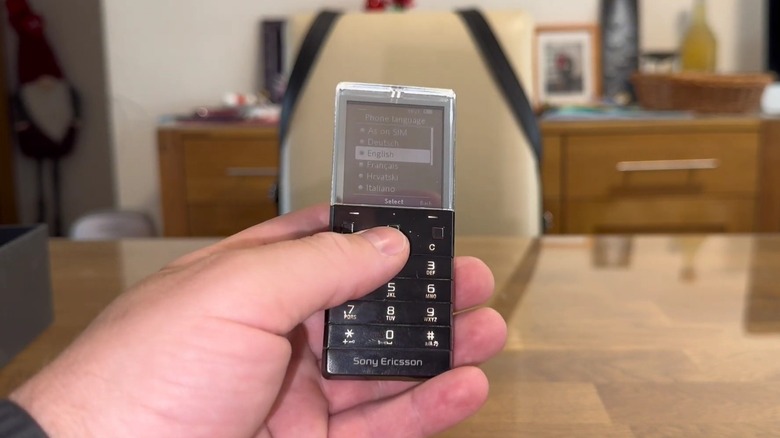
In the current landscape, Sony is exploring transparency tech display prototypes that could turn any glass surface into an interactive interface. The Xperia Pureness was the first peek at this, featuring a screen that you could literally see through while reading your text messages.
- Xperia Pureness Released in 2009, this phone did away with color, cameras, and even a solid screen. The display was a completely transparent panel. When the backlight was off, it looked like a piece of clear glass. It remains one of the most striking examples of Sony's commitment to pure aesthetic experimentation over mass-market utility.
If you are looking for a buying guide for weird house gadgets in 2026, keep an eye on Sony’s "First Flight" crowdfunding platform. This is where they now test their coolest and most obscure ideas, from smart watches hidden in traditional straps (the Wena) to multi-functional light bulbs that act as home intercoms and infrared remotes. Sony’s legacy isn't just about the hits; it’s about the courage to release the weird gadgets that everyone else was too afraid to build.
FAQ
Why are Japanese gadgets often considered weird?
The Japanese tech market, particularly companies like Sony, often focuses on "chindogu"—the art of the "unuseless" invention. There is a deep cultural appreciation for solving very specific, niche problems with high-tech engineering. This results in products that may seem eccentric to a global audience but serve a very distinct purpose in the context of Japanese daily life, such as space-saving devices or personal climate control for public transit.
What are the most famous weird inventions?
Beyond the Sony Rolly and Aibo, some of the most famous strange inventions include the "USB Pet Rock," the "HapiFork" that vibrates if you eat too fast, and various wearable air purifiers. In the Sony ecosystem, the 1946 wooden rice cooker and the transparent Xperia Pureness phone stand out as iconic examples of extreme experimental engineering.
Are strange gadgets actually useful?
Utility is subjective. While a dancing MP3 player like the Rolly might not be "useful" for basic music listening, it provides entertainment and a conversation piece. On the other hand, the Reon Pocket wearable AC is highly useful for those living in extreme heat. Many weird gadgets serve as "proof of concept" devices that eventually lead to features we take for granted in mainstream tech later on.
What are some of the weirdest gadgets you can buy?
Currently, you can purchase the Sony Reon Pocket 5, which is a highly sophisticated wearable heater and cooler. Other strange options on the market include the Dyson Zone air-purifying headphones and various "smart" jewelry that tracks stress levels through skin conductivity.
What are some weird tech gadgets for the home?
For the home, Sony offers the Glass Sound Speaker, which looks like a candle but is a high-end audio system. Other companies offer smart toasters with transparent windows or robotic lawnmowers that look like racing cars. The trend in 2026 is moving toward blending technology seamlessly into home decor so it doesn't look like tech at all.
Where can I find unique and unusual gadgets?
Specialized platforms like Sony’s First Flight or crowdfunding sites like Kickstarter and Indiegogo are hubs for unique tech. For those looking for retro items, sites like Obsolete Sony or eBay are the best places to find or learn about obscure gadgets from the 80s and 90s that never made it to the mainstream.