Our Top Picks
- Best for High-Ambient Light: JMGO N3 Ultimate – 5,800 ISO lumens and triple-laser precision.
- Best for Large Living Rooms: Xgimi Titan – 5,000 ISO lumens with superior gaming performance.
- Best Ultra Short Throw: Epson EpiqVision Ultra LS800 – 4,000 lumens and 3LCD technology for zero rainbow effect.
- Best High-End Cinema: Valerion VisionMaster Max – 3,500 lumens with elite native contrast.
- Best Entry-Level/Budget: Epson EpiqVision Flex CO-FH02 – Affordable 3,000-lumen output for bright spaces.
The JMGO N3 Ultimate and Xgimi Titan are leading choices for bright rooms in 2026, delivering 5,800 and 5,000 ISO lumens respectively. These premium devices offer the necessary output to serve as a genuine bright room projector that maintains clarity even when the curtains are open.
Finding a bright room projector that doesn't wash out in daylight is the local holy grail for home cinema enthusiasts. In 2026, the standard has shifted from marketing fluff to rigourous ISO lumens. For years, we had to settle for a dim, muddy image if we didn't live in a windowless "bat cave." Today, advancements in laser light engines have changed the game, allowing projectors to compete directly with high-end televisions in the living room.
| Model | Brightness (ISO) | Resolution | Tech Type | Best For |
|---|---|---|---|---|
| JMGO N3 Ultimate | 5,800 Lumens | 4K | Triple Laser | Direct Sunlight |
| Xgimi Titan | 5,000 Lumens | 4K | Triple Laser | Gaming & Movies |
| Epson LS800 | 4,000 Lumens | 4K | 3LCD Laser | Large TV Swap |
The Brightness Standard: Understanding ISO Lumens for 2026
When we evaluate a bright projector for daylight, the first thing we look at is legitimate brightness. In our reviews, we strictly adhere to ISO measurement standards because they provide a much more accurate representation of real-world performance than the inflated "LED lumens" or "Marketing lumens" often seen in budget listings.
For clear viewing in a room with ambient light, a projector should provide a minimum of 2,500 to 3,000 ISO lumens. If you are dealing with large, sun-drenched windows, you will want to push toward's 4,000 lumens or higher. The industry's pivot toward these high-output machines is clear; in fact, the global market for household laser projection equipment is projected to grow to approximately $5.72 billion by 2026.
The conversation has also moved from laser projector vs lamp projectors for bright rooms to which type of laser is superior. Lamp-based units often dim quickly over their light engine lifespan, whereas modern triple laser light source units maintain their peak brightness for up to 30,000 hours, making them a much more viable television replacement.
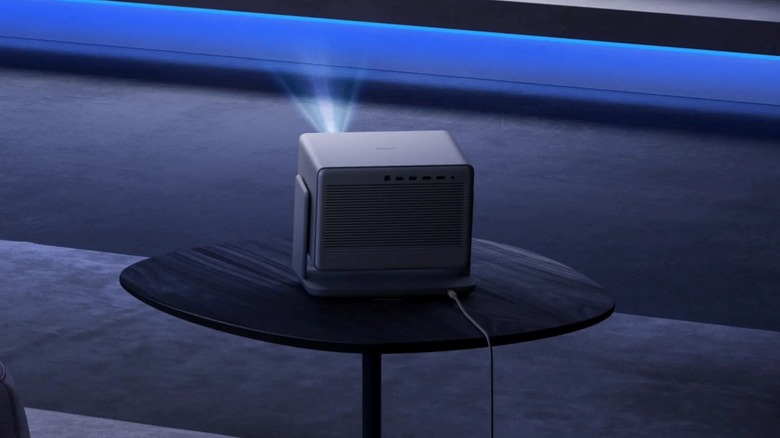
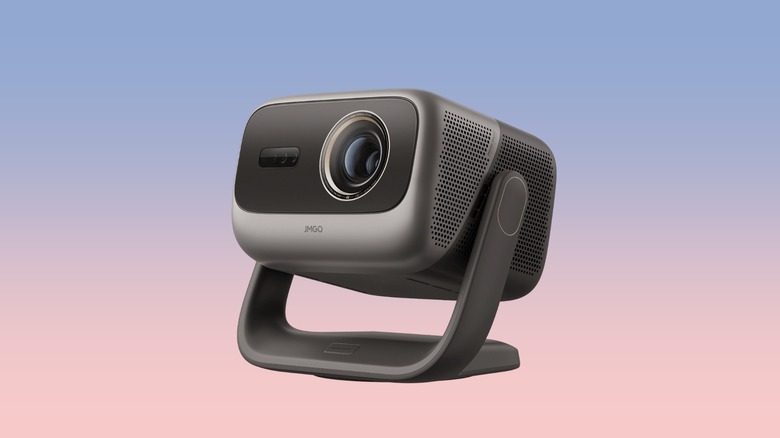
Best Overall: JMGO N3 Ultimate (5,800 ISO Lumens)
The JMGO N3 Ultimate is currently the king of the mountain for anyone seeking the best bright room projector without compromise. During our testing, the 5,800 ISO lumens stood out as the first time a domestic projector truly felt like it could handle a sun-lit afternoon. This isn't just about raw power; the triple laser light source provides a staggering 110% of the BT.2020 color gamut, ensuring that colors don't look "thin" or "chalky" when they have to compete with external light.
Editor's Note: While the brightness is legendary, watch out for the DLP rainbow effect if you are sensitive to it. However, the high refresh rate of the JMGO N3 engine minimizes this for most viewers.
Quick Specs
- MSRP: $3,499
- Brightness: 5,800 ISO Lumens
- Chip: 0.47" DMD
- Contrast: 3,000:1
Pros
- Industry-leading brightness for living room use.
- Incredible color saturation via triple-laser tech.
- Built-in gimbal design for easy placement.
Cons
- Large physical footprint.
- Premium price tag.
Best Ultra Short Throw (UST): Epson EpiqVision Ultra LS800
If you want the look and feel of a massive television without a black glass slab on your wall, the Epson EpiqVision Ultra LS800 is the top-rated choice for 2026. Because it sits just inches from the wall, the light has less distance to travel, which helps preserve the 4,000 lumens of both color and white brightness.
Epson uses 3LCD technology, which is a major advantage for families. Unlike DLP projectors, 3LCD produces no rainbow effect, making it much more comfortable for long-term viewing. We often recommend this as the best projector for living room setups because of its extremely short throw and integrated Yamaha sound system.
Quick Specs
- MSRP: $2,999
- Brightness: 4,000 ISO Lumens
- Chip: 3LCD (3-Chip)
- Throw Ratio: 0.16:1
Pros
- No rainbow effect (3LCD).
- Fastest setup time in the category.
- Huge, bright image from just 6 inches away.
Cons
- Projector lumens needed for bright room are high, but UST lenses can be sensitive to wall imperfections.
- Contrast is slightly lower than dedicated cinema laser units.
Best Performance for Gamers: Xgimi Titan
The Xgimi Titan is a technological marvel designed for those who want their bright room projector to double as a high-end gaming monitor. It pumps out 5,000 ISO lumens, but the real star is the Intelligent screen adaptation system. It can automatically detect your wall color, avoid obstacles like light switches, and even align perfectly with a screen in seconds.
For gamers, it offers 4K/120Hz support and low input lag, which is rare in high-brightness laser units. If you are watching a midday football game or playing an action-packed RPG, the motion remains fluid and the image remains punchy. The Smart OS integration is seamless, providing built-in access to all major streaming apps without needing a separate dongle.
Quick Specs
- MSRP: $2,799
- Brightness: 5,000 ISO Lumens
- Resolution: 4K with HDR10+
- Latency: < 20ms at 4K/60Hz
Pros
- Market-leading automation for easy setup.
- Excellent daylight visibility.
- Quiet fan noise even at full power.
Cons
- Auto-keystone slightly reduces resolution in extreme angles.
Best Budget Choice: Epson EpiqVision Flex CO-FH02
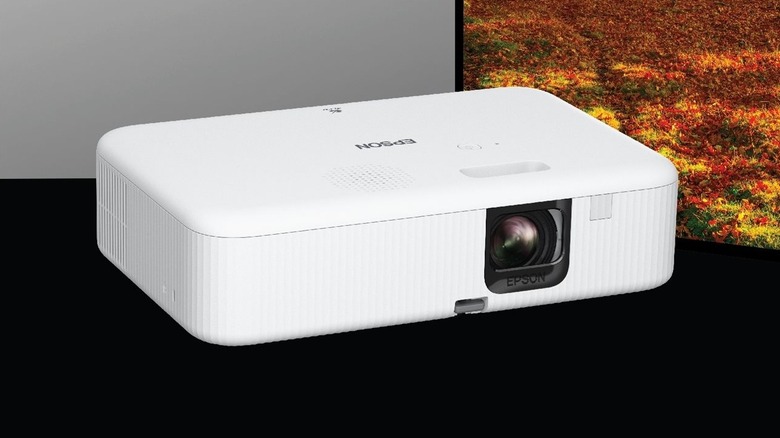
Not everyone has thousands to spend on the latest triple laser light source. For around $500, the Epson CO-FH02 is the best budget projector for bright room use. It delivers 3,000 lumens, which is enough to provide a clear image during the day if you avoid direct sun on the screen surface.
While it is limited to 1080p resolution, its brightness punches way above its price point. It’s light, portable, and a fantastic option for someone looking for a best projector for bright rooms without committing to a massive installation.
Quick Specs
- MSRP: $499
- Brightness: 3,000 ISO Lumens
- Resolution: 1080p
- Tech: 3LCD
Pros
- Incredible lumens-to-dollar ratio.
- Portable and easy to store.
- Same 3-chip technology as more expensive models.
Cons
- No 4K resolution.
- Minimal smart features.
Pro-Grade Luxury: Valerion VisionMaster Max
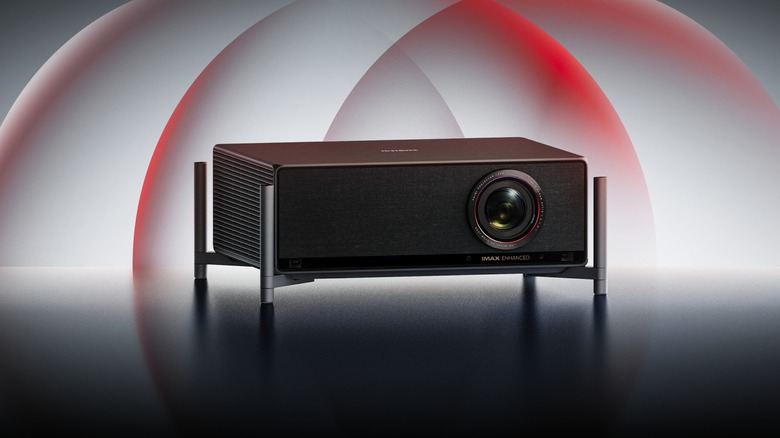
For cinephiles who want the best 4k projector for bright room environments but also crave "inky" blacks at night, the Valerion VisionMaster Max is our recommendation. While its 3,500 lumens are lower than the JMGO, it uses high-end optics to achieve a 5,000:1 native contrast ratio. Most projectors in bright rooms struggle with black levels, making the image look gray. The Valerion fights this with a superior light engine that keeps dark scenes detailed even when there's some light in the room.
Quick Specs
- MSRP: $3,999
- Brightness: 3,500 ISO Lumens
- Contrast: 5,000:1 Native
- Color: BT.2020 Full Support
Pros
- Best-in-class contrast for a laser projector.
- Solid build quality with premium lens glass.
- High-fidelity color reproduction.
Cons
- Needs a darker room to show its true potential compared to high-lumen monsters.
System Synergy: Why You Need an ALR Screen
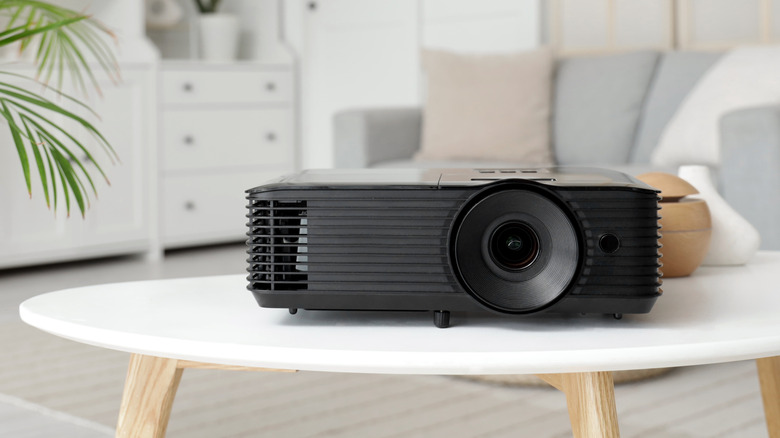
Even the most powerful bright room projector can only do so much on its own. If you are projecting onto a standard white wall, the light from your windows will bounce off that wall and wash out the image. This is where Ambient light rejection (ALR) technology becomes essential.
An ALR screen works by using a specialized surface—often a dark gray or silver—that is designed to reflect light coming from the projector toward the viewer, while absorbing or redirecting light coming from the ceiling or windows. When choosing the best projector screen color for bright room setups, gray is almost always superior to white. It helps maintain the black levels that high-brightness projectors naturally lose when competing with ambient light. Combining a high-lumen triple laser projector with a CineGrey 3D screen is the closest you can get to a 100-inch TV experience.
FAQ
What is the best projector for a bright room?
The JMGO N3 Ultimate currently holds the title for the best projector for a bright room due to its massive 5,800 ISO lumen output. For those looking for an ultra-short-throw option, the Epson LS800 is widely considered the best choice for everyday living room use.
How many lumens do I need for a projector in a bright room?
For a clear, usable image in a room with some ambient light, you should aim for a projector lumens needed for bright room of at least 2,500 ISO lumens. If the room has significant windows or direct floor-to-ceiling glass, 4,000 to 5,000 ISO lumens is the recommended tier.
Can projectors work in a bright room?
Yes, modern laser projectors can work excellently in bright rooms, provided they have a high light output and are paired with the right screen. However, you will never get the absolute perfect black levels of an OLED TV in a sunlit room; the goal is to achieve high contrast and vibrant colors that remain visible and engaging.
Is it worth buying a projector instead of a TV?
It is absolutely worth it if you want an image larger than 85 inches. A high-quality 100-inch or 120-inch TV is incredibly expensive and heavy. A television replacement projector offers a theatrical scale that a standard TV cannot match, and with modern laser technology, the light engine lifespan now reaches up to 10-15 years of daily use.
What is the 4 6 8 rule for projectors?
The 4 6 8 rule is a guideline for determining the ideal screen height based on the viewing distance and the content type. For analytical viewing (text/data), the viewer should be no further than 4 times the screen height. For basic viewing (typical movies), 6 times the height is ideal. For passive viewing (background sports), 8 times the height is acceptable. In a bright room, following this rule ensures that the image remains large enough to be legible even if the contrast is slightly reduced by ambient light.