Quick Facts
- The Top Performer: The Tesla Model 3 AWD currently holds the title of the most secure vehicle on the road, with theft rates significantly below national averages.
- The EV Advantage: Modern electric vehicles and plug-in hybrids have 85% lower theft claim frequencies compared to traditional internal combustion engine cars.
- Tesla Performance: High-tech tracking and surveillance mean Tesla theft rates are only 2 to 3 percent of the national average.
- Security Leaders: The 2026 leaderboard for least stolen EVs is dominated by the Tesla Model 3, Tesla Model Y, Tesla Model S, Ford Mustang Mach-E, and Volkswagen ID.4.
- Technical Breakthrough: New 2026 firmware updates have introduced a Low Power Sentry Mode, reducing battery drain by 40% while maintaining 360-degree surveillance.
- Recovery Rate: Integrated high-precision GPS tracking and cloud connectivity make vehicle recovery nearly 100% for most modern electric models.
- Insurance Benefits: Driving one of the least stolen electric car models in 2026 often leads to lower auto insurance premiums and better long-term ownership value.
According to the Highway Loss Data Institute, the least stolen EVs in 2026 include the Tesla Model 3 (both AWD and RWD), the Tesla Model Y, the Tesla Model S, and the Ford Mustang Mach-E. These vehicles lead the security race because they combine software-defined security, encrypted digital keys, and always-on GPS tracking that makes them nearly impossible to steal and easy to recover compared to traditional internal combustion vehicles.
The 2026 Security Leaderboard: Who Made the List?
When we look at the modern automotive landscape, the shift toward electrification has brought an unexpected benefit: a massive drop in vehicle theft. For years, the Highway Loss Data Institute (HLDI) has tracked insurance loss frequency, and the data is becoming increasingly clear. If you want a car that stays in your driveway, you want an electric one.
The 2026 data shows that eight electric vehicles and two plug-in hybrids are among the top 20 models least likely to be stolen across the entire industry. This is a staggering statistic when compared to high-theft internal combustion engine (ICE) vehicles. For example, a high-performance ICE car like the Chevrolet Camaro ZL1 is nearly 39 times more likely to be stolen than the average vehicle. In contrast, the top performers in the EV category are effectively invisible to professional thieves.
| Rank | Model | Category | Relative Theft Frequency |
|---|---|---|---|
| 1 | Tesla Model 3 AWD | Electric Sedan | 2% of average |
| 2 | Tesla Model Y AWD | Electric SUV | 3% of average |
| 3 | Tesla Model 3 RWD | Electric Sedan | 3% of average |
| 4 | Tesla Model S | Luxury Electric Sedan | 4% of average |
| 5 | Ford Mustang Mach-E | Electric SUV | 7% of average |
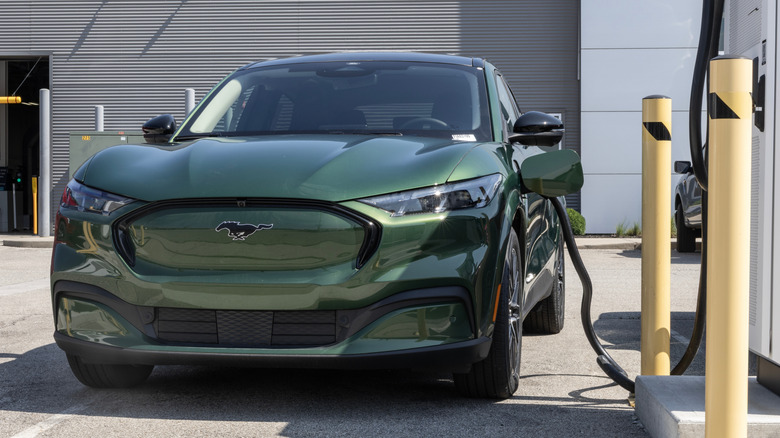
The Ford Mustang Mach-E stands out as the top-performing non-Tesla vehicle on this list. Ford’s decision to move toward a software-defined architecture has paid off, providing many of the same security benefits that were previously exclusive to Tesla owners. By eliminating traditional physical tumblers in the ignition and moving to digital immobilizers, Ford has significantly raised the barrier for entry for the average thief. For consumers, the financial benefits of high EV security ratings are real, as many insurers now offer reduced auto insurance premiums for vehicles that show such low loss frequencies.
Why Tesla Leads: Hardware 4 and the 2026 Firmware Revolution
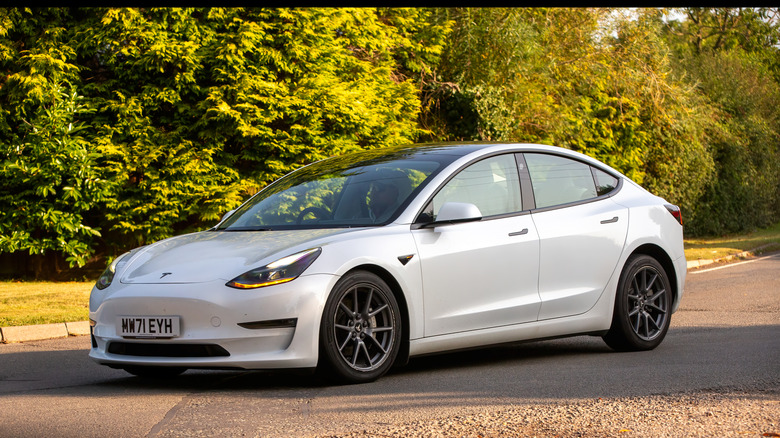
Tesla has always been a tech company that happens to make cars, and nowhere is this more evident than in their approach to Tesla Sentry Mode anti-theft systems. While other manufacturers have added security as an afterthought, Tesla built it into the core of their operating system.
The introduction of Hardware 4 (HW4) brought significantly higher-resolution cameras and more powerful processing, but the real game-changer arrived with the 2026 firmware updates. Previously, running Sentry Mode meant leaving the car's main infotainment computer awake, which consumed a significant amount of energy—often referred to as "vampire drain." The 2026 update introduced a refined Low Power Sentry Mode that has revolutionized how these vehicles protect themselves.
Key technical specs of the 2026 Tesla security suite include:
- Power Efficiency: A 40% reduction in energy consumption during surveillance.
- Intelligent Processing: The FSD (Full Self-Driving) computer now handles motion detection while the main infotainment system stays in a low-power sleep state.
- 360-Degree Awareness: Continuous monitoring via eight external cameras with enhanced night vision capabilities.
- Cloud-based monitoring: Real-time video streaming to the owner's smartphone whenever a "Sentry Event" is triggered.
This system is an incredibly effective way how Tesla Sentry Mode deters professional thieves. A thief looking for a quick score is unlikely to target a car that is actively filming them from every angle and sending their face directly to the owner's phone. By reducing Tesla battery drain from security systems, the company has made it practical for owners to keep their security active 24/7, even when parked at an airport for weeks at a time.
Beyond Cameras: The Technical Barriers to EV Theft
While cameras are a visible deterrent, the most secure electric cars rely on invisible barriers that make them "theft-proof" by traditional standards. In the era of the internal combustion engine, a thief could "hotwire" a car by physically manipulating the ignition cylinder and bypassing the mechanical lock. In a modern EV, there is no ignition cylinder to bypass.
These vehicles utilize a digital immobilizer that requires a cryptographic handshake between the key (or phone) and the car's central gateway. Without this encrypted digital key, the drive units simply will not engage. There are several technical reasons why EVs are difficult to hotwire:
- Software-Defined Security: The "keys" are not physical pieces of metal but encrypted tokens that are difficult to spoof without sophisticated hacking tools.
- Physical Hardware Encryption: The communication between the battery, the inverter, and the motor is encrypted. You cannot simply "jump" a wire to make the motor spin.
- High-Voltage Safety Standards: Under the UN R100 global standards, EV high-voltage systems are heavily shielded. Attempting to manually bypass power systems in a 400V or 800V vehicle is extremely dangerous and potentially lethal for an untrained thief.
Furthermore, how GPS tracking in EVs aids vehicle recovery cannot be overstated. Unlike aftermarket GPS units that can be easily found and ripped out, EV tracking is often integrated deep into the vehicle’s connectivity board. If a Tesla or a Kia EV6 is moved without authorization, it immediately enters a "stolen mode" that provides the owner and police with a live, high-precision map of the vehicle's location. This high vehicle recovery rate acts as a massive deterrent for professional car theft rings who prefer "silent" ICE cars they can hide quickly.
The Economic Deterrent: Why Thieves Don't Want Your EV
Beyond the digital walls and camera lenses, there are powerful economic reasons why thieves are avoiding most secure electric cars. The "black market" for car parts is a major driver of automotive theft, and currently, that market doesn't favor electric vehicles.
One of the most common reasons for ICE vehicle theft is the catalytic converter. These components contain precious metals like platinum and palladium and can be cut out in minutes. Electric vehicles do not have catalytic converters, immediately making them less attractive to "smash-and-grab" thieves. Additionally, because most EV components are serialized and tied to a specific VIN (Vehicle Identification Number) via software, it is much harder to sell stolen EV motors or battery modules on the open market.
There are also significant infrastructure barriers. A thief who steals a high-end ICE car can often export it to a country where the vehicle can be resold. However, exporting a stolen EV to a region without a robust charging network or manufacturer support is a losing proposition. Most EVs also feature remote disabling capabilities; if a vehicle is reported stolen, the manufacturer can theoretically "brick" the car through an OTA firmware update, rendering it useless for anything other than scrap metal.
Finally, the typical EV owner’s habits provide an extra layer of security. Most EV owners park in garages or well-lit areas near charging stations, often utilizing geofencing features that alert them if the car leaves a specific area. This combination of physical security, constant connectivity, and a lack of valuable "easy" parts like catalytic converters has created an environment where the most secure electric cars simply aren't worth the risk for most criminals.
FAQ
Which electric cars are the least likely to be stolen?
The Tesla Model 3 and Tesla Model Y are consistently ranked as the least likely vehicles to be stolen. Other top performers include the Tesla Model S, Ford Mustang Mach-E, Volkswagen ID.4, and Kia EV6. These models benefit from having theft rates that are a tiny fraction of the industry average.
Are electric vehicles harder to steal than gasoline cars?
Yes, electric vehicles are significantly harder to steal because they lack traditional mechanical ignitions and rely on software-defined security. They cannot be hotwired in the traditional sense, and their integrated GPS tracking makes them very difficult to move without being detected.
Why do electric cars have lower theft rates?
Electric cars have lower theft rates because they are equipped with advanced digital immobilizers, always-on connectivity, and lack expensive-to-sell parts like catalytic converters. Additionally, features like Tesla's Sentry Mode provide active surveillance that scares off potential thieves.
What security features make certain EVs less likely to be stolen?
Key EV security features include 360-degree camera surveillance (like Sentry Mode), digital keys with high-level encryption, multi-factor authentication (PIN to Drive), and integrated GPS tracking. The 2026 firmware updates have also made these systems more efficient, allowing them to remain active for longer periods.
Can thieves disable the tracking systems on electric vehicles?
While sophisticated thieves may try, disabling the tracking in a modern EV is extremely difficult. The GPS and cellular modules are often integrated into the car’s main computer architecture. Disconnecting them often disables the car entirely, making it impossible to drive away.
Do insurance companies offer lower rates for least stolen EVs?
In many cases, yes. Because insurance companies base their premiums on risk, the low insurance loss frequency of the least stolen EVs can lead to lower comprehensive coverage costs. Owners should check with their providers to see if they qualify for "high-security" or "anti-theft" discounts based on their vehicle's safety ratings.