Our Top Picks
- Best New Feature: The move to full-duplex interaction allows you to interrupt the AI mid-sentence for a truly natural conversation flow.
- Essential UI Cue: Always check for the Lavender Pulse animation to ensure you are using the latest GPT-Live model rather than older versions.
- Best Productivity Tool: Interactive Visual Cards now pop up during calls to provide real-time weather, sports scores, and maps without pausing the audio.
- Best Implementation: The decoupled delegation system keeps the chatgpt voice mode fast and responsive while delegating heavy thinking to background models.
OpenAI's latest chatgpt voice mode update introduces GPT-Live, a breakthrough full-duplex architecture that allows the AI to listen and speak simultaneously. This technology eliminates the rigid, walkie-talkie style turn-taking of previous versions, enabling natural interruptions and real-time responses that mirror human interaction.

The Shift to Full-Duplex: Walkie-Talkie No More
For years, interacting with AI felt like using a radio from the 1990s. You would speak, wait for the processing circle to spin, and then listen. This is known as half-duplex communication. If you tried to correct the AI midway through its answer, it would keep talking until its pre-generated buffer was finished. The 2026 launch of chatgpt full duplex voice mode changes this entirely by adopting the telephone model of bidirectional audio streaming.
In this new environment, the system is always listening, even while its mouth is moving. This allows for interruption management that feels uncanny. If you ask the AI to explain quantum physics and realize halfway through that its explanation is too complex, you can simply say, "Wait, make it simpler," and it will stop instantly to pivot. This shift in natural conversation dynamics makes the AI feel like a collaborator rather than a search engine with a voice. When comparing chatgpt advanced voice mode vs standard versions, the difference is night and day; the latency is reduced to the point where the AI can react to your tone and speed in real-time.
How to Enable and Use GPT-Live Today
Getting started with the new version is straightforward, but it requires a specific set of steps to ensure you are looking at the right interface. OpenAI has moved away from the simple white circle to a more vibrant UI that signals higher processing power.
Setup Guide for GPT-Live
- Check for Updates: Open your app store on iOS or Android and ensure you are running the most recent version of the official app.
- Locate the Icon: Look for the small waveform icon at the bottom right of the message input bar.
- Verify the Pulse: Once active, look for the lavender pulse. If you see a rotating white circle, you are likely still on the older legacy mode or have hit your chatgpt voice mode limit.
- Hardware Check: Ensure your microphone permissions are granted. While this chatgpt voice mode desktop version is now available, the mobile experience remains the most fluid for hands-free use.
Pro Tip: If you are looking for chatgpt voice free options, the basic full-duplex engine is available to all users, though Plus subscribers get higher priority access to GPT-5.5 reasoning during peak hours.

Under the Hood: Decoupled Delegation and GPT-5.5
The real magic of GPT-Live isn't just the audio—it is how the brain behind the voice is organized. OpenAI uses a method called decoupled delegation. Think of it as having a fast-talking receptionist (GPT-Live) sitting in front of a brilliant scientist (GPT-5.5).
The conversational model manages the flow of the dialogue, handling backchannel cues like "mhmm," "I see," and "go on." This prevents the awkward silences that used to plague AI assistants. While GPT-Live keeps the conversation moving with low-latency feedback, the reasoning tasks are processed by the massive GPT-5.5 model in the background. This allows the AI to give you a deep, researched answer while maintaining the pace of a normal human talk. It can even display interactive info cards on your screen—such as a map of the coffee shop you just mentioned—without breaking its verbal stride.
Testing Performance: Benchmarks and Daily Limits
To understand why this update is being called "the future," we have to look at the numbers. In the past, voice modes were often seen as toys because they lacked the "intelligence" of the text models. That gap has been closed.
| Metric | Advanced Voice Mode (Legacy) | GPT-Live-1 (Current) |
|---|---|---|
| GPQA Reasoning Score | 45.3% | 84.2% |
| BrowseComp Search Accuracy | 0.7% | 75.2% |
| Human Preference Rating | 24.3% | 75.7% |
| Latency (ms) | 2500 - 3000ms | 200 - 450ms |
The stats tell a clear story of improvement. GPT-Live-1 achieved a staggering 84.2% on the GPQA scientific reasoning benchmark, which is a massive leap from the previous version's 45.3%. Furthermore, its ability to browse the web via voice triggers is significantly more reliable, reaching 75.2% accuracy on the BrowseComp agent-based web search benchmark. In internal testing, users chose the newer model in 75.7% of comparative tests, citing the natural flow and fewer "robotic" pauses.
However, these capabilities come with a cost. The chatgpt voice mode limit varies depending on your plan. Plus users enjoy nearly unlimited access, while free users may be downgraded to a standard, non-duplex model after a certain amount of daily active minutes.
Practical Training: Prompts and Professional Workflows
Knowing how to turn on chatgpt voice mode is only half the battle; you also need to know how to use it for real work. The full-duplex nature makes it perfect for "Operator" style tasks where you need the AI to stay on the line while it researches something for you.
Professional Prompts for Voice Mode
- Hands-Free Coding: "Hey, I'm working on a Python script for a web scraper. I'm going to read you the error message I'm getting, and I want you to talk me through the fix while I type."
- Live Translation: "I'm about to walk into a meeting with a group of Italian designers. Stay on the line and provide a live whisper translation of what they are saying, and help me respond correctly."
- Brainstorming: "Let's do a fast-paced brainstorm for a marketing campaign. Interruption is encouraged—if you hear a bad idea, stop me immediately and suggest an alternative."
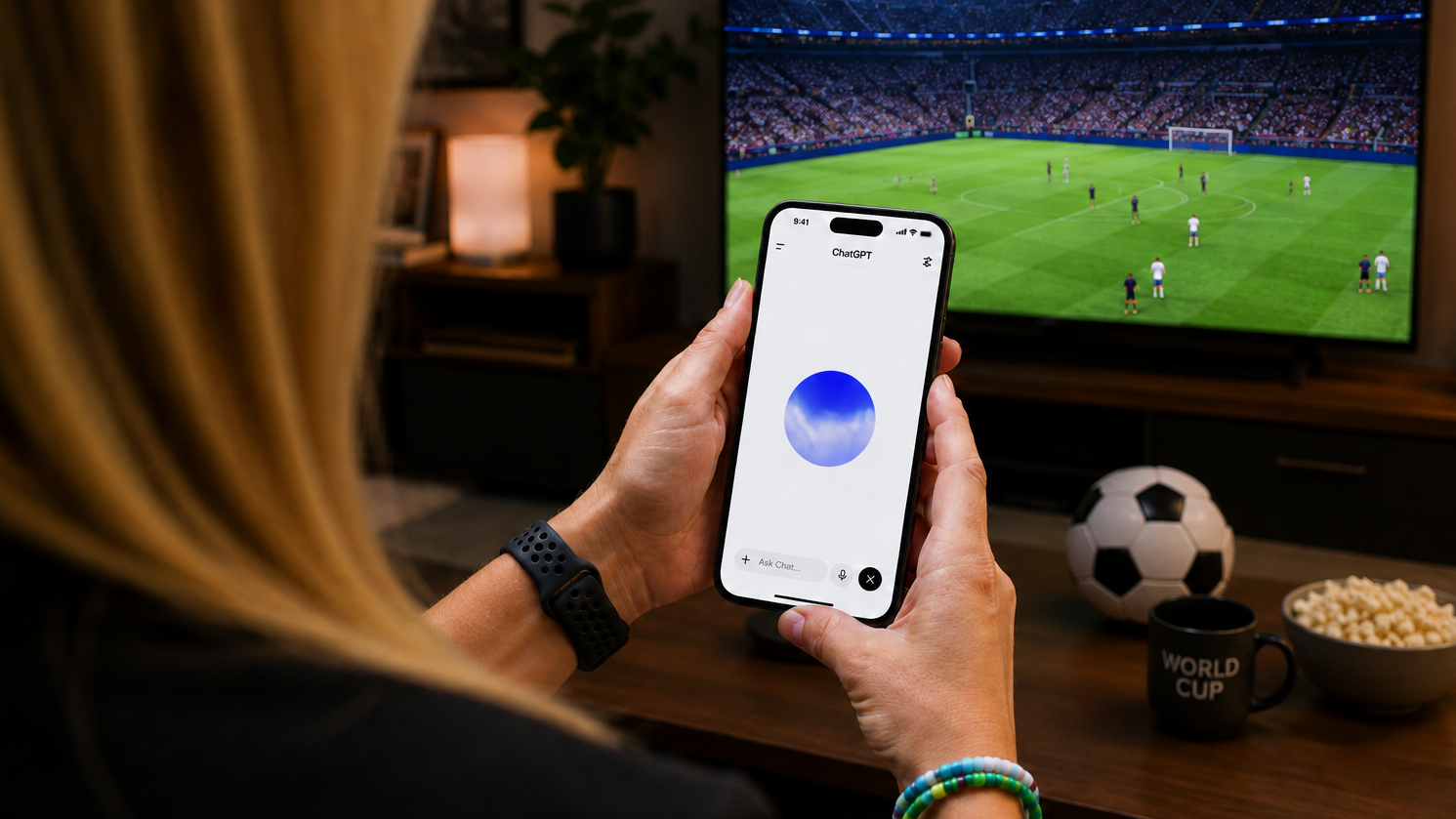
OpenAI has also implemented strict safety runtime controls. The system is limited to nine remastered system voices to prevent voice cloning of real people. For teen users, there are enhanced parental controls and monitoring systems to ensure that the human-like tone doesn't lead to unhealthy emotional attachment. These safeguards are essential as AI becomes more integrated into our daily lives.
FAQ
How do I use voice mode in ChatGPT?
To use the chatgpt voice mode, ensure your mobile app is updated to the latest 2026 version. Open a new chat and tap the waveform icon in the bottom right corner. When the screen changes to show a pulse animation, you can begin speaking naturally. You do not need to wait for the AI to finish its sentences to speak back.
Is voice mode free in ChatGPT?
Yes, a version of voice mode is available for free users. However, the high-performance GPT-Live full-duplex mode with GPT-5.5 reasoning is primarily reserved for Plus and Team subscribers. Free users may have access to a standard version with higher latency and daily time limits.
What is the daily limit for ChatGPT voice?
The limits are dynamic based on server load. Typically, Plus users receive several hours of continuous talk time per day on the GPT-Live model, while free users may be limited to 15-30 minutes of advanced interaction before the system reverts to a more basic, slower voice model.
How do I enable ChatGPT voice mode?
You enable it by tapping the waveform icon in the app. If you are on a desktop, you can look for the microphone icon in the web interface or the dedicated macOS/Windows app. Make sure your microphone is not muted and that you have granted the app permission to access your audio hardware.
How are people using ChatGPT voice?
Users are utilizing the chatgpt voice mode update for a variety of tasks including language learning through live conversation, hands-off cooking assistance, and real-time coding debugging. Professional users leverage the interactive info cards to check sports data and weather while driving or multi-tasking.
Conclusion and Next Steps
Is GPT-Live the future? After testing the system, the answer is a resounding yes. The transition from a static, turn-based interface to a fluid, full-duplex conversation reflects a fundamental shift in human-computer interaction. It no longer feels like you are interacting with a machine; it feels like you are speaking with an expert who is actually listening.
To experience this for yourself, check your app for the chatgpt voice mode update today. Look for that lavender pulse, pick one of the nine remastered voices, and try having a conversation where you are allowed to change your mind, interrupt, and ask for clarify in real-time. The barrier between thought and digital action has never been thinner.