Quick Facts
- Quickest 0-60: Porsche 959 Sport (3.2 seconds)
- Highest Top Speed: Ferrari F40 (201+ mph)
- Fastest Sedan: Mercedes-Benz 300E AMG Hammer (188 mph)
- AWD Pioneer: Porsche 959
- Group B King: Audi Sport quattro S1 E2
- Technological Peak: The Porsche 959 is widely recognized as the quickest production car of the 1980s, achieving a 0-60 mph time of 3.6 seconds (3.2s in Sport trim) using advanced all-wheel drive and a twin-turbocharged flat-six engine. While the Ferrari F40 claimed a higher top speed, the 959 set the benchmark for acceleration among the fastest 80s cars.
The Porsche 959 is widely recognized as the quickest production car of the 1980s. Featuring a twin-turbocharged 2.8-liter flat-six engine and advanced all-wheel drive, it achieved a 0-60 mph time of 3.6 seconds. While the Ferrari F40 rivaled it with a higher top speed of approximately 201 mph, the 959 remained the benchmark for acceleration during the decade.
The Technological Renaissance: Why the 1980s Redefined Speed
To understand why the 1980s produced such radical machines, we have to look at the landscape of the preceding decade. The 1970s were defined by the "malaise era"—a time of heavy emissions regulations, fuel crises, and massive bumpers that sapped the life out of performance engines. However, by the early 1980s, the automotive industry entered a period of rapid technological evolution. The rise of electronic fuel injection and a new obsession with turbocharging dominance transformed the market.
Suddenly, engineers weren't just trying to meet regulations; they were competing to see who could build the ultimate road-legal weapon. This era was significantly influenced by Group B racing, a rallying category with minimal restrictions that required manufacturers to build a specific number of street-legal versions of their race cars. These homologation specials brought race-track technology, like advanced all-wheel drive technology and Turbocharged V8 power, directly to the showroom floor.
Manufacturers shifted their focus toward a better horsepower to weight ratio and aerodynamic efficiency. By the middle of the decade, the fastest 80s cars were no longer just modified versions of existing coupes; they were bespoke engineering marvels that challenged the very laws of physics.
Ranked: The Quickest 1980s Production Cars (0-60 MPH)
When we look at 80s supercar 0-60 times, the numbers are staggering even by today’s standards. While top speed was the headline grabber, it was the "stoplight sprint" that truly separated the legends from the pretenders. Below is a ranking of the quickest 1980s production cars based on their 0-60 mph acceleration.
| Model | 0-60 MPH | Top Speed | Engine Type |
|---|---|---|---|
| Audi Sport quattro S1 E2 | 3.1s* | 155 mph | 2.1L Turbo I5 |
| Porsche 959 Sport | 3.2s | 211 mph | 2.8L Twin-turbo Flat-six |
| Porsche 959 Komfort | 3.6s | 197 mph | 2.8L Twin-turbo Flat-six |
| Ferrari F40 | 3.8s | 201 mph | 2.9L Turbocharged V8 |
| Ford RS200 Evolution | 3.8s | 155 mph | 2.1L Turbo I4 |
| Chevrolet Corvette ZR-1 | 4.5s | 175 mph | 5.7L V8 |
| Ferrari 288 GTO | 4.9s | 189 mph | 2.8L Turbocharged V8 |
| Buick Grand National GNX | 4.9s | 124 mph | 3.8L Turbo V6 |
Asterisk: The Audi Sport quattro S1 E2 was a very limited homologation special, but it remains one of the quickest 1980s production cars ever offered to the public.
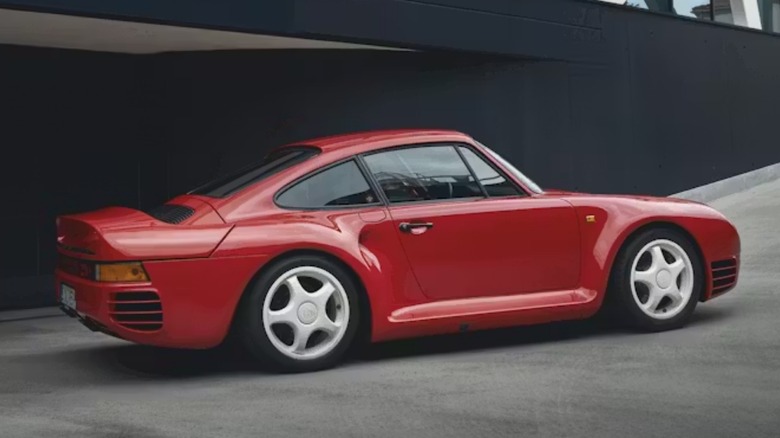
The Porsche 959 was recognized as the world's fastest street-legal production car upon its 1986 introduction, achieving a top speed of 197 mph (317 km/h) and a 0-60 mph time of 3.6 seconds. For those who needed even more intensity, the Porsche 959 S recorded a tested top speed of 211 mph (339 km/h) at the Nardò Ring in 1988.
Not far behind in the fastest production cars of the 1980s list was the 1989 Chevrolet Corvette ZR-1. Known as the "King of the Hill," the ZR-1 utilized a Lotus-designed LT5 engine to achieve a 0-60 mph time of 4.5 seconds. For a domestic car to compete with European exotics was a massive achievement, and it remains a highlight of American performance history. Even the Lamborghini Countach LP5000 QV made its mark, following closely with a 5.2-second sprint, proving that 1980s exotic cars with sub-5 second 0-60 times were becoming the new standard.
The Clash of Titans: Porsche 959 vs. Ferrari F40
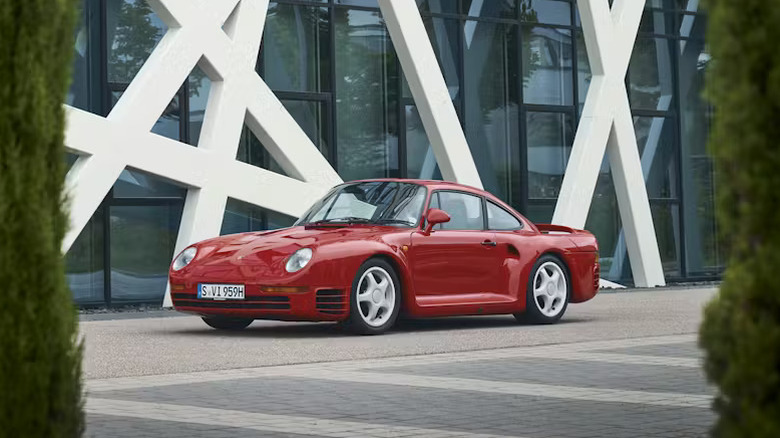
The late 1980s were defined by a rivalry that still sparks debate in car meets today. On one side, you had the Porsche 959, a masterpiece of technological sophistication. It featured an Active suspension system, an early form of tire pressure monitoring, and magnesium wheels with hollow spokes. It was the first high-performance car to prove that All-wheel drive technology could work in a supercar, providing immense grip that allowed for a sub-4-second launch even on imperfect surfaces.
On the other side stood the Ferrari F40, the 959's primary rival. If the 959 was a computer on wheels, the F40 was a go-kart with a rocket strapped to it. Built to celebrate Ferrari's 40th anniversary, it used extensive Carbon-Kevlar bodywork to keep weight to an absolute minimum. It lacked power steering, power brakes, and even door handles (using a pull wire instead). This focus on a lightweight, rear-wheel-drive design with a twin-turbo V8 allowed it to become the first production car to officially break the 200 mph barrier with a top speed of 201 mph (324 km/h).
When looking at a Porsche 959 vs Ferrari F40 0-60 comparison, the Porsche usually won off the line due to its all-wheel-drive traction. However, once moving, the F40's superior top speed of 1980s supercars ranked higher, and in some independent tests, it could pull ahead in a quarter-mile sprint once it found grip. The Porsche 959 vs Ferrari F40 performance debate often comes down to philosophy: do you want the refined, all-weather dominance of the German machine or the raw, visceral, and slightly terrifying speed of the Italian?
Beyond the Supercars: The Quickest Sleepers and Sedans
While the exotics stole the posters, some of the most impressive feats of 1980s speed happened in more "mundane" packages. The decade gave birth to the "super-sedan." One of the most famous examples was the Mercedes-Benz 300E AMG Hammer. By stuffing a 6.0-liter V8 into a mid-sized sedan, AMG created a car with a 188 mph top speed, which was faster than a Lamborghini Countach at the time.
In America, the Buick Grand National and its even more potent sibling, the GNX, proved that you didn't need a Flat-six engine to go fast. Using a turbocharged V6, the 1987 Buick GNX could reach 60 mph in 4.9 seconds, famously beating the contemporary Chevrolet Corvette and even some Ferraris in a straight line.
Similarly, the 1989 Pontiac Trans Am Turbo used a version of that same Buick engine to become the quickest American car of the decade before the ZR-1 arrived. These cars focused on curb weight reduction and specialized turbo tuning to deliver massive torque, making them legends of the drag strip.
Still Fast Today? 80s Icons vs. Modern Performance
It is a testament to 1980s engineering that these cars are still genuinely fast today. If you take a Porsche 959 performance specs vs modern sports cars, the numbers hold up surprisingly well. For instance, a 2025 Porsche 718 Cayman GTS 4.0 has a 0-60 time of roughly 3.8 to 4.3 seconds depending on the transmission—meaning a 40-year-old 959 could still potentially out-accelerate it.
However, the world has changed. Modern cars benefit from decades of advancement in tire technology and electronic stability control. While a 959 or F40 is fast, driving one at the limit requires significantly more skill and bravery than a modern supercar.
Today, these vehicles have transitioned from the road to the high-end collector car market. Due to their rarity and historical significance, a Porsche 959 or Ferrari F40 can easily fetch between $1.5 million and $3 million at auction. For American enthusiasts, the Porsche 959 was famously difficult to own due to its failure to meet US crash standards, leading to the creation of the "Show and Display" law, which allowed these icons to finally be imported and driven on American soil. This history only adds to their allure as the ultimate symbols of automotive engineering history.
FAQ
What was the fastest production car of the 1980s?
The title is often split between two legends. In terms of acceleration, the Porsche 959 was the quickest production car, reaching 60 mph in as little as 3.2 seconds in Sport trim. However, in terms of top speed, the Ferrari F40 took the crown late in the decade.
Which 80s car had the highest top speed?
The Ferrari F40 held the record for the highest top speed of the 1980s, being the first production vehicle to officially surpass the 200 mph mark, reaching a top speed of 201 mph (324 km/h). The Porsche 959 S was also recorded at 211 mph in specialized testing, though the F40 is more commonly cited as the top speed king of the era.
What were the quickest 0-60 cars in the 1980s?
The quickest cars were primarily homologation specials and supercars. The list includes the Audi Sport quattro S1 E2 (3.1s), Porsche 959 Sport (3.2s), Porsche 959 Komfort (3.6s), Ferrari F40 (3.8s), Ford RS200 Evolution (3.8s), and the Chevrolet Corvette ZR-1 (4.5s).
Are 80s performance cars still considered fast today?
Yes, many 80s icons remain fast by modern standards. With 0-60 times in the 3-second range, cars like the Porsche 959 and Ferrari F40 are still quicker than many entry-level modern sports cars and can keep pace with mid-range performance vehicles produced in the 2020s.
Which 1980s car first broke the 200 mph barrier?
The Ferrari F40 was the first production car to officially break the 200 mph barrier. It achieved this milestone in 1987, solidifying its place in history as the ultimate speed machine of its generation.