Quick Facts
- The VRAM Floor: For 1440p gaming in 2026, 12GB is the absolute minimum requirement; anything less leads to immediate performance stutters.
- Pricing Reality: A massive 172% GDDR cost spike has caused mid-range card prices to swell by nearly 20% compared to previous generations.
- Worst Value: The Nvidia GeForce RTX 3050 6GB version is the most compromised budget card, offering significantly lower performance than its already-weak 8GB predecessor.
- The Hype Trap: While a technical marvel, the RTX 5090 street prices frequently exceed $2,600, making it a poor financial decision for pure gaming.
- Best Alternative: Competitors like the Intel Arc B580 and AMD RX 9070 offer significantly more VRAM-per-dollar than Nvidia’s entry-level and mid-range stack.
- Key Tech: Software features like DLSS 4.5 are impressive, but they cannot compensate for fundamental hardware limitations like narrow memory buses.
In 2026, the primary Nvidia GPUs to avoid are those suffering from the VRAM Trap or extreme price inflation, specifically the RTX 5060 Ti 8GB, RTX 3050 6GB, and the grossly overpriced RTX 5090 for gaming. For mid-range users, the RTX 5070 offers diminishing returns compared to older models, making it one of the worst value Nvidia GPUs currently on the shelf.
The 'RAMpocalypse': Why 8GB is the Ultimate Dealbreaker
As a PC editor who has seen every hardware cycle since the original GeForce days, I’ve seen some bad trends, but the current state of video memory is particularly concerning. We are currently living through what the industry calls the RAMpocalypse. Driven by a massive 172% surge in GDDR production costs, manufacturers have had to make a choice: eat the cost or cut the corners. Nvidia, unfortunately for the consumer, has often chosen the latter.
In 2026, why to avoid 8GB Nvidia cards in 2026 is no longer a matter of elitism; it is a matter of basic functionality. Modern AAA gaming requirements have shifted. Even at 1080p, titles released this year are saturating 8GB of memory just for high-quality textures. When you hit that VRAM limit, you don't just lose a few frames; you experience massive stuttering and texture pop-in that ruins the experience. This VRAM bottlenecking is exacerbated by the fact that GDDR7 memory inflation has pushed the price of 12GB and 16GB modules higher, leading Nvidia to keep 8GB as a "budget" tier that simply doesn't hold up.
Hardware future-proofing requires at least 12GB of buffer for a card to last more than two years. Buying an 8GB card today is like buying a car that can't go over 40 miles per hour; it might get you to the store, but you’ll be miserable on the highway.
1. The RTX 5090: A Professional Tool, Not a Gaming Investment
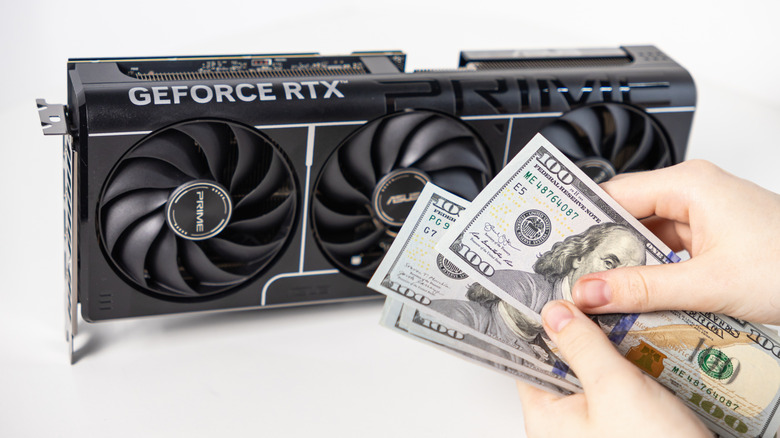
Let’s be clear: the Nvidia GeForce RTX 5090 is the fastest graphics card ever made. But for the average enthusiast asking is the RTX 5090 worth it for gaming, the answer is a resounding no. We are seeing Nvidia graphics cards with worst price to performance 2026 reaching their peak with this flagship. While the official MSRP vs street pricing gap has always existed, the RTX 5090 has become a victim of the AI boom. Scalpers and professional firms are driving street prices above $3,000 in some regions.
The hidden costs are even more staggering. With a Total Dissipated Power (TDP) rating of nearly 600 watts, you aren't just buying a GPU. You are likely buying a new 1200W-1600W power supply and potentially a larger case to handle the massive thermal load. When you look at 4K rendering benchmarks, the RTX 5090 is a beast, but in gaming, you quickly hit diminishing returns. Unless you are playing at 8K or doing professional-grade AI development, the extra $1,500 over an RTX 5080 yields only a marginal improvement in perceived smoothness.
| Feature | Marketing Claim | Reality for Gamers |
|---|---|---|
| Price | $1,999 MSRP | $2,600 - $3,200 Street Price |
| Power | "Flagship Performance" | 600W TGP; Requires PSU Upgrade |
| Performance | 2x faster than 4090 | 15-25% gain in most 4K games |
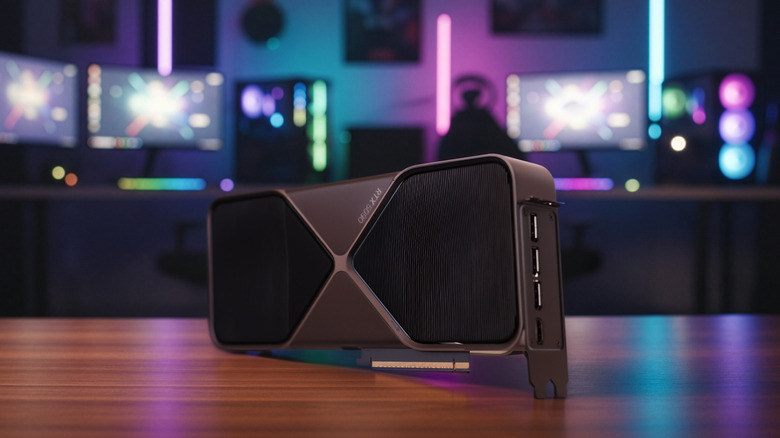
Pro Tip: If you are a gamer with $3,000 to spend, buy an RTX 5080 and spend the remaining $1,500 on a high-end QD-OLED monitor and a CPU upgrade. You will have a much better overall experience.
2. The RTX 5060 Ti 8GB: The Poster Child for Planned Obsolescence
If there is one card that represents everything wrong with the current market, it is the RTX 5060 Ti 8GB. This is arguably the most overrated Nvidia graphics cards in the mid-range sector. Nvidia’s RTX 50 series buying advice often leans heavily on the inclusion of DLSS 4 frame generation, but software tricks can’t fix a lack of physical memory.
In 2026, the 8GB buffer is a catastrophic failure for a "Ti" branded card. When you enable path tracing or high-resolution textures, the memory fills up instantly. While the 16GB version of this card exists, it is often priced so close to the RTX 5070 that it also becomes a poor value. This SKU exists solely to hit a price point on a spreadsheet, not to provide a good gaming experience for AAA gaming requirements.
Buy Instead: Look for an AMD Radeon RX 8800 XT or a discounted RTX 4070 Super. Both offer better memory configurations that won't choke on modern textures.
3. The RTX 5070: A Marginal Upgrade over the RTX 4070
The RTX 5070 is a classic example of a "refresh" masquerading as a new generation. When we look at the RTX 5070 vs 4070 performance comparison, the data is underwhelming. On average, we are seeing a mere 7-10% uplift in 1% Low FPS and raw frame rates. For a card that is launching at a higher MSRP vs street pricing than its predecessor, it simply doesn't make sense.
Nvidia’s RTX 50 series buying advice typically highlights the efficiency of the Blackwell architecture, but for someone already on an RTX 3080 or 4070, this is a lateral move. You are essentially paying a "new generation tax" for features that are only marginally better than what we had two years ago.
| Metric | RTX 4070 (Super) | RTX 5070 |
|---|---|---|
| VRAM | 12GB GDDR6X | 12GB GDDR7 |
| Real-World FPS Gain | Baseline | ~8% |
| Value Score | High (on sale) | Low |
4. The RTX 3050 6GB: The Budget Trap to Avoid
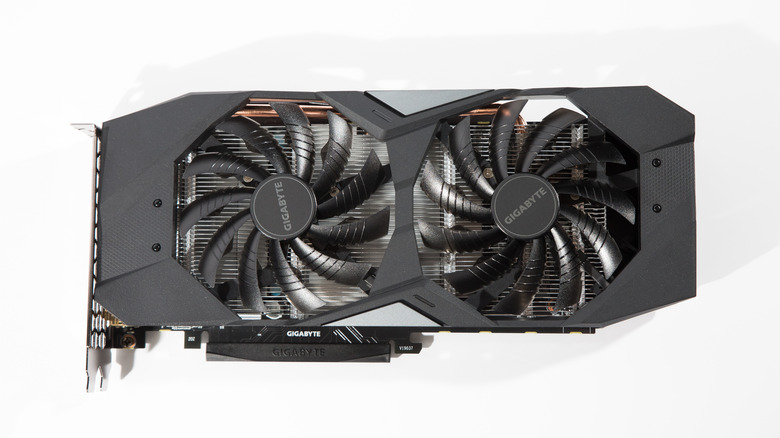
Budget gamers often fall for the cheapest card with a recognizable name, and the RTX 3050 6GB is designed to exploit that. This card is a significant downgrade from the original 8GB version. It features a narrower 96-bit memory bus and 10% fewer CUDA cores. Consequently, the Nvidia GeForce RTX 3050 6GB variant provides approximately 20% lower performance than the already modest 8GB version.
This is the ultimate worst value Nvidia GPUs entry. In a market where you can find used 20-series or 30-series cards that outperform this for less money, the 3050 6GB has no place in a modern PC. It struggles to maintain 60 FPS in modern titles even at 1080p medium settings. When you consider the AMD Radeon competition in this price bracket, Nvidia's offering looks even worse.
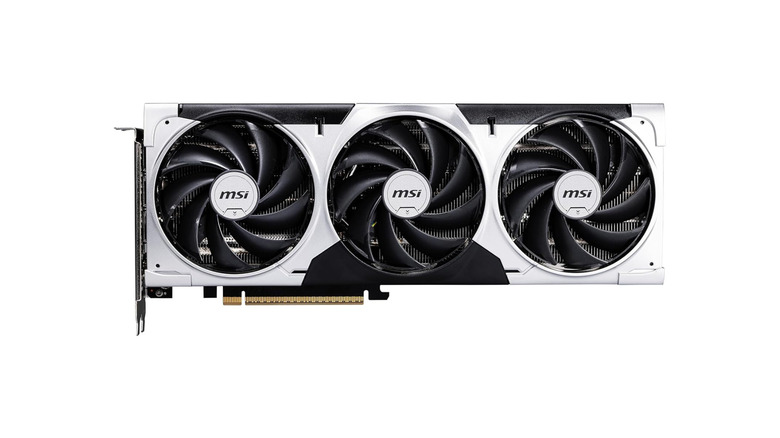
Buy Instead: The best budget graphics cards instead of RTX 3050 6GB are the Intel Arc B580 or the AMD Radeon RX 7600. Both provide a much more stable 1080p experience with better longevity.
5. The Used RTX 4070 Ti Super (At 2026 Prices)
The used market is usually a sanctuary for value-seekers, but in 2026, the RTX 4070 Ti Super is currently overrated. Because it was a "darling" of the 40-series for its 16GB VRAM, its used prices have remained artificially high. Sellers are often asking for 80-90% of its original MSRP, ignoring the 40% discount rule that should apply to hardware that is now a generation old.
Buying this card at near-original prices is a mistake when the newer AMD RX 9070 XT offers better rasterization performance and similar ray-tracing capabilities for a lower cost. If you are looking at used Nvidia GPUs to avoid, stay away from any 40-series card that hasn't seen a significant price drop. Hardware future-proofing is only valuable if you don't overpay for the privilege.
Summary Table: Total Cost of Ownership (2026)
| Model | Average Street Price | Hidden Costs (PSU/Cooling) | 3-Year Value Rating |
|---|---|---|---|
| RTX 5090 | $2,800 | High ($300+) | 1/5 (Gaming) |
| RTX 5070 | $649 | Low | 3/5 |
| RTX 5060 Ti 8GB | $449 | Low | 2/5 |
| RTX 3050 6GB | $179 | None | 1/5 |
Historical data shows that the RTX 3060 8GB model has been criticized for poor value due to its 128-bit memory bus, and the current 50-series and 30-series budget cuts follow that same disappointing trend. Don't let the brand name fool you into buying a crippled piece of silicon.
FAQ
Which Nvidia GPUs should you avoid buying today?
In the current 2026 market, you should avoid the RTX 5060 Ti 8GB, the RTX 3050 6GB, and the RTX 5090 if your primary goal is standard gaming. Additionally, the RTX 5070 is often a poor choice compared to discounted 40-series cards or used high-end hardware.
Are low VRAM Nvidia cards still worth the investment?
Generally, no. Cards with 8GB or less of VRAM are increasingly becoming obsolete for modern AAA games that require higher texture buffers. Investing in a card with at least 12GB of VRAM is essential for longevity and to avoid the stuttering caused by memory bottlenecks.
Why are some Nvidia graphics cards considered a bad value?
Some models are considered a bad value because they feature cut-down memory buses, reduced CUDA core counts, or prices that do not reflect their actual performance gains over previous generations. The current spike in memory costs has led to several cards being released with specifications that are inadequate for modern software.
How do I know if an Nvidia GPU is outdated for modern games?
A GPU is likely outdated if it cannot maintain stable frame rates at 1080p, lacks support for modern features like DLSS, or—most importantly—has a VRAM capacity below 8GB. If you see consistent stuttering despite having a high average frame rate, your card is likely being held back by its memory capacity.