Our Top Picks
- Overall Winner: Razer Wolverine V3 – The definitive choice for competitive professionals who need micro-switch responsiveness and maximum remappable buttons.
- Best Value: 8BitDo Ultimate 2C – An incredible $30 entry point that brings Hall Effect sensors and high-speed polling to the budget market.
- Best Longevity: GameSir G7 HE – Utilizing cutting-edge TMR sensor technology to provide even greater precision and lifespan than standard magnetic sticks.
- Best Nostalgia: Hyperkin Xenon – A perfect modern recreation of the beloved Xbox 360 controller with updated internals and USB-C connectivity.
- Best Customization: Scuf Valor Pro – Offers elite-tier ergonomics with four rear paddles that outclass the official first-party alternatives for shooters.
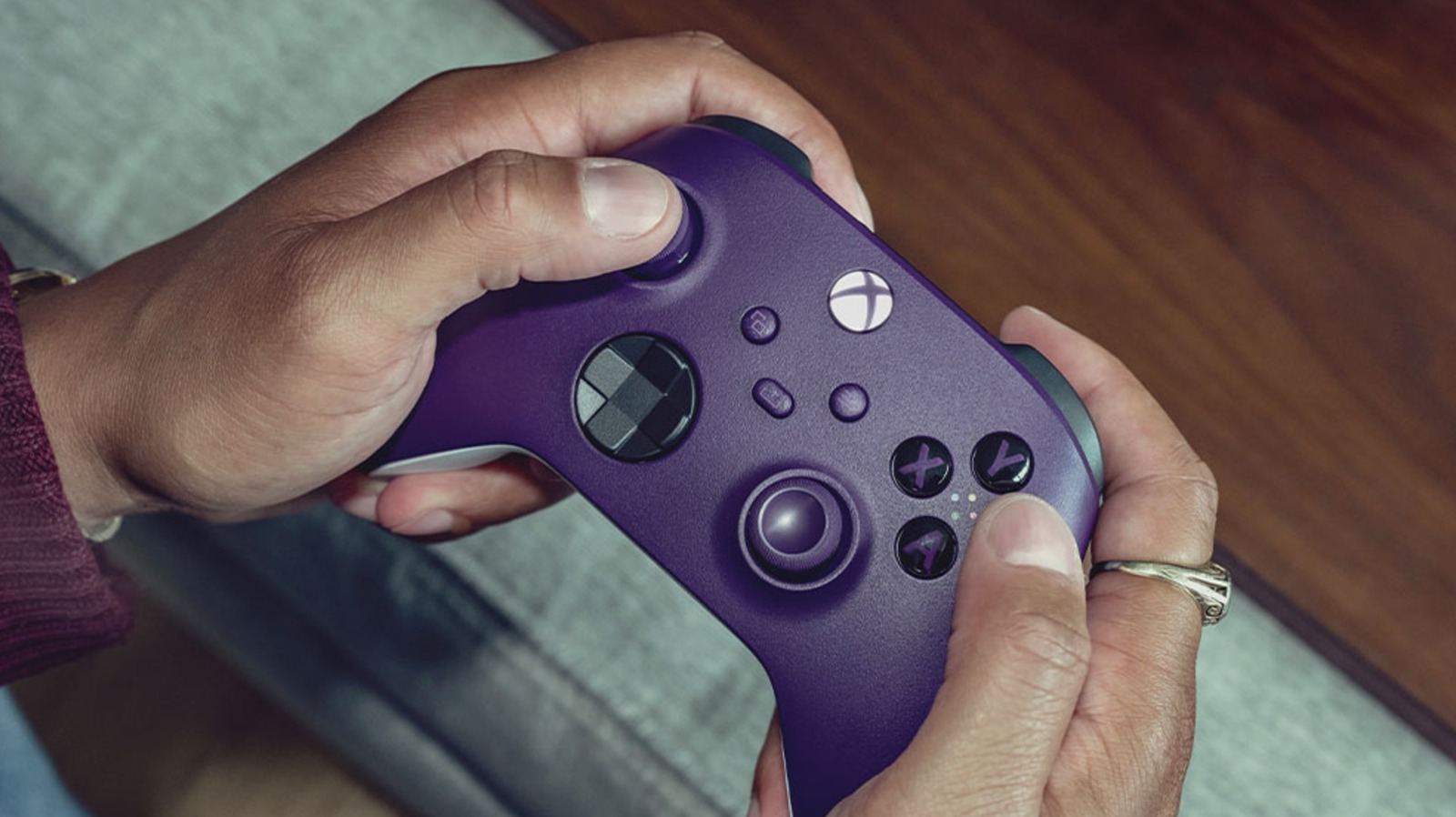
The top-rated third-party Xbox controllers for 2026 include the Razer Wolverine V3, 8BitDo Ultimate 2C, Hyperkin Xenon, Scuf Valor Pro, and GameSir G7 series. These alternatives often provide features absent in standard Microsoft peripherals, such as Hall effect joysticks for stick drift prevention, additional back paddles for competitive play, and 1000Hz polling rates for reduced input latency.
| Model | Sensor Type | Connectivity | Polling Rate |
|---|---|---|---|
| Razer Wolverine V3 | Hall Effect | Wired (1000Hz PC) / Wireless | 1000Hz (Wired) |
| 8BitDo Ultimate 2C | Hall Effect | Wired | 1000Hz |
| GameSir G7 HE | TMR Sensor | Wired | 1000Hz |
| Scuf Valor Pro | Hall Effect | Wired | 1000Hz |
| Hyperkin Xenon | ALPS (Standard) | Wired | 125Hz - 250Hz |
The 2026 Tech Shift: Hall Effect vs. TMR vs. ALPS
If you have spent any time in gaming forums over the last few years, you have likely heard the term stick drift mentioned with a sense of dread. For decades, the industry relied on ALPS potentiometer sensors. These use physical brushes that scrape against a resistive surface to measure movement. Over time, that friction creates debris and wear, leading to your character spinning in circles even when you aren't touching the thumbsticks.
As we move through 2026, the best hall effect xbox controllers for stick drift prevention have effectively killed the era of disposable controllers. Hall effect Xbox controllers use magnets and electrical conductors to measure stick position without any physical contact. No friction means no wear. However, the innovation hasn't stopped there. We are now seeing the rise of TMR sensor technology (Tunneling Magnetoresistance). While Hall Effect is great, TMR sensors offer lower power consumption and even higher resolution for micro-movements, which is why models like the GameSir G7 HE are gaining such massive traction.
Parallel to sensor durability is the push for speed. The industry has moved toward an xbox controllers with 1000hz polling rate for low latency standard. While standard Microsoft pads typically poll at 125Hz (8ms of delay), these third-party Xbox controllers update the console or PC every single millisecond. In a high-stakes FPS match, that 7ms difference is the gap between landing a headshot and staring at a respawn screen.
1. Razer Wolverine V3: The Ultimate Pro Choice
The Razer Wolverine V3 is currently sitting at the top of the mountain for those who view gaming as a competitive pursuit. What sets this apart from the standard Elite Series 2 is the tactile feedback. Razer uses mecha-tactile action buttons that feel more like a high-end mechanical keyboard click than a mushy controller button. These buttons are officially rated for a durability of approximately 3 million clicks, ensuring that your face buttons won't lose their springiness after a few months of intense play.
For players searching for third party xbox controllers with back paddles for fps games, the Wolverine V3 offers a unique six-button layout. You get four paddles on the back and two extra bumpers next to the triggers. This allows for complex custom mapping where you never have to take your thumbs off the sticks to jump, reload, or swap weapons.
Pros
- Incredible tactile feedback on all buttons
- Four rear paddles and two extra top bumpers
- Built-in trigger stops for instant firing
Cons
- The 1000Hz polling rate is restricted to wired mode on PC
- Premium pricing puts it in the same bracket as first-party pro pads
2. 8BitDo Ultimate 2C: Unbeatable Budget Performance
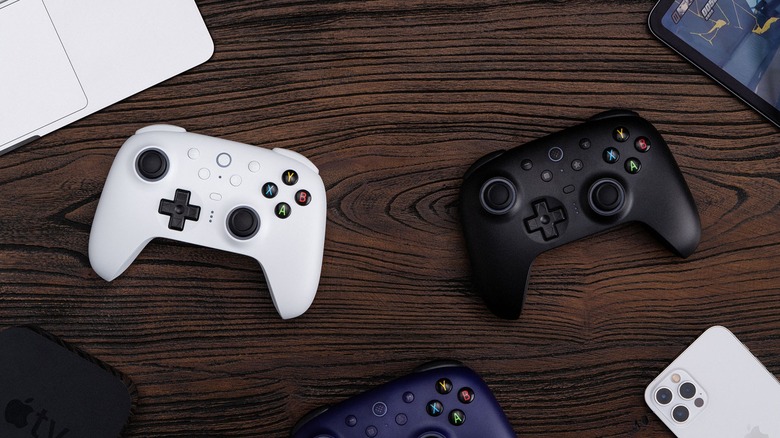
It is rare that we see a product completely disrupt a category, but the 8BitDo Ultimate 2C has done just that. For roughly $30, it manages to offer Hall Effect sensors and a 1000Hz polling rate, making it one of the most affordable third party xbox series x controllers under 50 dollars on the market today. We tested this against much more expensive units and found the centering of the sticks to be incredibly consistent, with virtually zero deadzone.
When comparing the gamesir g7 se vs 8bitdo ultimate for xbox series x, the 8BitDo feels slightly more compact. It uses a classic asymmetrical analog sticks layout that feels familiar to any Xbox veteran, but it trims the fat to keep the weight down. It lacks the back paddles of its more expensive siblings, but for a general-purpose pad that will never drift, the value is untouchable.
Pros
- Unbeatable price-to-performance ratio
- Excellent build quality for a budget device
- Available in several striking colors
Cons
- Lacks rear paddles for competitive play
- Wired-only connection might annoy living room gamers
3. GameSir G7 HE: The TMR Sensor Evolution
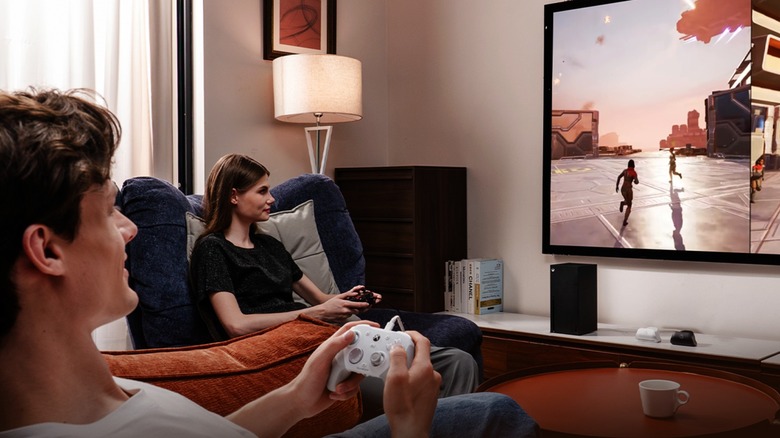
GameSir was the pioneer that brought magnetic sensors to the mainstream with the original G7 SE. Their latest iteration, the GameSir G7 HE, takes things further by implementing TMR sensor technology. In our performance analysis, TMR offered a slightly "sharper" feel in the inner deadzone, which is vital for sniper players who need to make tiny adjustments at long distances.
The G7 line is also a favorite for those who value aesthetics. It features a magnetic swappable faceplate that is specifically designed to be paint-friendly, allowing users to customize their look without voiding the warranty. Through the GameSir Nexus software, you can also toggle between a standard 265Hz polling rate and the 1000Hz overclock mode. This flexibility makes it one of the most versatile pro xbox controller alternatives to elite series 2 for players who want high-end tech without the $150 price tag.
Pros
- TMR sensors offer the highest precision currently available
- Includes two low-profile back buttons
- Swappable faceplates for easy customization
Cons
- The software interface can be a bit clunky for beginners
- Wired cable is high quality but not easily replaceable with generic cables
4. Scuf Valor Pro: Professional Grade Customization
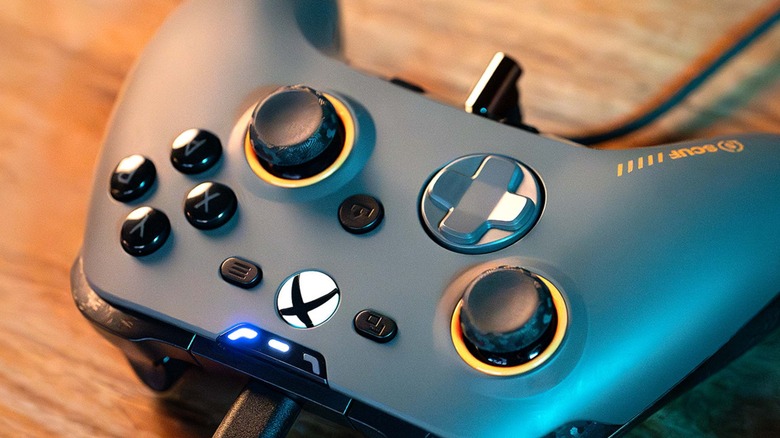
Scuf has long been the gold standard for professional esports hardware, and the Valor Pro continues that legacy. While other brands focus on internal tech, Scuf focuses on the physical interface. The four rear paddles are placed exactly where your middle and ring fingers naturally rest, preventing the hand cramps often associated with the Elite Series 2's metal paddles.
Customization is the name of the game here. You can swap the thumbsticks in seconds, choosing between convex or concave shapes and different heights. This is particularly useful for FPS gamers who prefer a taller right stick for better aiming leverage. The friction-less rings around the sticks ensure that you never feel that "grinding" sensation when doing full circular motions.
Pros
- The most ergonomic back paddle design in the industry
- Extensive physical customization options
- Instant-click triggers for faster reaction times
Cons
- Requires a significant investment
- Lacks the TMR sensors found in the GameSir
5. Hyperkin Xenon: Modern Tech in a Retro Shell
For gamers of a certain age, the Xbox 360 controller represents the pinnacle of ergonomics. The Hyperkin Xenon is a "Designed for Xbox" certified recreation of that iconic peripheral. While it doesn't feature Hall Effect sticks or back paddles, it targets a different demographic: the nostalgic gamer who wants a comfortable, familiar shape for single-player adventures and retro collections.
Hyperkin hasn't just cloned the old pad; they have modernized the internals. It features a 3.5mm headset jack, a Share button for the Series X|S, and a detachable USB-C connectivity cable. It maintains the classic asymmetrical analog sticks and the "chunky" triggers that many still prefer over the sleeker modern designs. It is a niche pick, but for those who find modern controllers too slim, the Xenon is a welcome return to form.

Pros
- Authentic Xbox 360 ergonomics
- High-quality modern components
- Perfect for long, casual gaming sessions
Cons
- No advanced competitive features (no paddles/stops)
- Uses traditional ALPS sensors which are prone to drift eventually
Buying Guide: Wired vs. Wireless & Polling Rates
When shopping for third-party Xbox controllers, you will notice a recurring theme: almost all of them are wired. This isn't because manufacturers are lazy; it is due to Microsoft's proprietary wireless protocol. To produce a wireless Xbox pad, manufacturers must pay a significant licensing fee, which often drives the price up or limits the features they can include.
However, being wired has a massive upside for performance. Wired controllers allow for much higher polling rates. For example, the Victrix Gambit is often marketed as a speed king, with a recorded input latency of less than 2.5 milliseconds. If you are playing casually from a couch 10 feet away, a wireless option like the Turtle Beach Stealth Ultra might be better, though it currently holds a 3.9 out of 5-star rating based on 329 customer ratings, suggesting some users find the complex "Smart" features more polarizing than a standard pro pad.
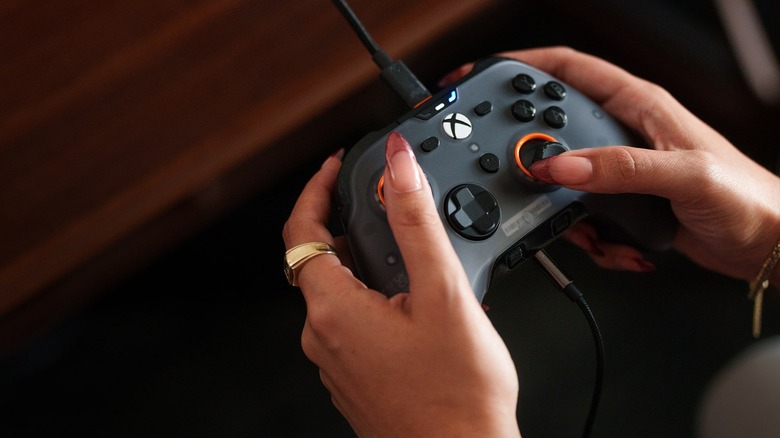
If you are a competitive FPS player, prioritize an xbox controllers with 1000hz polling rate for low latency and trigger stops. If you play a lot of fighting games or RPGs, look for mecha-tactile buttons. For the average user simply looking for a replacement that won't break, a Hall Effect sensor is the single most important feature to look for in 2026.
FAQ
Are third-party Xbox controllers worth buying?
Yes, they have evolved from being "cheap knockoffs" to being performance leaders. In 2026, third-party options often feature better durability through Hall Effect sensors and faster input speeds than the official Microsoft controllers.
Which third-party Xbox controller is best for competitive gaming?
The Razer Wolverine V3 and Scuf Valor Pro are currently the top choices. They offer the necessary back paddles, trigger stops, and high polling rates required for professional-level play in titles like Call of Duty or Halo.
Do third-party controllers work with Xbox Series X and S?
Yes, as long as they carry the "Designed for Xbox" certification. This ensures they are fully compatible with the console's firmware and won't be blocked by Microsoft's security updates.
Why are many third-party Xbox controllers wired instead of wireless?
Microsoft uses a proprietary wireless security chip. To keep costs down and focus on high-performance features like 1000Hz polling, many manufacturers choose a wired connection which also provides the lowest possible input latency.
Are third-party Xbox controllers more durable than official ones?
In many cases, yes. Controllers that use Hall Effect or TMR sensors are immune to the mechanical stick drift that eventually plagues official Microsoft controllers which use traditional potentiometer sticks.