Quick Facts
- Top Investment: Land Cruiser FJ60 ($31,638 benchmark).
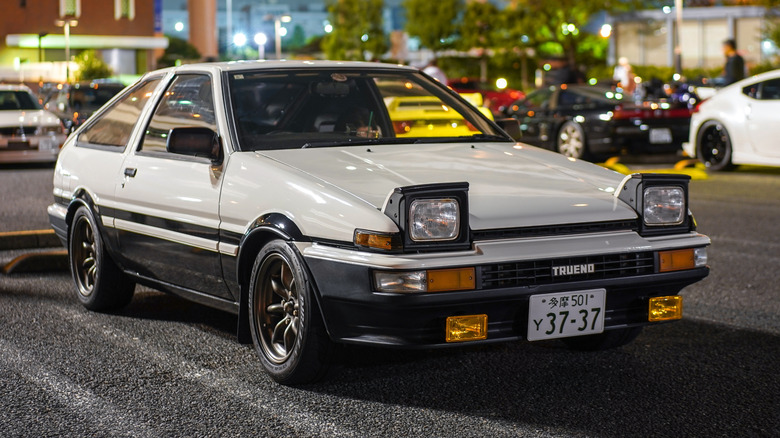
- Culture King: Sprinter Trueno AE86 (significantly impacted by drift tax).
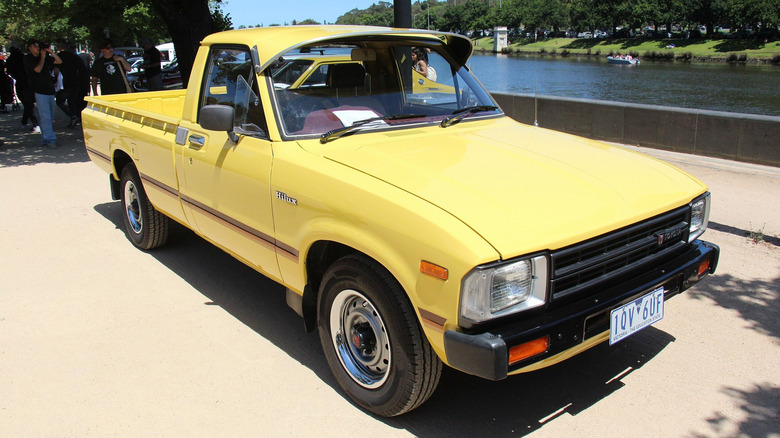
- Utility Pick: 4th Gen Pickup SR5 ($16,741 median).
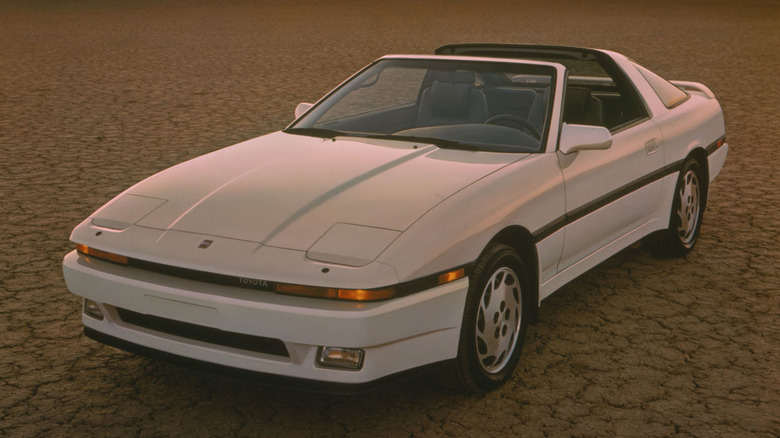
- Best Growth: A70 Supra ($19,896 median).
- Reliability Icon: Models equipped with the 22R-E engine.
- Market Driver: High-condition 1980s Toyota values are driven by analog appeal and the Radwood movement, with elite models exceeding $30k.
As the collector car market shifts toward analog experiences, 1980s Toyota values have reached new heights. Whether it is the rugged FJ60 or the drift-legend AE86, these Japanese bubble economy icons offer reliability and rising resale potential. The Toyota Land Cruiser FJ60 (approx. $31,638) and the AE86 Sprinter Trueno (approx. $27,981) currently lead the market, while the 4Runner and MR2 remain high-growth collectibles.
Tier 1: The Blue-Chip Investments (The Big Three)
For the serious collector, the elite tier of 1980s Toyota values is occupied by models that transcend mere transportation to become cultural artifacts. This category is led by the Land Cruiser FJ60, a vehicle that has become the gold standard for vintage SUVs. While the 1980s were defined by a shift toward complexity, the FJ60 retained a mechanical purity that modern buyers crave. Recent 1980s Toyota auction prices show that pristine examples are no longer just utility vehicles; they are financial assets. The 1980s Toyota Land Cruiser FJ60 price guide now places the benchmark at $31,638, though exceptional examples on Bring a Trailer have been known to double that figure when they feature original paint and low mileage.
Following closely is the AE86 generation of the Corolla, known as the Sprinter Trueno or Corolla GT-S. This car represents a unique intersection of motorsport history and pop culture. We see a significant phenomenon known as the Toyota AE86 drift tax pricing, where the car’s association with the Initial D legacy and professional drifting has inflated prices far beyond its original economy-car roots. Unlike many other 1980s Toyota values, the AE86 is rarely found in survivor condition, as most were modified or driven to their limits on mountain passes.
Rounding out the blue-chip tier is the Supra. When discussing the 1980s Toyota Supra A60 vs A70 investment potential, the market currently favors the A70 for its technological sophistication. Market data for 2025 indicates that the third-generation Toyota Supra (A70), produced from 1986 to 1992, maintains a median resale value of approximately $19,896. With its signature pop-up headlights and grand touring comfort, the A70 is a quintessential example of the Japanese bubble economy era.
Tier 2: Rugged Icons of the 4WD Era
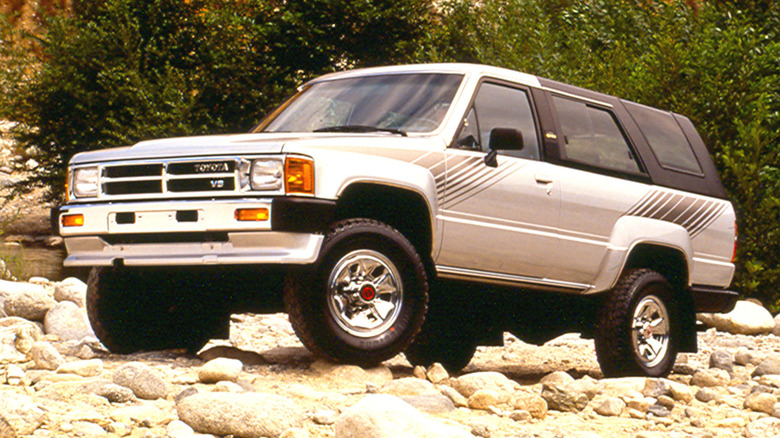
The 1980s was the decade Toyota cemented its reputation for invincibility. Leading this rugged charge is the first-generation 4Runner. Collectors are specifically hunting for models with the 22R-E engine, a powerplant known to outlast the chassis it sits in. The first gen Toyota 4Runner market value is bolstered by its unique features, most notably the removable fiberglass canopy that turns the SUV into a semi-convertible. As of 2025, the first-generation Toyota 4Runner has reached a benchmark collector value of approximately $17,734.
Equally impressive in the secondary market is the fourth-generation Toyota Pickup. The classic Toyota pickup SR5 resale trends indicate a massive preference for trucks with period-correct racing graphics and the 4WD drivetrain. As of late 2025, the fourth-generation Toyota Pickup (1984–1988) holds a median resale price of $16,741, with well-maintained SR5 models often commanding higher market premiums. These trucks have become the face of the Radwood movement, celebrating the vibrant and bold aesthetic of the 1980s.
Pro Tip: When evaluating a 4WD Toyota from this era, check the frame for rust before the engine. The 22R-E engine is easy to fix, but a compromised frame can be a deal-breaker for long-term resale value.
We must also mention the rare Toyota Trekker. As a precursor to the 4Runner, the Trekker was a collaboration with Winnebago. Because so few were produced, they rarely appear at auction, but when they do, they often spark bidding wars that push them into the Tier 1 price bracket.
Tier 3: The Enthusiast Rising Stars
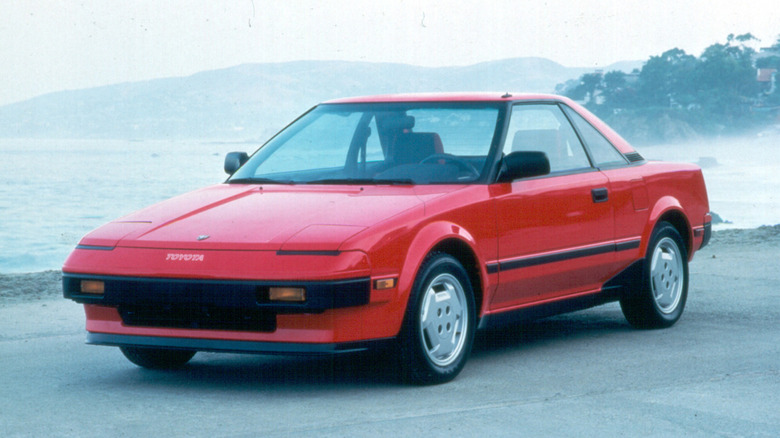
While the trucks and the AE86 get the most headlines, a group of collectible 80s Toyotas is quietly gaining momentum among driving enthusiasts. The AW11 MR2 is perhaps the most famous of these. It was Toyota’s first mid-engine production car, featuring a rectilinear design that looked like nothing else on the road in 1984. The mid-engine layout provided a level of balance and handling that rivaled European exotics but with the maintenance costs of a Corolla.
The Celica line also offers significant variety. The Celica GT-S (A60) with its rear-wheel-drive platform is a favorite for those who missed out on the AE86 boom. However, the real prize for tech enthusiasts is the AWD Celica All-Trac (ST165). This car was a technological tour de force, designed to dominate the World Rally Championship. Because of their complexity, many were neglected, making a survivor condition All-Trac one of the hardest 1980s Toyotas to find today.
| Model | Benchmark Value (2025) | Investment Rating | Primary Appeal |
|---|---|---|---|
| Land Cruiser FJ60 | $31,638 | Hold | Off-road Legend |
| Sprinter Trueno AE86 | $27,981 | Hold | Drift/Culture Icon |
| Supra A70 | $19,896 | Buy | GT Luxury |
| 1st Gen 4Runner | $17,734 | Buy | Versatility |
| 4th Gen Pickup SR5 | $16,741 | Hold | 80s Aesthetic |
| MR2 AW11 | $14,500 | Buy | Mid-engine Handling |
| Celica All-Trac | $15,200 | Buy | Rally Pedigree |
| Toyota Cressida | $8,507 | Buy | Inline-six Comfort |
Tier 4: Accessible Classics & Curiosities
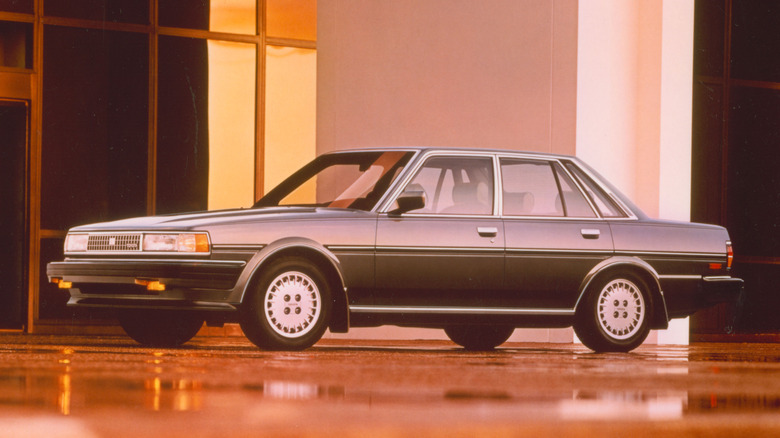
For those looking for affordable 1980s Toyotas for collectors, the market still offers several entry points that provide the classic 80s feel without the six-figure auction drama. The Toyota Cressida is the standout here. Often described as a four-door Supra, the Cressida featured the same inline-six powerplants as its sporty cousin but wrapped in a conservative, luxury-sedan body. With a benchmark value of $8,507, it represents incredible value for someone who appreciates the rectilinear design and build quality of 1980s Japanese engineering.
Other "curiosities" that are gaining traction include the Tercel 4WD Wagon and the Toyota Van (known as the MasterAce in Japan). The Tercel 4WD Wagon, with its quirky "box" look and six-speed manual (including an ultra-low gear), is a cult classic. Meanwhile, the mid-engine, rear-drive Toyota Van has become a favorite for the "van life" community, often outperforming its original MSRP at modern auctions if the interior is well-preserved.
Finally, the Corolla FX16 and the tiny Toyota Starlet offer a lightweight, front-wheel-drive experience. These cars are essentially the hot hatches of the Toyota world, and while they don't command the high hammer price trends of the FJ60, their scarcity makes them a smart long-term hold for those who enjoy nimble city driving.
The Condition Gap: A Buyer’s Guide for 2026
When navigating 1980s Toyota values, the most important factor is the condition gap. We are currently seeing a market where the cost of a professional restoration often exceeds the market value of the finished vehicle. This makes finding a survivor condition car more important than ever. A survivor is a vehicle that has its original paint, interior, and drivetrain in excellent working order.
The maintenance history of these vehicles is also a significant factor in resale price. While Toyotas are famously reliable, 40-year-old rubber seals, suspension bushings, and cooling systems eventually fail. Buyers should expect 10-year maintenance costs to hover around $6,996 for trucks like the 4Runner if they are driven regularly. If you find a vehicle with a documented service history that covers these "age-related" repairs, it will likely command a 20% to 30% premium over a car with unknown history.
When looking at 1980s Toyota auction prices, pay close attention to the details. Original decals, working pop-up headlights, and un-cracked dashboards are the markers of a high-value investment. In the world of 80s Toyotas, the smallest detail can be the difference between a $10,000 "driver" and a $30,000 collector piece.
FAQ
Are 1980s Toyota cars increasing in value?
Yes, 1980s Toyota values have seen a steady upward trend over the last five years. This growth is driven by a generation of collectors who grew up with these cars and now have the disposable income to purchase them. Models like the Land Cruiser and AE86 have seen the most significant gains, but even base models are rising as clean examples become rarer.
Which 1980s Toyota models are the most collectible?
The most collectible models currently include the Land Cruiser FJ60, the Sprinter Trueno AE86, and the A70 Supra. For those interested in trucks, the first-generation 4Runner and the fourth-generation Pickup SR5 are highly sought after. Enthusiasts also highly value the AW11 MR2 and the AWD Celica All-Trac.
How much is a vintage Toyota Land Cruiser worth?
A vintage 1980s Toyota Land Cruiser FJ60 has a current benchmark value of approximately $31,638. However, the market varies wildly based on condition. High-mileage examples with some rust might sell for $15,000, while concours-level restorations or extremely low-mileage survivors have been known to reach $60,000 to $80,000 at specialized auctions.
What factors influence the resale price of 80s Toyotas?
The primary factors are mechanical condition, rust presence, and original features. Specifically, the presence of original engines like the 22R-E or 4A-GE, original paint and decals, and a documented maintenance history significantly boost value. For certain models, cultural factors like the drift tax or the Radwood movement also play a large role.
Are 1980s Toyota trucks a good investment?
Historically, 1980s Toyota trucks have proven to be very stable investments. They have high utility value and a legendary reputation for durability that keeps demand high. As long as you purchase a truck with a clean frame and avoid heavy modifications, these vehicles tend to hold their value or appreciate as the supply of clean survivors diminishes.