Quick Facts
- Highest Overall Investment: The International Space Station remains the undisputed leader with a $150 billion total lifecycle cost.
- Costliest Scientific Instrument: The Hubble Space Telescope holds an inflation-adjusted valuation of $16 billion.
- Modern Deep Space Icon: The James Webb Space Telescope represents a $10 billion investment in infrared astronomy.
- Premier Earth Observer: The NISAR satellite, at $1.5 billion, is the most expensive imaging satellite dedicated to Earth’s surface.
- Commercial Titan: Heavy communication satellites like TerreStar-1 can cost upwards of $1.3 billion including launch and insurance.
- Launch Efficiency: By 2026, heavy-lift vehicles like the Falcon Heavy have reduced costs to roughly $1,520 per kilogram.
The International Space Station (ISS) is the most expensive satellite ever constructed, with an estimated total cost of $150 billion due to its modular assembly and ongoing maintenance. While uncrewed assets like the Hubble Space Telescope and James Webb Space Telescope dominate the high-end scientific spectrum, the cost of most expensive satellites is generally driven by the intersection of cutting-edge technology and the extreme logistical challenges of reaching high orbits.
The Billion-Dollar Sky
As we look at the orbital landscape of 2026, the financial scale of space exploration has reached unprecedented heights. While the "New Space" era has popularized the idea of cheap, disposable CubeSats, the backbone of global communication, national security, and scientific discovery still relies on massive, multi-billion-dollar platforms. The price tags associated with these machines are not just a reflection of their physical components but represent decades of research and development overhead and the unique requirements of the space environment.
The financial disparity between different types of orbital hardware is stark. A standard commercial satellite might cost $200 million, yet flagship missions from NASA or ESA often see their budgets balloon into the billions. This is because specialized tools, such as remote sensing instruments or delicate multispectral imaging arrays, require custom engineering that cannot be mass-produced. Furthermore, the distance from Earth dictates the price; satellites in geostationary orbit or those positioned at a Lagrange point L2 require more robust shielding and complex propulsion systems than those in low Earth orbit.
| Satellite / Platform | Est. Cost (USD) | Primary Purpose | Operator |
|---|---|---|---|
| International Space Station | $150 Billion | Multidisciplinary Research | International Partnership |
| Hubble Space Telescope | $16 Billion* | Optical & UV Astronomy | NASA / ESA |
| James Webb Space Telescope | $10 Billion | Infrared Astronomy | NASA / ESA / CSA |
| AEHF Fleet (per unit) | $1.7 Billion | Military Communications | US Space Force |
| GOES-R Series (per unit) | $1.6 Billion | Weather Monitoring | NOAA / NASA |
| NISAR | $1.5 Billion | Earth Imaging / Radar | NASA / ISRO |
| TerreStar-1 | $1.3 Billion | Mobile Communications | TerreStar |
| GPS III Fleet (per unit) | $560 Million | Navigation | US Space Force |
| Inmarsat-5 (Global Xpress) | $450 Million | High-Speed Data | Inmarsat |
| ViaSat-2 | $400 Million | Broadband Internet | ViaSat |
*Inflation-adjusted valuation representing cumulative lifecycle costs.
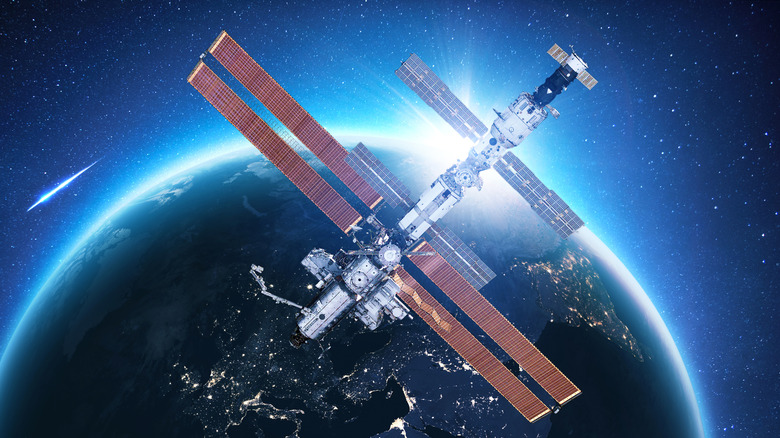
1. International Space Station (ISS) - $150 Billion
Though we often think of it as a laboratory, the ISS is technically the largest and most expensive artificial satellite ever placed in orbit. The total estimated investment of approximately $150 billion comes from a coalition involving the United States, Russia, Europe, Japan, and Canada. Unlike a single-launch satellite, the ISS was assembled piece-by-piece over dozens of missions, each contributing to its massive payload mass capacity.
The staggering cost is largely attributed to how much does it cost to maintain the international space station on an annual basis. NASA alone spends roughly $3 billion to $4 billion per year on operations and cargo resupply missions. As the station approaches its planned deorbit in 2030, its cumulative financial legacy remains a testament to what international cooperation can achieve, even as private space stations begin to emerge as more cost-effective alternatives in 2026.
2. Hubble & James Webb: The Multi-Billion Dollar Eyes
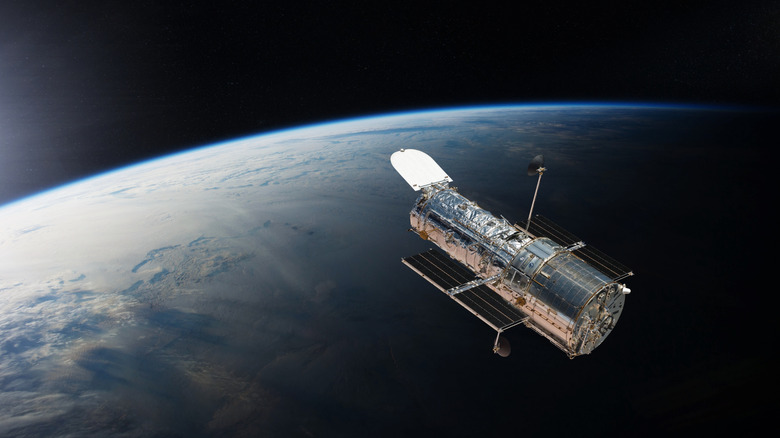
When discussing the cost comparison of commercial vs scientific satellites, the astronomical observatories take center stage. The Hubble Space Telescope has reached a cumulative lifecycle cost of approximately $16 billion as of 2021, a figure that accounts for its initial construction, five Space Shuttle servicing missions, and over 30 years of continuous operation. Hubble’s ability to be repaired in orbit was a unique feature that extended its life but also added billions to its total price tag.
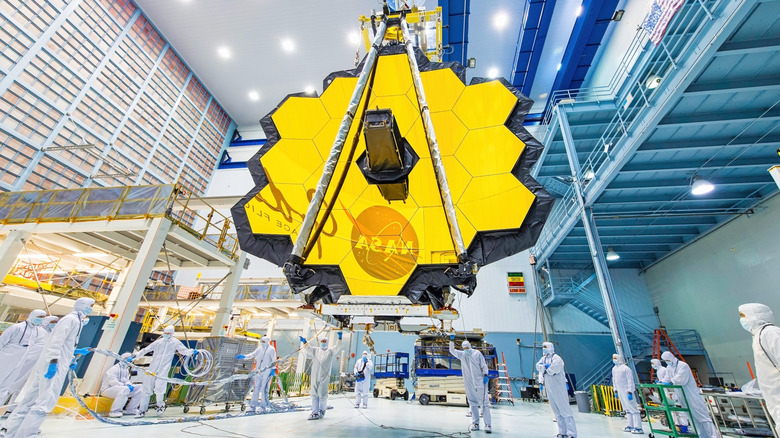
In contrast, the James Webb Space Telescope (JWST) represents a $10 billion investment in a platform that cannot be serviced by human divers. Located at the Lagrange point L2, nearly a million miles from Earth, JWST’s scientific payload complexity required it to work perfectly the first time. The extreme cost was driven by the need for a deployable sunshield the size of a tennis court and mirrors plated in gold to capture the faintest infrared signals from the early universe.
3. High-Cost Earth Observation: NISAR and Specialized Sensors
Earth observation has moved beyond simple photography into the realm of high-precision radar and environmental monitoring. The NISAR satellite, a joint mission between NASA and the Indian Space Research Organization (ISRO), is the most expensive Earth-imaging satellite ever constructed with a total project cost of $1.5 billion.
The budgeting factors for high cost earth observation satellites like NISAR include the development of a dual-band synthetic aperture radar. This allows the satellite to see through clouds and dense forest canopies to track changes in Earth's surface as small as a few millimeters. Such high cost earth observation satellites are critical for tracking glacier melt, earthquake land shifts, and agricultural health, providing data that serves as a global public good.

4. Communication Giants: TerreStar-1 and High-Throughput Fleets
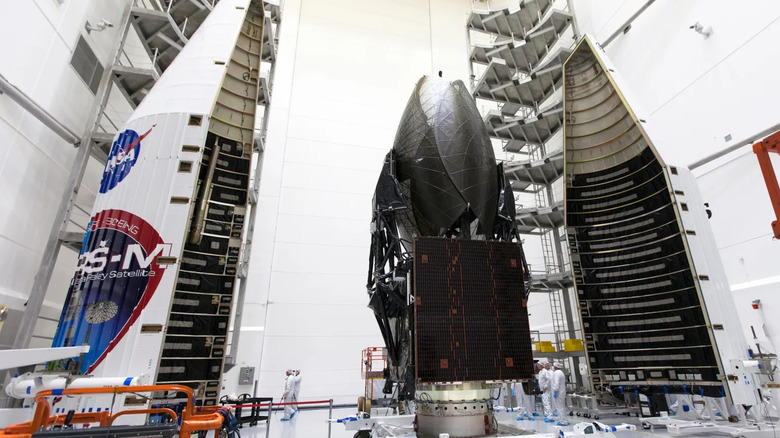
While scientific missions often grab the headlines, the commercial sector operates some of the most expensive communication satellites in existence. TerreStar-1, launched to provide mobile satellite services, carries a valuation of over $1.3 billion. Much of this cost is tied to its massive 18-meter-wide antenna, which allows it to connect with small, handheld ground devices.
The price difference between geostationary and low earth orbit satellites is a major factor here. While SpaceX’s Starlink satellites are small and relatively cheap to produce in bulk, a single geostationary satellite like TerreStar-1 or a ViaSat-3 model must be built to last 15 years without maintenance. These units are designed with high-throughput capacity to handle massive amounts of data traffic, necessitating larger solar arrays and more expensive geostationary transfer orbit launch profiles.
Behind the Price Tag: Why These Satellites Cost Billions
The financial reality of spaceflight involves much more than just the cost of the hardware. To understand the breakdown of satellite construction and launch expenses, one must look at the rigorous testing and insurance required for a successful mission.
- Research and Development: For many flagship missions, up to 70% of the budget is spent on the ground before the satellite ever sees the launchpad. This covers the engineering of new materials and the software required to manage autonomous operations in harsh radiation environments.
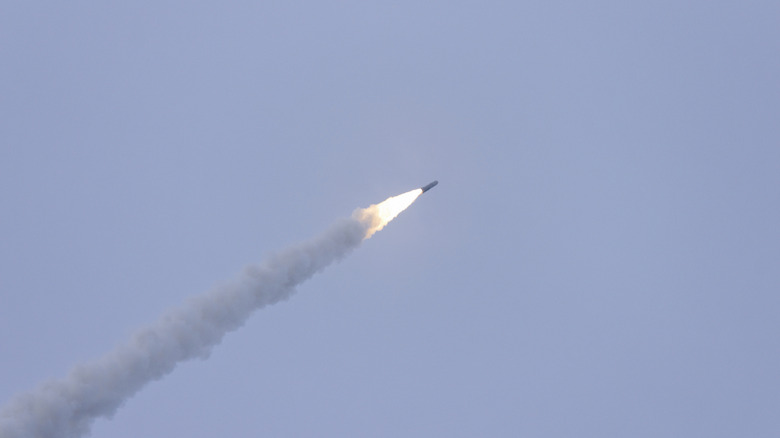
- Launch Expenses: Reaching orbit is a massive line item. As of 2026, the price depends heavily on the provider. While a Falcon Heavy might charge $1,520 per kilogram, European alternatives like the Ariane 64 can cost over $5,300 per kilogram. This makes payload mass a primary driver of the final bill.
- Insurance Premiums: The financial risks of launching multi billion dollar satellites are mitigated through space insurance. Insurance premiums for spaceflight typically range from 6% to 12% of the total value of the satellite and launch. For a $1 billion satellite, that is an additional $100 million just to cover the risk of a launch failure or an on-orbit malfunction.
Hidden Costs Callout: Even after a successful launch, the bill doesn't stop. Ground station operations, data processing, and cybersecurity for high-value satellites can add tens of millions of dollars to the annual operating budget, ensuring that the hardware remains secure and functional throughout its multi-year lifespan.
FAQ
What is the most expensive satellite ever launched?
The International Space Station (ISS) is technically the most expensive satellite ever launched, with a cumulative cost of $150 billion. If looking strictly at uncrewed, single-payload satellites, the Hubble Space Telescope takes the lead with an inflation-adjusted valuation of $16 billion.
How much did the James Webb Space Telescope cost?
The James Webb Space Telescope cost approximately $10 billion. This budget covered over two decades of development, construction, and the first five years of its operational life at the Lagrange point L2.
What factors contribute to the high cost of satellites?
The high cost is driven by specialized scientific payload complexity, the need for extreme durability in the vacuum of space, and the high price of launch vehicles. Additionally, research and development overhead and high insurance premiums for spaceflight add significantly to the final price tag.
Why are spy satellites so expensive?
Spy satellites are expensive because they require the highest resolution imaging sensors and secure, encrypted communication arrays that are resistant to jamming. Their development is often classified, but experts estimate that high-end reconnaissance satellites, like the Keyhole series, cost billions to produce and operate.
Who owns the world's most expensive satellites?
The majority of the world's most expensive satellites are owned by government agencies like NASA, the European Space Agency (ESA), and the US Space Force. In the commercial sector, major telecommunications companies like Inmarsat, ViaSat, and TerreStar own the most valuable private assets in orbit.