Quick Facts
- Visual Key: Genuine Ryobi logos feature distinct, small indents on the upper loops of the letters R and B.
- Weight Difference: Authentic high-capacity batteries are significantly heavier because they contain dense, high-quality lithium-ion cells rather than fillers.
- Retailer Rule: In North America, Home Depot and the official Ryobi website are the only authorized dealers for new Ryobi batteries.
- Warranty: Authentic units carry a 3-year manufacturer warranty, which can often be verified using the manufacture date code.
- Safety Risk: Research indicates that nearly 8% of counterfeit and budget cells contain dangerous negative anode overhang defects that lead to internal shorts.
- Direct Answer: To identify fake Ryobi batteries, you must carefully inspect the molded logos for specific indents, check that specifications are printed on the plastic rather than on stickers, and verify the weight against known OEM standards. Genuine units include integrated protective circuitry to prevent thermal runaway, a critical safety feature often missing in cheaper imitations.
Identifying genuine Ryobi batteries has become increasingly difficult as third-party sellers on major marketplaces flood the ecosystem with convincing imitations. While the price of fake Ryobi batteries might be tempting, the trade-off involves more than just reduced runtime; it involves significant safety risks including fire hazards and permanent damage to your expensive power tools. By understanding the specific visual and physical markers of an authentic product, you can protect your workshop and your wallet.
Visual Inspection: The Typography and Label Secrets
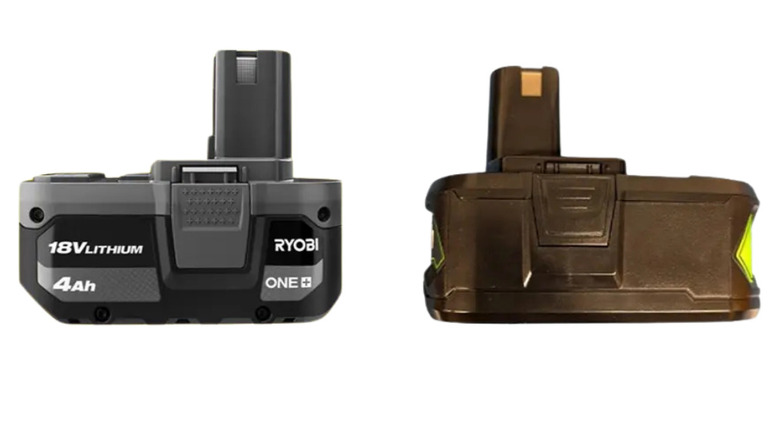
When you first hold a battery, your eyes are your first line of defense. The manufacturers of fake Ryobi batteries often get the color of the plastic right, but they frequently stumble on the fine details of the branding and typography. Ryobi uses high-precision molds for their battery casings, and the logo is a key identifier. On a genuine unit, the Ryobi name is molded into the plastic. If you look closely at the letters R and B, you will notice tiny, intentional indents or "notches" in the curves of the letters. Most counterfeits use a simplified font that lacks these specific geometric details.
Furthermore, pay close attention to the information labels. Genuine Ryobi batteries feature specifications and safety warnings that are either laser-etched or printed directly onto the high-quality polycarbonate casing. In contrast, many marketplace scams utilize low-quality stickers that can be peeled off with a fingernail. If the battery capacity (Ah) or voltage platform information looks like it was applied as an afterthought via a sticker, it is a major red flag.
| Feature | Genuine Ryobi Battery | Counterfeit/Fake Battery |
|---|---|---|
| Logo Typography | Specific indents on the 'R' and 'B' | Smooth letters or generic font |
| Information Labels | Printed/Etched directly on plastic | Paper or plastic stickers that peel |
| Casing Texture | Matte, high-impact polycarbonate | Shiny or brittle, low-grade plastic |
| Shipping Box | Includes 'Dangerous Goods' declarations | Often lacks proper hazard labeling |
When checking Ryobi battery serial numbers for authenticity, remember that Ryobi uses a specific 10- or 13-digit format. This serial number often contains the manufacturing date code (the first few digits usually represent the year and week of production). If you see a battery where the serial number looks blurred, poorly stamped, or identical to another battery in the same "bulk" shipment, you are likely looking at identifying genuine Ryobi battery logo and labels that have been forged.
Tactile and Physical Tests: Weight and Fitment
The "feel" of a tool component often tells you more than a photo ever could. One of the most reliable ways for how to spot fake ryobi batteries is to put them on a scale. Authentic Ryobi batteries are engineered with high-density Lithium-ion cells that provide consistent power. These cells are heavy. In a recent investigation, it was discovered that some 50% fake or dummy cells were used in non-genuine battery packs to misrepresent their storage capacity. Scammers sometimes even fill these dummy cells with sand or flour to give the battery a false sense of weight, but they rarely match the exact OEM standards.
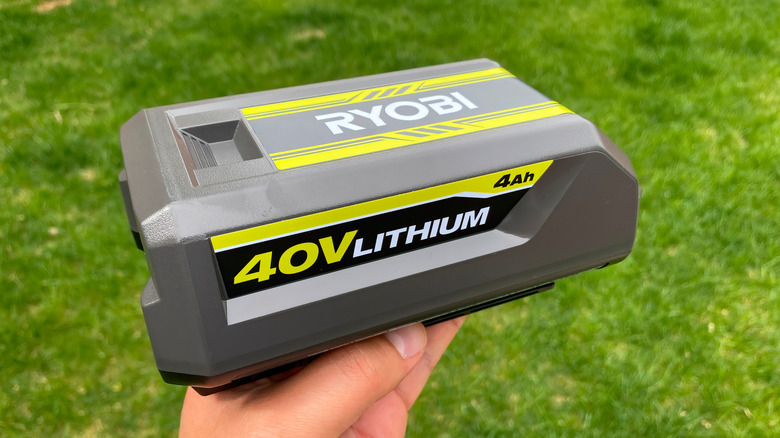
The fitment into the tool and charger is another physical giveaway. Ryobi spends millions on research and development to ensure their One+ 18V and 40V Max systems have a perfect "click" fit. When you slide an authentic battery into a drill or a circular saw, the latches should engage smoothly and stay locked. Fake Ryobi batteries often have tolerances that are slightly off. You might find yourself having to force the battery into the charger, or conversely, it may rattle loosely inside your tool. This poor fit can cause electrical arcing, which damages the contact pins on both the battery and the tool.
If the authentic vs counterfeit ryobi battery weight feels off—specifically if the battery feels "top-heavy" or unusually hollow—it is likely missing the structural reinforcement and cell quality found in genuine units. Authentic high-capacity packs, such as the 6.0Ah or 9.0Ah HP models, are notably bulky and solid because they are packed tight with premium cells and vibration-dampening materials.
The Technical Danger: Thermal Runaway and Internal Circuitry
The most dangerous aspect of these imitations isn't that they die quickly; it's that they can catch fire. Genuine Ryobi batteries contain a sophisticated Battery Management System (BMS). This internal protective circuitry monitors the temperature and voltage of every individual cell within the pack. If a cell gets too hot or the voltage drops too low, the BMS shuts the battery down to prevent damage.
⚠️ WARNING: THERMAL RUNAWAY RISK
Counterfeit Ryobi batteries often lack the integrated protective circuitry required to manage heat output. This absence can lead to thermal runaway, a condition where the battery enters an uncontrollable self-heating cycle. Because using non-genuine batteries can void the product's three-year manufacturer's warranty and pose a fire risk, the savings are never worth the danger.
The technical failure of budget cells is well-documented. A study involving advanced CT scanning of over 1,000 lithium-ion batteries found that nearly 8% of counterfeit and budget cells contained dangerous negative anode overhang defects. This is a manufacturing flaw where the internal components of the cell are misaligned, making them highly susceptible to internal short circuits. These defects were completely absent in brand-name batteries that adhere to strict OEM standards.
Furthermore, fake batteries can damage your original charger. Many Ryobi chargers communicate with the battery's firmware to determine the optimal charging rate. Without the correct communication protocols, a generic battery might draw too much current, causing the charger to overheat or enter a "firmware lockout" state (sometimes referred to as the J1 Reset issue). Ryobi battery fire safety risks are a reality that can lead to garage fires if a counterfeit unit is left on a charger overnight.
How to Buy Safely and What to Do if Scammed
The safest way to avoid the risks of buying cheap ryobi batteries on ebay or other third-party marketplaces is to stick to authorized dealers. In the United States and Canada, Home Depot is the primary retail partner for Ryobi. Buying from a "Too Good To Be True" listing on a secondary market is almost a guarantee that you are receiving a counterfeit. Be especially wary of brands like Flagpower or other "Ryobi-compatible" labels that mimic the color scheme but do not carry the Ryobi name; while some are honest third-party brands, many are vehicles for sub-standard cells.
If you believe you have already purchased a fake Ryobi battery, do not continue to use it. Here is what you should do:
- Compare Serial Numbers: Check the serial number against a known genuine unit. If the font is different or the number doesn't follow the Ryobi date-code format, it’s a fake.
- Contact the Platform: If you bought it on a major marketplace, report the seller immediately. Most platforms have a "Counterfeit Policy" that will trigger an automatic refund.
- Report to Consumer Protection: In the US, you can file a report with the IC3 (Internet Crime Complaint Center) or your local consumer protection agency.
- Dispose Safely: Do not throw lithium-ion batteries in the trash, especially suspected fakes. Take them to a dedicated battery recycling center (like those found at most big-box hardware stores) to prevent garbage truck fires.
FAQ
How can you tell if a Ryobi battery is real or fake?
You can identify a fake by looking for the absence of molded indents on the R and B of the Ryobi logo, checking for peel-off stickers instead of printed specs, and weighing the unit. Genuine batteries are heavier and fit the tool with a precise click, whereas fakes often feel light or require force to seat correctly.
Are off-brand batteries safe for Ryobi power tools?
While some third-party batteries are marketed as compatible, many lack the essential protective circuitry found in genuine units. This increases the Ryobi battery safety risks, including the potential for thermal runaway or internal shorts that can lead to fires. It is generally safer to stick with OEM batteries to ensure tool longevity and home safety.
Do knock-off Ryobi batteries damage the original charger?
Yes, they can. Authentic chargers are designed to communicate with the battery's internal management system. Knock-off batteries often lack the correct firmware, which can cause the charger to provide too much current, leading to overheating or permanent failure of the charging unit.
Will using a generic battery void my Ryobi warranty?
Yes. Official manufacturer guidance states that the use of non-genuine or counterfeit batteries can void the product's three-year manufacturer's warranty. If a fake battery causes your drill or saw to burn out, Ryobi is not obligated to repair or replace the tool.
How do I verify a Ryobi battery serial number online?
Ryobi does not currently have a public "search" database for every individual serial number, but you can verify the manufacture date code within the number. The first four digits typically indicate the year and week of manufacture (e.g., "CS2114" would be week 14 of 2021). If the serial number is missing, blurry, or formatted differently, it is a sign of a counterfeit.