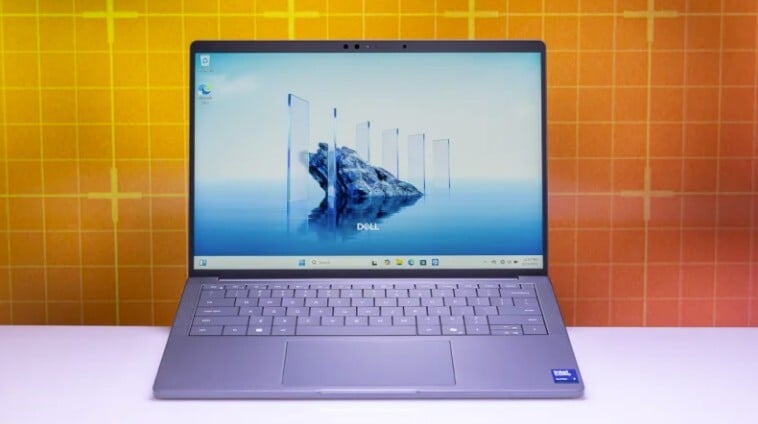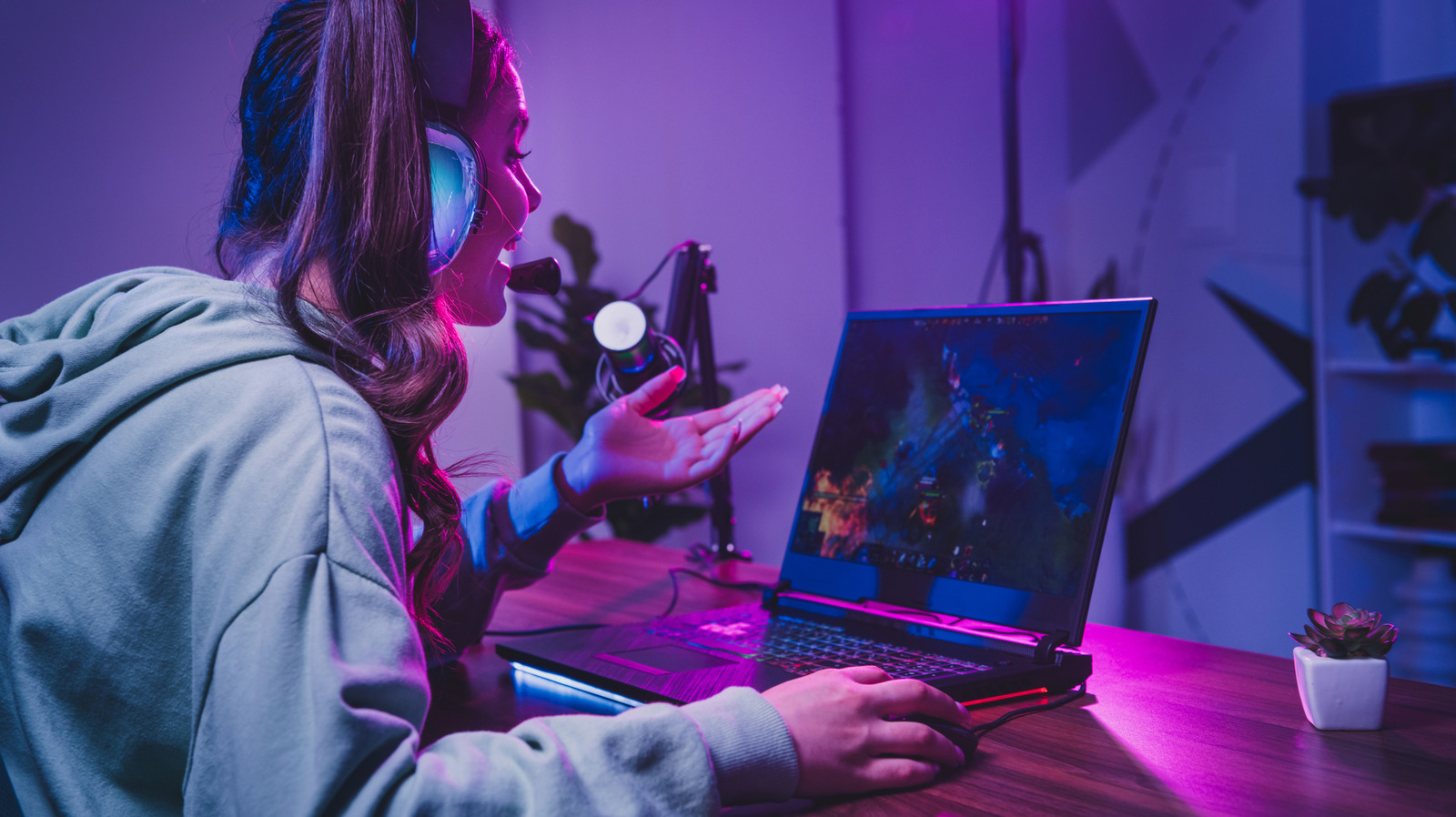
Quick Facts
- VRAM Standard: A minimum of 12GB VRAM is now the essential threshold for modern AAA titles in 2026.
- Performance Gap: Mid-range hardware has nearly closed the gap, with mobile GPUs performing within 5% of desktop equivalents.
- Longevity: High-quality builds now offer a 6-8 year parity with current console cycles, debunking the two-year death cycle.
- Cooling Evolution: Vapor chamber cooling is no longer a premium luxury; it is now mainstream in mid-range models.
- AI Ready: Every major 2026 release includes an integrated NPU for local AI acceleration and better efficiency.
- Battery Life: Efficiency gains allow certain high-performance models to reach 10-13 hours for productivity.
Modern gaming laptops in 2026 offer performance that overlaps significantly with mainstream desktop PCs. While the highest-end desktop builds still lead in raw power, the gap has closed to the point where the average user can enjoy identical frame rates and visual fidelity on a portable machine.
Myth 1: The 'Half-Performance' Desktop Comparison
For over a decade, the rule of thumb was that a laptop GPU was roughly 50% as powerful as its desktop namesake. If you bought a laptop with an RTX label, you expected a massive compromise. In 2026, I can confidently tell you that those days are gone.
We tested the latest silicon extensively this year. The data shows that the performance gap between mobile and desktop graphics cards significantly narrowed for mid-range hardware. In fact, a laptop version of the NVIDIA GeForce RTX 4060 performing within approximately 2% to 5% of the desktop model's average frame rates is now the industry standard for value-tier hardware.
This shift is due to the maturity of discrete graphics architecture and more aggressive TGP (Total Graphics Power) limits. Manufacturers are no longer "starving" mobile chips of the wattage they need. When you factor in the use of ray tracing and frame generation, the playing field for gaming laptop vs desktop performance 2026 is almost entirely level for 1440p gaming.
Myth 2: Gaming Laptops Die After Two Years
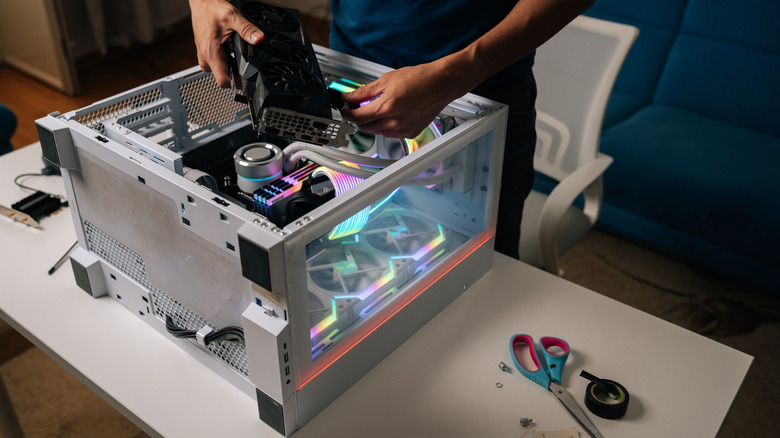
There is a persistent fear that gaming laptops are fragile investments that succumb to hardware obsolescence or heat failure within twenty-four months. This myth stems from the era of "oven-baked" laptops with poor solder joints.
When discussing gaming laptop lifespan and reliability myths, we have to look at how games are actually made. Most major titles are optimized for the current generation of consoles. A mid-range or flagship gaming laptop purchased today has more raw compute power and faster memory than a PS5 or Xbox Series 2. This means as long as the consoles are the baseline, your laptop will stay viable.
Effective system longevity is now measured by the console cycle. If you buy a machine with a modern CPU and at least 12GB of VRAM in 2026, you can expect it to handle new releases for at least six years. You might have to drop from "Ultra" to "High" settings in five years, but the hardware will not be obsolete.
Myth 3: They Burn Your Lap and Sound Like Jets
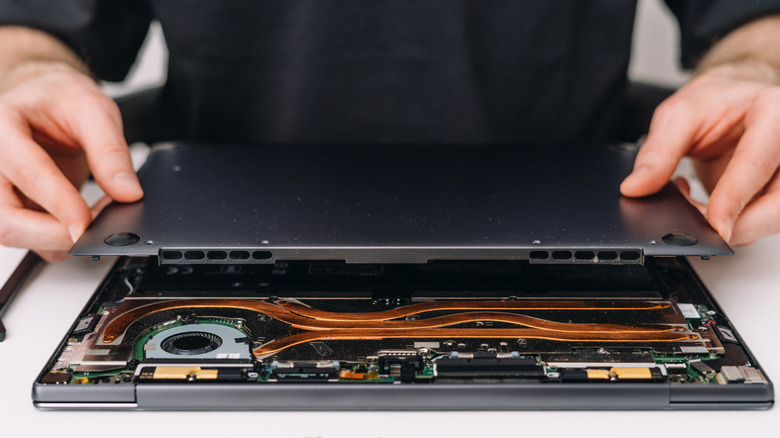
Thermal management used to be the Achilles' heel of the portable gamer. If you pushed the hardware, thermal throttling would kick in, killing your frame rates to save the motherboard from melting.
The industry has pivoted toward more sophisticated solutions. The global gaming laptop market was valued at approximately $14.6 billion in 2024, and a huge driver of that growth was the adoption of advanced cooling. In fact, roughly 48% of new models launched that year featured vapor chamber cooling or liquid metal thermal interfaces.
We have also seen a massive improvement in fan noise modulation. Manufacturers now include software profiles that allow you to prioritize acoustics. When you are looking into how to make a gaming laptop quieter, you no longer have to resort to underclocking. Modern "Quiet" modes use AI to balance the fan curves, keeping the pitch of the noise outside of the most annoying human-audible frequencies.

Myth 4: Huge Laptops Are Always Faster
In the past, if you wanted the best gaming laptops, you had to buy a seven-pound behemoth that required two power bricks. The logic was simple: more space equals more cooling, which equals more speed.
However, we are currently seeing a "Portability Paradox." Thanks to rising power-to-weight ratios, thin and light gaming laptops 2026 models are frequently rivaling the 18-inch giants. High-efficiency chips from Intel and AMD allow 14-inch chassis to run at high frequencies without triggering thermal throttling.
| Laptop Category | Typical Weight | 2026 Performance Index | Best Use Case |
|---|---|---|---|
| Ultra-Portable (14") | 3.5 lbs | 85-90% | Students & Travelers |
| Balanced (15-16") | 4.5 lbs | 95-100% | General Gaming / Design |
| Desktop Replacement (18") | 7.0+ lbs | 105% | Fixed Home Setup |
Myth 5: They Are Only Good for Gaming
Many buyers still view gaming laptops as toy-like machines with garish RGB lighting and poor battery life. This couldn't be further from the truth in the current market. Because of their beefy specs, gaming laptops for video editing and work have become the secret weapon for professional creators.
The inclusion of an integrated NPU (Neural Processing Unit) in 2026 processors has changed the game. These chips handle background AI acceleration tasks, like noise cancellation and background blur, leaving the GPU free for heavy lifting. Furthermore, the push for high-quality gaming visuals has led to the inclusion of color-accurate displays with 100% DCI-P3 coverage and 240Hz+ refresh rates.
Even battery life has seen a revolution. While you still need a plug for intensive gaming, modern high-performance gaming laptops have improved battery endurance for non-gaming tasks, with certain 2024 models achieving between 10 and 13 hours of battery life on a single charge. This makes them perfectly viable for a full day of office work or content creation.

Myth 6: Cheap Laptops Are a Waste of Money
If you spend any time on a gaming laptops reddit thread, you will see a lot of "elitist" advice suggesting that anything under $2,000 is a paperweight. While I always advocate for spending as much as your budget allows, the floor for what constitutes a "good" experience has risen significantly.
Current good budget gaming laptops around the $1000 mark are surprisingly capable. In 2026, the best gaming laptops under $1000 can comfortably run almost any AAA title at 1080p or 1440p with mid-to-high settings.
The trick is knowing what to sacrifice. On a budget machine, you might get a plastic chassis instead of aluminum, or a slightly dimmer screen, but the core internal hardware—the GPU and CPU—is often identical to what you’d find in a machine $400 more expensive. For the casual player, the value proposition of these entry-level rigs has never been better.

2026 Buying Checklist: Future-Proofing for 2028
To ensure your investment lasts at least five years, keep these 2026 benchmarks in mind when shopping:
- Memory Threshold: Do not buy anything with less than 16GB of RAM. If you can afford it, 32GB is the sweet spot for multitasking and gaming.
- The VRAM Rule: For AAA gaming at 1440p, 12GB of VRAM is the new safe zone. 8GB is becoming the bare minimum for 1080p.
- Connectivity: Prioritize Wi-Fi 7 and at least one Thunderbolt 5 or USB4 port for future-proofing your peripherals.
- Display Specs: Look for a minimum of 400 nits of brightness. Anything lower will struggle in a well-lit room.
- Cooling Type: Check for vapor chamber cooling in the spec sheet if you plan on long continuous gaming sessions.
FAQ
What is the lifespan of a gaming laptop?
A well-maintained gaming laptop typically lasts between 5 and 7 years. While the physical hardware can last longer, its ability to run the latest AAA games at high settings usually starts to decline after the 5-year mark as software requirements evolve. However, for general productivity and less demanding titles, these machines often remain useful for even longer.
How long will a $1000 gaming PC last?
In 2026, a $1000 gaming laptop is a very capable machine. You can expect it to play new releases at respectable settings for about 4 to 5 years. Because budget machines often have slightly less VRAM or entry-level cooling, you may need to lower your graphics settings sooner than you would on a flagship model, but the core experience will remain solid for half a decade.
Is 32 GB RAM overkill gaming?
While 16GB is currently the minimum for a smooth experience, 32GB is no longer considered overkill for any serious user. Many modern open-world games and simulation titles benefit from the extra headroom. If you plan on having Chrome tabs open in the background or doing any video editing, 32GB is a highly recommended upgrade for 2026.
Which laptop is the best for gaming?
The "best" laptop depends entirely on your needs. For pure power, high-end 18-inch models with maxed-out TGP scores are the winners. However, for most people, 14-inch or 16-inch models with a balanced power-to-weight ratio offer the best overall experience. Always look for a machine that balances a high-refresh-rate display with a modern discrete GPU.
Can a $500 PC run Fortnite?
In the 2026 market, a $500 gaming laptop can certainly run Fortnite, but you will likely be using "Performance Mode" or lower settings to maintain a competitive frame rate. Fortnite is highly optimized, but entry-level hardware at this price point will usually feature older components or integrated graphics that struggle with higher visual fidelity.