Quick Facts
- Top Pick: Dronewing AI (Best frequency range and sensitivity)
- Most Portable: JEPWCO G4 Pro (Sleek pen-style design weighing just 1.05oz)
- Best for Optics: SpyFinder Pro (High-intensity LED array for spotting glass reflections)
- Price Range: $35 - $48 (Premium protection on a budget)
- Key Technology: Dual-mode RF signal scanning and infrared lens detection
- Market Insight: 75% of vacation rental guests now routinely check for security measures like cameras upon arrival.
Travel privacy is a growing concern, with research showing 11% of guests discover hidden cameras in rentals. Finding a reliable hidden camera detector for under $50 is now essential for 2026 travelers looking to secure their personal space without breaking the bank. These devices utilize a portable rf signal scanner to identify wireless transmissions and an infrared lens finder to pinpoint the optical glass of pinhole cameras, even when they are not actively broadcasting.
Why You Need a Detector: The 2026 Privacy Landscape
As someone who spends most of my life looking through lenses, I’ve seen imaging technology shrink from bulky boxes to sensors smaller than a grain of rice. While this is a triumph for camera engineering, it creates a significant challenge for travel safety. The reality is that the 2026 travel privacy hardware overview is no longer a niche concern for spies; it is a necessity for the average vacationer.
Recent research into vacation rental experiences found that 11% of travelers have reported discovering cameras in their accommodations, with approximately 5% finding them specifically inside the rental unit. This shift has changed how we approach hospitality. By 2026, approximately 41% of digital nomad and remote-working travelers are expected to utilize technology-enabled travel accessories to safeguard their privacy.
When you walk into a short-term rental, you have a reasonable expectation of privacy, yet covert recording devices can be hidden in the most mundane objects: USB wall chargers, smoke detectors, alarm clocks, or even the tiny screw heads of a picture frame. Relying solely on a visual inspection is often insufficient because modern optics are designed to blend into the textures of a room. This is where counter-surveillance equipment comes into play, providing a technical layer of defense that your eyes simply cannot match.
Top 3 Hidden Camera Detectors Under $50
Choosing the right hidden camera detector requires looking at two specific technical capabilities: the RF signal scanner range and the quality of the infrared lens finder. For 2026, we have narrowed the field to three standout devices that offer professional-grade sensors at a consumer price point.
| Model | Frequency Range | Weight | Battery Life | Best For |
|---|---|---|---|---|
| Dronewing AI | 100 MHz - 8 GHz | 1.2 oz | 25 Hours | All-around sweep |
| JEPWCO G4 Pro | 1 MHz - 6.5 GHz | 1.05 oz | 15 Hours | Discretion & Portability |
| SpyFinder Pro | N/A (Optical Only) | 2.1 oz | 10 Hours | Finding non-wireless cameras |
Dronewing AI
The Dronewing AI is our top recommendation because it manages to pack a high-performance chipset into a very affordable frame. Its primary strength lies in its ability to detect frequencies up to 8 GHz. This is crucial because many newer spy cameras operate on higher-frequency 5G Wi-Fi bands that older detectors might miss. It provides clear signal strength indicators that beep or vibrate with increasing intensity as you get closer to a wireless source.
JEPWCO G4 Pro
If you prioritize space in your carry-on, the JEPWCO G4 Pro is the ultimate portable rf signal scanner for travel privacy. Shaped like a high-end fountain pen, it is incredibly discreet. While its frequency range is slightly narrower than the Dronewing, it is more than capable of picking up standard 2.4 GHz Wi-Fi cameras and GSM bugs. It’s the perfect companion for business travelers who need to perform quick sweeps of hotel rooms or meeting spaces.
SpyFinder Pro
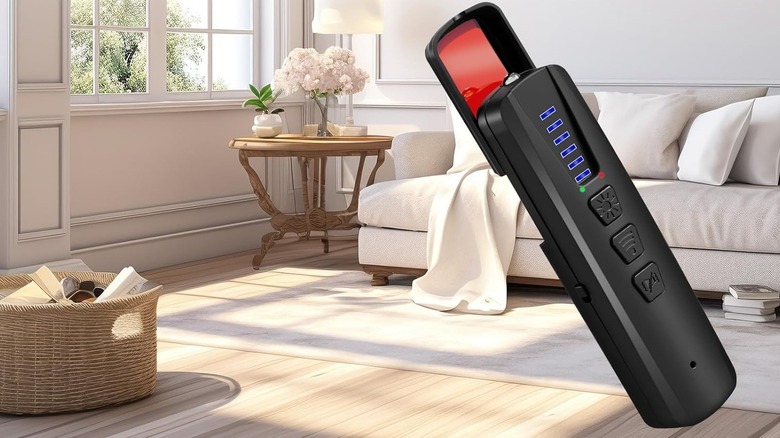
While the other two focus heavily on wireless signals, the SpyFinder Pro is a specialized infrared lens finder for pinhole camera detection. It doesn't look for signals; it looks for glass. By using a ring of high-powered red LEDs, it exploits the retro-reflective property of camera lenses. When you look through its viewing port, a hidden camera lens will appear as a bright, blinking dot of light, even if the camera is turned off or not connected to a network.
Step-by-Step Guide: How to Find Hidden Cameras in Rentals
Owning the gear is only half the battle; knowing how to conduct a thorough electronic bug sweeps is what ensures your safety. I recommend a "5-minute sweep protocol" every time you check into a new location.
1. The Active RF Scan
Begin by turning off your own phone’s Wi-Fi and Bluetooth to minimize "noise." Turn on your hidden camera detector and set it to the RF detection mode. Slowly walk the perimeter of the room, holding the device near electronics like TVs, routers, and smart speakers. Pay close attention to signal strength indicators. If the device alerts you near a non-electronic object, like a stuffed animal or a tissue box, you’ve likely found a wireless transmitter. This method is highly effective for wireless frequency monitoring.
2. The Optical Lens Reflection Test
Not all cameras broadcast a signal; some record to an internal SD card. To find these, switch your device to the infrared finder mode. Dim the lights in the room to make reflections more obvious. Look through the viewfinder of your hidden camera detector and scan the room in a grid pattern. You are looking for a sharp, pinpoint reflection. This infrared lens finder technique is the gold standard for spotting pinhole cameras hidden in smoke detectors or vents.
3. The Manual Flashlight Test
If you don't have a detector handy, you can use a high-powered flashlight—or even your phone’s flash—as a low-tech version of spy camera detection techniques for hotel rooms. Hold the light at eye level and shine it into every small crevice, hole, or transparent surface. Because camera lenses are made of glass, they will produce a distinct blue or purple glint when hit by direct light.
4. Checking Critical Zones
Focus your efforts on "high-risk" areas. In my experience, the most common spots for covert recording devices are directly facing the bed or inside the bathroom. Check the hidden camera detector for public changing rooms if you are in a shared space. Look for "out of place" items, such as two clocks in one room or a USB charger plugged into an outlet that has no clear purpose.
Legalities and Post-Discovery Protocol
If you do find a device using your best hidden camera detectors under $50 for 2026, it is vital to handle the situation correctly. In most jurisdictions, recording audio or video in private areas like bedrooms or bathrooms without consent is a criminal offense.
Expert Tip: If you find a camera, do not attempt to dismantle it. You may inadvertently destroy evidence or trigger a remote alert to the host. Instead, cover the lens with a piece of non-transparent tape or a towel.
Take clear photos and videos of the device in its hidden location as proof. Contact the booking platform (like Airbnb or Expedia) immediately and file a police report. Under no circumstances should you stay in the unit once a hidden device has been confirmed. Your safety and legal standing depend on a swift, documented exit. While anti-tracking technology and counter-espionage tools provide peace of mind, the ultimate goal is empowerment through information.
FAQ
How do hidden camera detectors work?
These devices generally use two methods: RF detection and optical detection. RF detectors scan for the radio frequencies emitted by wireless cameras as they transmit data to a router or server. Optical detectors use bright infrared LEDs that reflect off the curved glass of a camera lens, making it visible to the user as a bright spot of light through a filtered viewfinder.
Can I use my phone to detect hidden cameras?
While there are apps that claim to find cameras, they are often unreliable. Some use the phone's magnetometer to find magnetic fields, but this can give false positives from any metal or electronic device. Others use the camera to look for infrared light, but most modern smartphones have infrared filters that actually block the light emitted by spy cameras, making the phone less effective than a dedicated hidden camera detector.
What is the best way to find a hidden camera in a hotel room?
The most effective method is a combined approach. Start with a physical inspection of suspicious items, then use a hidden camera detector to perform a signal sweep for wireless devices. Finally, use the infrared lens finder mode in a dark room to catch reflections from lenses that might be recording offline.
Do hidden camera detector apps actually work?
Most experts agree that dedicated hardware is significantly more effective. Apps are limited by the phone’s existing hardware, which is designed for photography and communication, not counter-surveillance. A dedicated detector has specialized sensors specifically tuned to pick up the wide range of frequencies used by modern surveillance equipment.
Can a hidden camera detector find cameras that are turned off?
An RF scanner cannot find a camera that is powered off or not transmitting. However, an infrared lens finder can. Because the lens of a camera is made of glass, it will reflect light whether the device is on or off. This makes optical detection a critical feature for any travel safety kit.
What should I look for when buying a hidden camera detector?
Prioritize a wide frequency detection range (at least up to 6 GHz, ideally 8 GHz) and a high-quality infrared viewfinder. Battery life is also important for long trips, and portability is a plus. Look for devices that offer multiple sensitivity levels so you can narrow down a signal's exact location without being overwhelmed by background noise.
Conclusion & Travel Safety Checklist
Investing in short-term rental safety doesn't have to be expensive. By utilizing the best hidden camera detectors under $50 for 2026, you can reclaim your sense of security while exploring the world. Remember that technology is a tool, but your intuition is your best asset. If a rental feels "off," or if you notice unusual electronic interference on your phone, perform a sweep.
Before your next trip, ensure your travel safety essentials include:
- A fully charged hidden camera detector like the Dronewing AI.
- A basic understanding of how to find hidden cameras in airbnb rentals.
- A small roll of electrical tape for covering suspicious LEDs or lenses.
- The contact information for local authorities and your booking platform's safety team.
Privacy is a right, not a luxury. With the right gear and a few minutes of diligence, you can focus on the joy of travel without the lingering worry of unwanted eyes.